Running a loyalty program at a sushi restaurant demands a different approach than at a café or pizzeria. Guests love the food, each visit feels like a special occasion, and competition from other sushi spots is real. This guide covers what actually keeps them choosing you.
The loyalty challenge sushi restaurants face
Sushi ranks among Danes' favourite dining experiences, but the sector has a distinctive pattern: satisfied guests who rotate. A sushi fan typically has two to four favourite spots and picks based on availability, a new seasonal menu, or simply whichever place comes up in conversation that week.
This is not dissatisfaction. It happens because sushi is treated as a special event, and many restaurants deliver on that occasion. A guest can genuinely love your food and still only visit three or four times a year because they share visits around.
A digital stamp card changes the dynamic. It gives that satisfied guest one concrete reason to choose you on Friday evening rather than trying the new competitor down the road. They still rotate, but you are now a fixture on the list rather than one of many possible choices.
Visit rhythm: infrequent enough to forget
Sushi guest frequency varies: an enthusiast might visit once or twice a month, an average guest once a month, and an occasional diner two to four times a year. That is lower than a café but higher than a fine-dining restaurant.
This relatively low frequency is exactly why a loyalty program matters here. The less often a guest comes, the weaker the recall, and the easier it is to forget your restaurant when the next sushi craving hits. A stamp card is the small mental anchor that keeps you present in a guest's mind between visits.
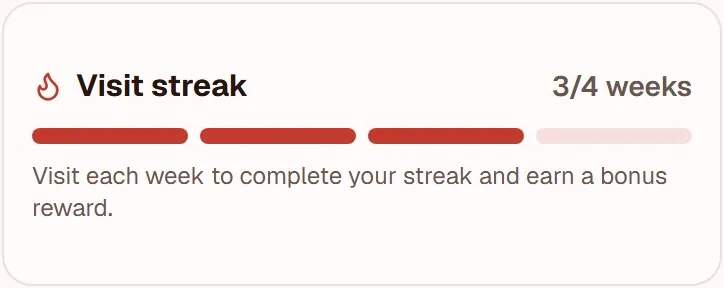
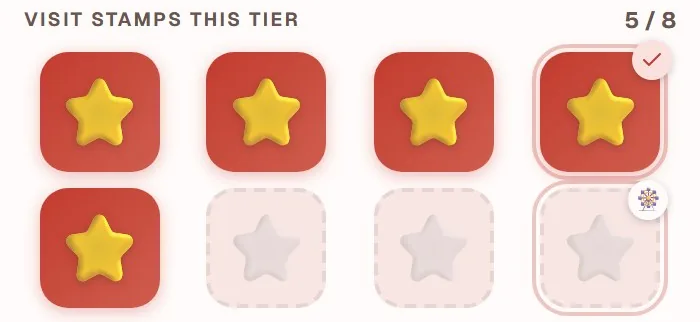
The stamp goal needs to match the rhythm. A ten-stamp target that takes half a year to reach builds no momentum. Four to six stamps, reachable in two to three months for regular visitors, is realistic and motivating. For occasional diners, a welcome bonus of two stamps on sign-up shortens the perceived distance to the reward.
For a full guide to balancing stamp targets and reward value, see Choosing the right reward for your stamp card.
A reward that fits the sushi menu
The best reward at a sushi restaurant feels like a gift rather than a discount. Sushi is a premium experience for many guests, and the program should reinforce that feeling, not undermine it.
Free starter. Edamame, miso soup, or gyoza are natural choices: low cost to you, high perceived value to the guest, and they set a great tone for the meal. The server can present them as a welcome gesture: "This is from us, a thank-you for joining our stamp card."
Free dessert. Mochi ice cream is a classic sushi-restaurant dessert and a natural closing note. A complimentary dessert redeemed quietly at the end of the meal leaves the guest with a strong positive final impression that carries over to the next visit.
Extra roll. A free maki or California roll alongside the main order is easy to deliver and easy to communicate: "Six stamps and you get a free California roll on your next visit." Clear and compelling from the very first mention.
Avoid percentage discounts and complex conditions. The simpler and more concrete the reward, the easier it is to mention at the table and the more convincing it feels to the guest.
The QR code fits naturally at the sushi table
Many sushi restaurants already use QR codes for digital menus or table ordering. That makes the shift to a digital stamp card feel natural: guests are comfortable scanning at the table, and there is no cultural friction to overcome.
You place a small QR stand or card on each table or at the counter. Guests scan with their phone camera, the join screen opens directly in the browser with no app download needed, and the server awards the first stamp through the staff interface. Start to first stamp: under two minutes.
The critical ingredient is active mention. A QR code sitting on the table that nobody mentions rarely gets scanned on its own. One prompt does the job: "Do you have our digital stamp card? Scan here and you already have your first stamp." A guest who is happy and settling the bill is exactly the right moment for that question.
For advice on where to place your QR material to get the most scans, see QR poster placement: where customers actually scan.
From sign-up to regular
Picture a sushi restaurant with fifty covers and a steady stream of returning guests. If a quarter of guests sign up in the first two months, a pool of active card-holders emerges who keep an eye on their progress toward a reward.
Guests who are halfway to their goal are considerably more likely to choose you the next time a sushi craving strikes. Not because they consciously think it through, but because your restaurant is the one with something concrete to come back to. That small mental advantage is enough to tip the decision your way.
The first few weeks need active effort from the team. After that, regulars know the program and new guests hear about it from fellow diners. The underlying mechanics are very similar to what works for stamp cards at pizzerias: a simple model, actively mentioned at the counter, produces results over time.
Standard plan at 99 DKK/month includes unlimited stamps and an analytics dashboard to track active card-holders. The Pro plan at 249 DKK/month adds email marketing, automations, and advanced analytics. There is no binding period and no setup fee, and you cancel in the portal. See the guest experience from the customer side at loyalty.maiya.dk. For a full look at what the stamp card includes and what the setup involves, the stamp card app page covers it in detail.
Frequently asked questions
What stamp target is right for a sushi restaurant?
It depends on your average guest's visit frequency. For a guest who dines with you once or twice a month, four to six stamps is a realistic target achievable in two to three months. For less frequent visitors, a welcome bonus of two stamps on sign-up shortens the initial distance. The key criterion is that guests believe they can reach the reward within a manageable number of visits.
Can the stamp card be used for both table service and takeaway?
Yes. The guest shows their code on their phone and the staff member scans it through the staff interface, whether the guest is seated at a table or collecting a takeaway order at the counter. For takeaway customers, having the QR material visible at the till makes it natural for the server to mention it while the guest waits for their order.
Which reward works best for sushi?
A free starter such as edamame or miso soup is the most popular choice: low cost to you, high perceived value for the guest, and easy to introduce at the table. A free mochi dessert is a strong alternative that lands naturally at the end of the meal. Avoid percentage-off discounts, which signal "budget" rather than "gift", and keep conditions simple so the program can be explained in one sentence.