Email marketing for restaurants is the channel most owners forget, even though their loyalty program has already collected email addresses from hundreds of guests. It is not about weekly newsletters with lengthy copy; it is about two or three precise messages a year, sent to the right guests at the right moment. Here are three email types that actually work, and what to avoid.
Why email reaches differently than social media
An organic post on Instagram or Facebook is seen by only a fraction of your followers. The algorithm controls the reach, and it changes without warning.
An email lands directly in the inbox of the guest who asked to hear from you. It does not disappear into a feed, but waits until the guest is ready to open it.
That makes email a channel with substantially higher reach to your existing customer base than organic social media. The condition is that you do not abuse it. A guest who unsubscribes because you send too often is harder to win back than one who has never received a message at all. Think of the channel as a privilege rather than an automatic marketing pipe.
What your loyalty program already knows about your guests
If you run a digital stamp card app, you have data most restaurants never collect: when guests visit, how often, and when they last came in.
That information is the key to writing emails that feel relevant rather than generic. Instead of sending the same message to everyone, you can target more precisely:
- Guests who have not visited in over 30 days
- Guests who are close to reaching their stamp goal
- Guests who have never redeemed a reward
Imagine a restaurant with 250 members in its loyalty program. A third of them have not visited in six weeks. An email aimed specifically at that group, with a concrete reason to come by next week, is far more effective than a general message to all 250.
You cannot do this with a paper stamp card or a sign-up sheet by the till. The loyalty program is your best data partner here.
Three email types that actually work
You do not need a complex automated system to get started. Three straightforward email types cover the situations that deliver the most return:
The welcome message. The guest has just joined your program. Send a short email within 24 hours: confirm the reward they are working towards, and explain exactly what to do on their next visit. Keep it under ten lines. A welcome email sets expectations and reminds the guest of their sign-up while your place is still fresh in their mind. Consider mentioning that no app download is required, since many guests assume the opposite.
The re-engagement message. For guests who have not visited in 30 to 45 days. The message is simple: you miss them, and here is a concrete reason to come by. A line like "We have not seen you in a while. Come in and earn a stamp this week" is direct and personal without being pushy. No long explanations; your guests know who you are.
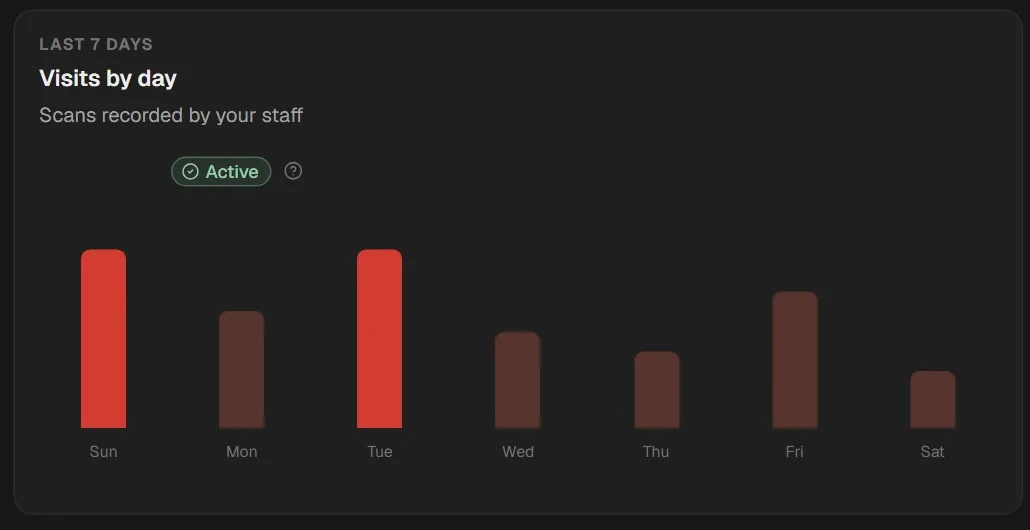
The campaign message. For the quiet periods in your week. Imagine your Tuesdays are noticeably slower than your Fridays. An email to members with an offer valid only on Tuesdays can shift visits that would otherwise go to a competitor. It does not need to be a discount; a double stamp on Tuesdays for a given week, or a free side dish with a main, is enough. Reward rather than discount is the principle that preserves your menu's full value and avoids training guests to expect reduced prices.
The subject line determines whether the email gets opened at all
An email that is not opened does not exist for the guest. The subject line is the single factor that decides whether the guest opens or deletes, and it deserves more attention than the body copy.
Avoid generic lines like "News from us" or "Monthly update". Use specific phrasing that gives the guest a reason to open:
- "You are 3 stamps away from your next free coffee"
- "We miss you. Come in before Sunday"
- "Double stamps Tuesday and Wednesday this week"
Personalising with the guest's first name requires collecting it at sign-up. That small detail gives the email a human tone and increases the chance the guest opens rather than deletes.
Frequency is what determines whether people unsubscribe
A weekly email is too much for most restaurants. One email per month to the full list, combined with targeted messages to specific segments, is a sustainable pace. It keeps the list active without irritating people.
The time of day matters too. An email about a lunch offer sent in the morning gives the guest time to decide before lunch approaches. The same message sent at noon arrives when they are already placing an order somewhere. Test two send times with two smaller groups and measure which one drives more return visits.
Email lists decay over time as people change addresses or lose interest. Clean your list twice a year by removing addresses that never open your emails. A small, engaged list is more valuable than a large, passive one.
For a broader picture of what works in restaurant marketing beyond email, you will find a complete overview in restaurant marketing that works in 2026. To build a larger list of loyal guests to write to, Get more regulars: 7 tactics that work is a natural next step. And to measure whether the effort actually sends guests through the door, Measuring your loyalty program ROI gives you the metrics you need. To reach guests directly on their screen at the moment they are deciding, push notifications for restaurants explains when it is the fastest tool available.
Frequently asked questions
Am I allowed to email my loyalty members?
Yes, provided the guest gave explicit consent to marketing messages at sign-up, and that every email includes a clear unsubscribe link. It is your responsibility to ensure the consent is voluntary and clearly worded in the sign-up flow. Consult your email platform's documentation or a GDPR adviser if you are unsure about your specific setup.
Which email platform should I use?
The best option depends on what your loyalty program supports. The important things are that the platform can segment your list on simple criteria such as "last seen X days ago" and shows the unsubscribe rate per email. Ask about integration before signing up for a separate tool.
What should I do if many guests unsubscribe?
Unsubscribe rates below two to three percent per email are normal and healthy. If the rate rises above that, you are likely sending too often or with content that is not relevant to your particular customer base. Cut the frequency and make the content more specific and action-oriented. A person who unsubscribes simply prefers not to receive emails from you and is not necessarily a lost guest.