Points or stamps is the first design decision most restaurant and cafe owners face when launching a loyalty program. Both mechanics reward return visits, but they work differently and suit different types of business. This guide breaks down the differences so you can choose the model that actually fits your context.
How the two systems work
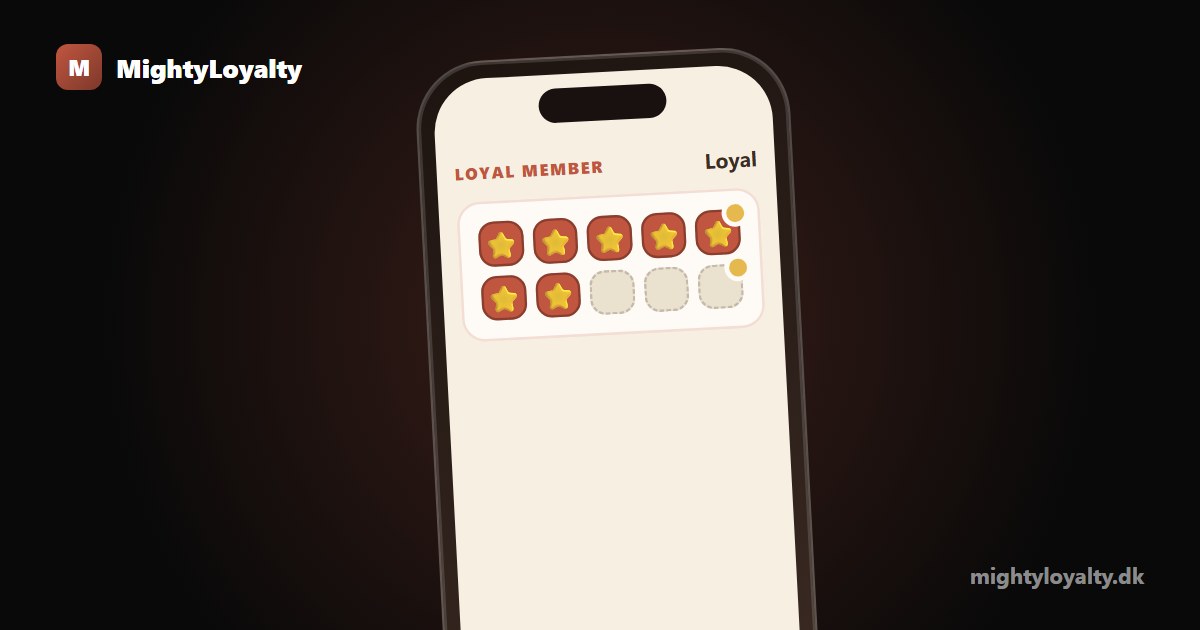
A stamp card is straightforward: the guest earns one stamp per visit (or per purchase above a threshold), and once a fixed number is reached, a reward unlocks. The guest always knows exactly where she stands.
A points system assigns points based on the amount spent. Points accumulate over time and can be redeemed against rewards of varying size. The guest builds a balance across visits and picks from a rewards catalog.
The two mechanics look similar on the surface, but they create very different experiences in practice.
Customer psychology: visible progress is the real motivator
The mechanic that wins is usually the one the guest can see working. People are pulled along by visible progress toward a clear goal: it is not the reward itself that drives the behavior, it is the feeling of getting closer to it.
The stamp card is built precisely for that. A guest can see at a glance that she is six of ten stamps in, and that creates a concrete sense of momentum. She knows what she is working toward and understands when she will get there.
A points system is harder to make intuitive for an independent business. Imagine a cafe that awards points based on the amount spent, with a redemption threshold the guest has to reach before earning anything. A guest on her third coffee of the week does not immediately know whether she is halfway there, nearly done, or far off. Points accumulate invisibly, and the psychological pull weakens accordingly.
That is not to say points systems never work. Large chains use them successfully because they have the resources to make the system intuitive through apps, push notifications, and tiered status levels. The independent restaurant or cafe rarely has those same resources.
Where stamp cards win for local businesses
For a restaurant, cafe, or salon with a small team and guests who know the place personally, stamp cards have three clear advantages.
Simplicity at the counter. A stamp takes two seconds. Staff scan, the guest sees her card update, done. The more friction there is in the stamping moment, the fewer guests bother. A digital punch card the guest keeps on her phone is no more complicated than holding the screen up to a QR poster.
Clear goal, clear reward. "Eight stamps earns a free coffee." That is one sentence a new team member can say to a guest without hesitation. The guest remembers it, tells a friend, and comes back. Complexity is a stamp card's biggest enemy.
Visit-based rather than spend-based. One stamp per visit means the guest who orders a cappuccino and the guest who orders a large latte with a pastry both earn one stamp. That might sound unfair, but it is actually an advantage: it removes any barrier to joining. Every single visit counts, regardless of what the guest orders.
Where points systems are relevant
Points systems are not useless for local businesses; they just have a narrower scenario where they make sense.
High, variable average spend. If a guest spends very different amounts from visit to visit, points per unit of spend is fairer than one stamp per visit. This is typical for restaurants with table service, wine bars, and delis.
Wide price range across products. If you sell at a wide range of price points and guests vary greatly in what they buy, points give a more accurate reflection of actual spend. Guests who always order from the cheapest end of the menu will generate very different loyalty value compared to higher spenders.
Multiple purchase categories. If you run a restaurant alongside a retail section, points can accumulate across both, which a simple stamp card does not handle naturally.
All three scenarios require investment in infrastructure: an app or web interface that clearly shows the balance, and a team trained in the system. Without it, the points system loses its advantage and becomes a source of confusion instead.
Complexity is the biggest risk for any program
The most common mistake when choosing between points and stamps is underestimating the cost of complexity.
A program too complex for staff to explain without hesitation will never reach its potential. The guest asks "what do I get out of this?" at the counter. If the team member can answer clearly and quickly, the guest is in. If she cannot, the guest politely declines and moves on.
This dynamic hurts points systems more than stamp cards, simply because there is more to explain. That is not a criticism of the mechanic itself; it is a practical constraint that matters on a busy shift.
Want to go deeper on what makes rewards motivating? See our guide to choosing the right stamp card reward, which covers reward types, stamp counts, and the most common mistakes in detail.
Which model fits your business?
Here is a practical rule of thumb.
Choose a stamp card if:
- You run a cafe, bakery, takeout counter, or anywhere guests visit frequently and regularly
- Your guests spend roughly the same amount per visit
- You have a small team and want a program that is easy to run day to day
Choose a points system if:
- Your guests spend highly variable amounts from visit to visit
- You sell across a wide price range and want to reward your highest spenders proportionally
- You have the infrastructure to communicate the points balance clearly to every guest
For the vast majority of independent restaurants and cafes, a stamp card is the right starting point. You can start simple and add complexity later once you have data and experience from the first few months. Going the other direction is harder.
Businesses built on a daily habit sit furthest over on the stamp side of that line. If you sell bread, pastries, or coffee to the same faces every morning, stamp cards for bakeries shows how to set the target when the basket is small and the visits are close to daily.
For a broader look at what a loyalty program has to do for an owner-run business, see our guide to customer loyalty for small businesses.
Getting started: the practical choice
If you have never run a loyalty program before, the clear recommendation is to start with a stamp card. Not because points systems are worse, but because a simple program that actually gets used is far more valuable than a sophisticated one nobody understands.
Set a target a typical guest can reach in two to three months. Choose a reward with strong perceived value. Brief your team in one sentence. That is the foundation.
Want to see what the experience looks like from the guest's side? Try the live demo at loyalty.maiya.dk and see the stamp card in action. MightyLoyalty is 99 DKK a month, about 13 EUR, with no setup fee and no binding period, so you can run the program with your own guests and cancel in the portal whenever you like. See the complete guide to creating a stamp card program in one day to get started. For a full walkthrough of what a digital stamp card includes for guests and owners, see our stamp card app page.
Frequently asked questions
Can I combine points and stamps in the same program?
Yes, but it is not recommended as a starting point. Combining the two mechanics increases complexity for staff and guests alike. It can make sense as an advanced next step once you have run a well-functioning stamp card for six months or more and want to add a secondary layer, for example bonus points on special occasions. Start simple; you can always build from there.
How many stamps should a cafe typically require for a reward?
Most cafes set the target at six to ten stamps for a free drink. Six suits guests who visit two to three times a month; ten suits guests who come weekly. Base it on what a typical guest can realistically reach in six to eight weeks. If the target is hit too rarely, guests lose motivation; if it is hit too quickly, it erodes your margin.
When does a points system make sense for an independent restaurant?
A points system makes sense when your typical guest spends very different amounts from visit to visit, and you want the reward to reflect that. A good example is a table-service restaurant where groups order to very different totals depending on the evening and party size. In that context, a per-visit stamp system would favor frequent low-spend visits over guests who actually generate the most revenue. If that describes your business, a points system is worth considering, provided you have a platform that communicates the balance clearly to every guest.