POS loyalty is a feature most point-of-sale providers now pitch as part of their package, and the appeal is obvious: one system, one login, one dashboard. But when you look closely at what you actually get, and what it costs to give up flexibility, the picture shifts. Here is an honest comparison of when the POS module is enough and when a standalone stamp card is the better call.
What is POS-integrated loyalty?
A POS (point of sale) system is the software your café or restaurant uses to ring up orders, process payments, and manage the till. Many modern POS providers include a loyalty module as an add-on: the customer links their payment card or email address, and each purchase is recorded automatically when they pay.
The appeal is that enrolment happens during the transaction itself. Staff do not need to ask customers to scan anything; the system identifies them by their payment method. From the operator's perspective it looks frictionless, because the stamp or point is awarded without any extra step.
But there are limitations worth knowing before you commit to that approach.
What does a standalone stamp card offer?
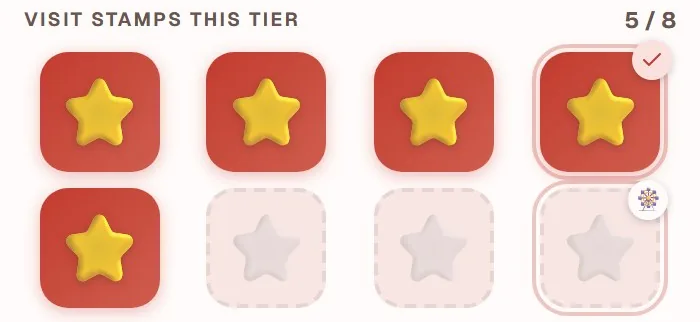
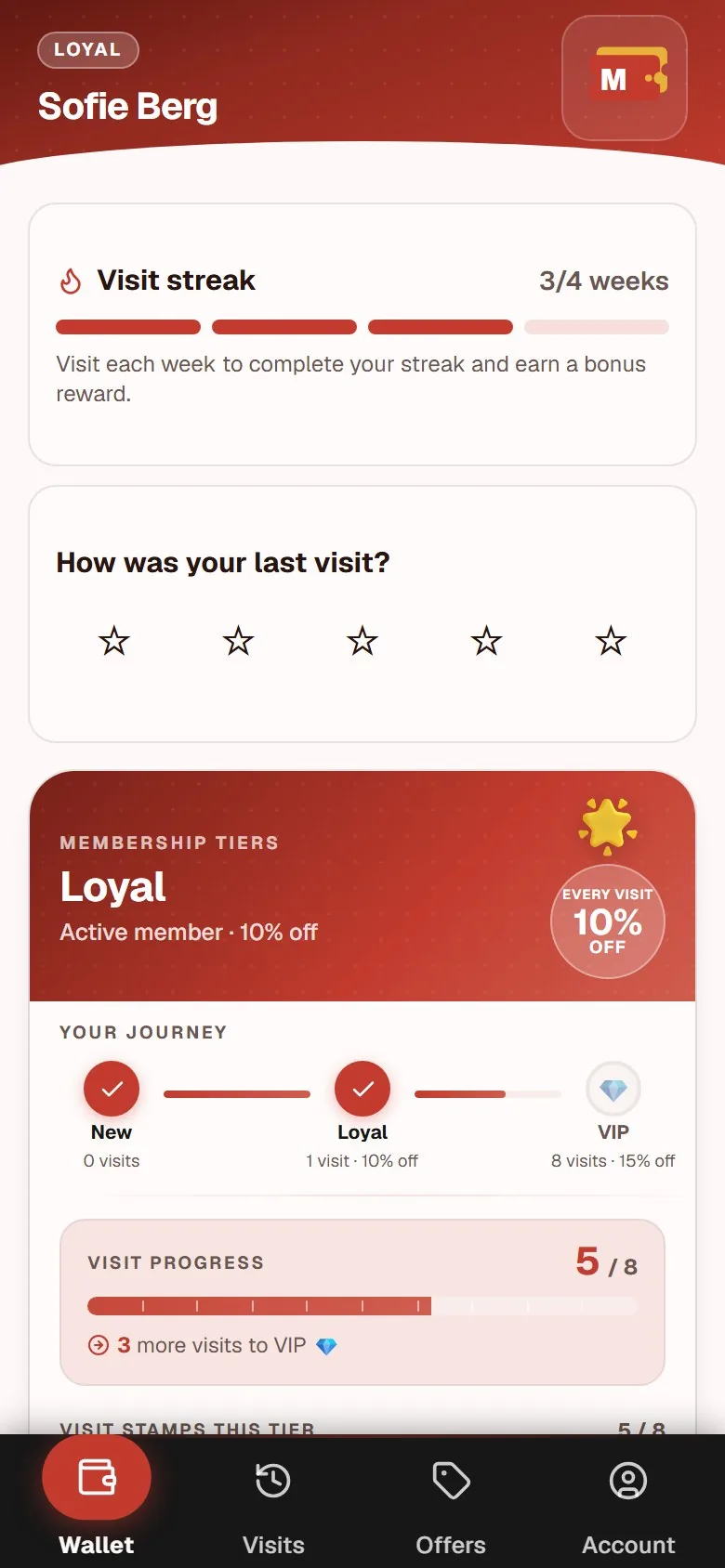
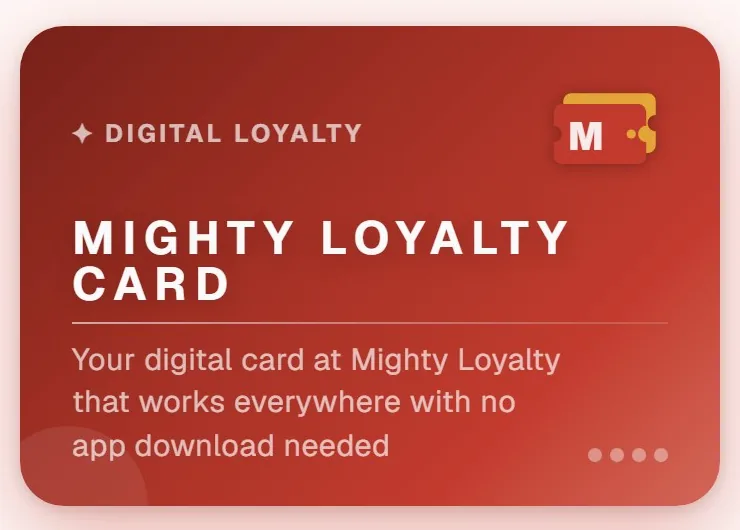
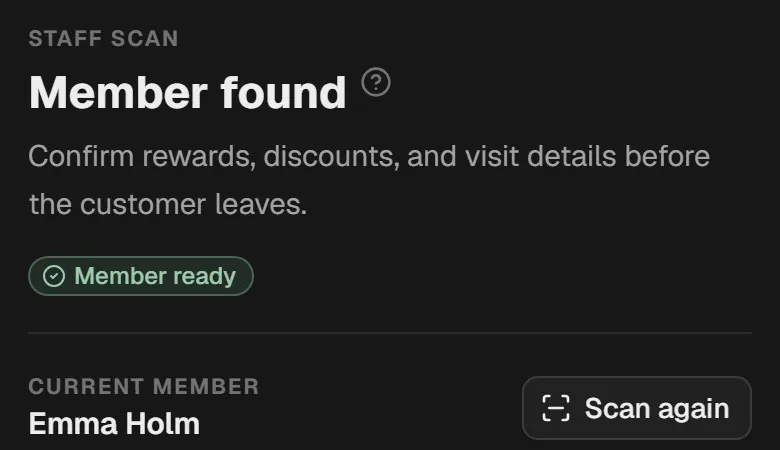
A standalone digital stamp card like MightyLoyalty works independently of your POS. The customer scans a QR code, the loyalty card opens directly in their mobile browser, and staff scan the customer's code to award a stamp. No app download, no App Store account, no link to payment data.
The advantages are ownership and flexibility. You can switch POS providers, update your rewards, change the stamp threshold, or run a campaign without touching your loyalty program at all. The two systems run in parallel and independently.
Customers get a card they can save as a shortcut on their home screen, just like a native app. Next time they visit, they open it to see exactly how close they are to their next reward.
The key differences
Sign-up and payment method. POS integration typically works via one payment card. If a customer pays with MobilePay one day and a Visa card the next, the visits may register as two separate customers. The same problem arises when a friend pays for them, or they switch between a personal and a business card. A QR-based stamp card is entirely independent of payment method: staff scan the customer's code, and the stamp registers regardless of how the bill is paid.
Data ownership. With a POS-integrated program, your guest data lives on the POS provider's platform. If you switch providers, you typically lose your full loyalty history and the list of active cardholders. With a standalone program, you own your data and can export it whenever you need to.
Program flexibility. Want to offer a welcome bonus for new sign-ups? Run double stamps during a quiet January? Launch a spin-the-wheel draw in the run-up to Christmas? Most POS loyalty modules cover the basics: points and simple discounts. A dedicated loyalty platform is built for exactly these kinds of campaigns.
Changes and maintenance. Adjusting a reward in a POS module often means navigating the provider's backend and sometimes calling support. With a standalone program you make the change in your owner dashboard in under a minute, and customers see it the next time they open their card.
When does a POS loyalty module make sense?
There are scenarios where POS-integrated loyalty is the right fit. If all your customers pay consistently with the same card, automatic registration is a genuine benefit. It works well in staff canteens, self-service environments, and businesses that accept card payment only, where the checkout flow is highly standardised.
If you already have a capable POS system with a loyalty module that meets your needs, and it is included in your current package, there may be no reason to add a separate platform on top.
Think of a corporate canteen that only accepts contactless card payment via a fixed POS with a built-in loyalty module. For them, integration is the natural choice because the payment method is controlled and consistent across every transaction.
When is a standalone stamp card the better choice?
For cafés, restaurants, pizzerias, hair salons, and bakeries, a standalone stamp card is usually the better fit, for three concrete reasons.
Payment methods are mixed. In a typical Danish café, customers pay with Dankort, Mastercard, Visa, MobilePay, and occasionally cash. A loyalty program that only works when customers pay with one specific payment method misses a large proportion of visits and leaves customers confused about why their progress is not showing.
You own the program. If you switch POS providers in two years because you find something cheaper or better suited to your setup, you lose nothing on the loyalty side. Your customers' cards remain active, and your membership list stays with you.
You can do more. A dedicated loyalty platform gives you offers, spin-the-wheel mechanics, and campaigns that go beyond the basic point model. Those are the features that give you something worth communicating to your customers beyond "collect stamps."
For a full picture of the categories available to you, see our overview of loyalty solutions in Denmark.
Pricing: what to expect
A standalone digital stamp card through MightyLoyalty costs 99 DKK per month on Standard (unlimited stamping, offers, the spin wheel, QR poster, owner dashboard) or 249 DKK per month on Pro (adding email marketing, push, and advanced analytics). There is no binding period and no setup fee, and you cancel in the portal. For a full feature breakdown by plan, visit the stamp card app page.
POS loyalty modules are priced differently by each provider and are usually bundled with other POS features, which makes direct comparison difficult. Check exactly what is included as standard versus what costs extra before you decide.
For more context on digital versus paper, read the comparison of digital and paper stamp cards. If you need guidance on picking the right reward structure, choosing the right reward for your stamp card walks you through the options. Ready to get started? Creating a stamp card program in one day shows the full setup from scratch.
Frequently asked questions
Can I use a standalone stamp card alongside my existing POS system?
Yes. A standalone digital stamp card runs in parallel with your POS and requires no technical integration. Staff use a scan app on a phone or tablet next to the till. The two systems are completely independent, and you do not need to change your existing checkout setup at all.
What happens to my guest data if I switch POS providers?
With a standalone program like MightyLoyalty, nothing changes. Your customers keep their stamp cards, and you keep your full membership list and loyalty history. That is a meaningful advantage over POS-integrated programs, where the data typically stays locked inside the provider's platform.
Is a standalone stamp card harder for staff to use?
No. The flow is straightforward: the customer opens their digital card on their phone, and staff scan the code. It takes about five seconds and requires no technical knowledge. A brief 10 to 15 minute briefing is usually enough for a full team to feel comfortable with the process from day one.