Customer loyalty at your café is not something that just happens because the coffee is great. It forms when a guest has a reason to choose you over the place next door, and when every visit confirms that choice was the right one. This guide covers what actually drives loyalty in cafés and what you can do about it starting today.
Satisfied guests vs. loyal regulars
A satisfied guest is one who doesn't complain. A regular is one who actively chooses you the next time the need arises. These are very different things, and many café owners confuse them.
Picture a café that gets consistent praise for its coffee and service. Guests are happy, reviews are good. Yet revenue swings week to week because those happy guests don't necessarily return to that specific café. The coffee isn't the problem; there is simply nothing pulling them back to this place rather than any other.
Loyalty is not just about quality. It is about a choice: the guest actively picks you even when alternatives are available. That choice emerges when two things are in place: the habit and something that reinforces it.
The habit loop and the café's natural advantage
Cafés have a natural edge over most business types: visit frequency is already high. The same guest buys coffee two, three, maybe five times a week. The habit is partly established before you do anything.
The classic habit loop has three elements: a cue (Monday morning, passing your door), a routine (a visit and a coffee), and a reward (caffeine, a pause, a pleasant atmosphere). The stronger each link, the more automatic the guest's behaviour becomes over time.
Your job as a café owner is not to build the habit from scratch; it is to make your café the natural answer to the cue. That takes three things: a good experience, recognition, and an incentive that reinforces the routine. A digital stamp card for coffee shops provides the incentive; atmosphere and staff provide the other two.
Staff are your most important loyalty factor
No digital tool replaces a member of staff who remembers a guest's name and usual order. Guests return to places where they feel recognised, and that experience is delivered by people, not software.
It requires very little effort. A staff member who says "the usual?" to a returning guest gives that guest something a chain or a first-time competitor cannot: the feeling of being known. That is differentiation that costs nothing.
Train your team on two things in relation to the loyalty program: to mention it at payment ("We have a digital stamp card, want to scan here?") and to give the first stamp immediately. An empty card feels like a demand; a card with one stamp already feels like a promise of something to look forward to.
For a step-by-step guide to launching the program and getting your team involved, see Create a stamp card program in one day.
The digital stamp card as a loyalty amplifier
A digital stamp card amplifies a habit that is already in motion. It is not a substitute for good coffee, good service, or a welcoming atmosphere. It is an extra layer that gives a guest a concrete, visible reason to choose you specifically.
Picture this: a guest is on her way to work and weighing whether to stop at your café or keep walking to the chain coffee shop around the corner. She remembers she needs two more stamps for a free coffee. It is not a big decision, but it tips the choice. That is exactly what the loyalty program is there to do.
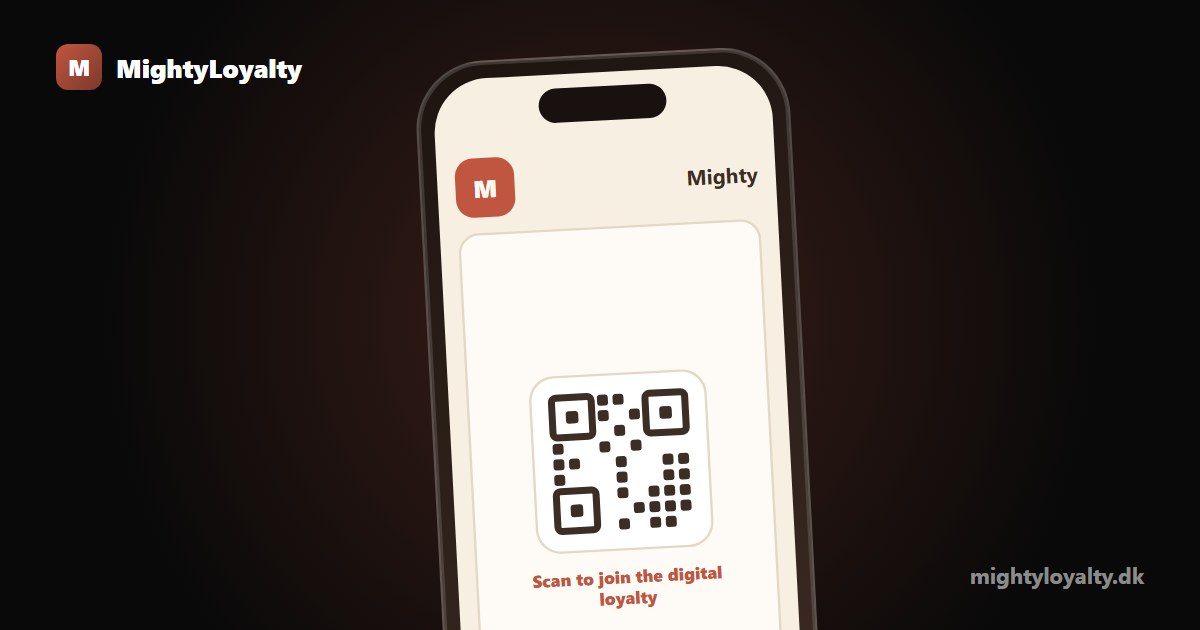
A web-based solution that guests open by scanning a QR code at your counter requires no app download and no account in advance. The guest scans, signs up, and starts collecting within a minute. That removes the friction of getting started and makes the program easy to run at the counter no matter who is on shift.
You can see what the experience looks like from a guest's perspective at loyalty.maiya.dk.
What you can track and why it matters
A digital loyalty program gives you something a paper card never can: data about your guests. You can see when they visit, how many are active, and when they typically redeem their reward.
That is useful in two ways. First, you can identify your most active guests and those close to their next reward. You can use that knowledge to time offers at the right moments.
Second, you can see whether the program is actually working. A low redemption rate can mean the stamp goal is set too high, the reward is not attractive enough, or staff are rarely mentioning the program in practice. These are insights you cannot get from a pile of paper cards in a drawer.
For more on using that data to improve your program over time, see Choose the right reward for your stamp card.
From first-time visitor to regular: the first 30 days
Loyalty builds quickly in cafés because visit frequency is high. A guest who comes three times a week will reach her first stamp goal within two to three weeks if the target is set at eight to ten stamps.
These first weeks are critical. The habit forms here, and the guest begins connecting her visits to an upcoming reward. Here are the three actions that turn the first 30 days into a foundation for loyal behaviour.
Get the guest enrolled at the first opportunity. Do not wait for her to ask. Mention the program at payment and help her scan. The sooner she is in, the sooner she is working towards a goal.
Give the first stamp immediately. A card with one stamp already on it shows the program is real and active. It is not just a poster; it is something she is already part of.
Keep it simple. A clear goal, a clear reward, no fine print. The guest should be able to explain your program to a friend in ten seconds. If she can, she will remember it. If she remembers it, she comes back.
For more on what brings and keeps regulars, see Get more regulars: 7 tactics that work. For a café-specific breakdown of stamp numbers and reward types, the stamp cards for cafés guide covers the details.
Ready to set one up? The stamp card app page shows what is included and how to get started.
Frequently asked questions
What is the difference between customer satisfaction and customer loyalty?
Customer satisfaction is a snapshot: the guest was happy after the last visit. Customer loyalty is behaviour over time: the guest consistently chooses you over the alternatives. A café can have high satisfaction and low loyalty if there is nothing pulling the guest back specifically. The loyalty program is one of the tools that bridges the gap between a pleasant visit and a returning habit.
Does running a loyalty program require a lot of administration?
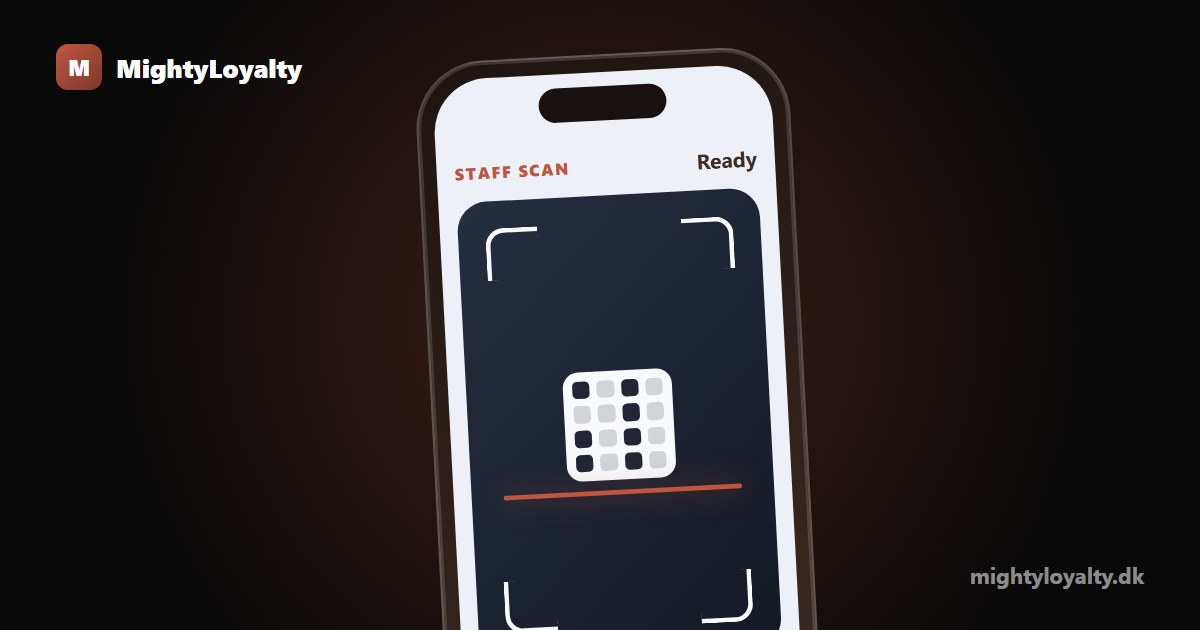
A digital loyalty program like MightyLoyalty is built to run with minimal daily administration. You set up the reward and stamp goal once, and from there staff handle stamp awards via a simple scan interface. The analytics dashboard gives you a weekly overview in under five minutes. It is designed for café owners with busy shifts, not for marketing teams.
When does a loyalty program start showing visible results?
It depends on your visit frequency and your stamp goal, so the honest answer is to do the arithmetic for your own café. If a guest comes three times a week and the goal is ten stamps, her first redemption is roughly three to four weeks away. Expect the first weeks to go on enrolments, and the first redemptions to follow once your earliest members reach their goal and return to start a new round. Those are the moments the program proves its value: a guest who redeems a reward has, by definition, come back to you. There is no setup fee and no binding period, and you cancel in the portal.