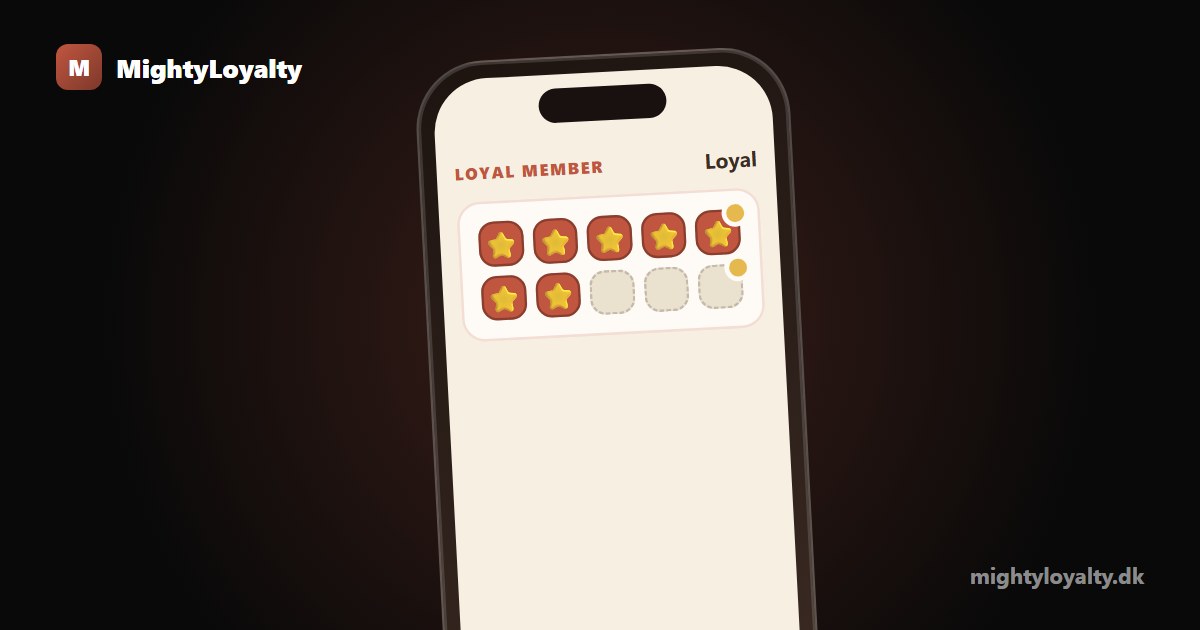
Most articles about a digital stamp card assume you should have one. This one does not. The mechanic is cheap and quick to set up, but it only earns its keep in businesses with a particular shape, and it is worth spending five minutes deciding whether yours is one of them before you print a poster.
Four tests that decide it
Work through these in order. If you pass all four, a digital card will almost certainly pay for itself. If you fail one, the rest of this article covers what to do instead.
- Do your customers come back often enough to fill a card?
- Can your staff spare ten seconds per guest at the busiest moment of the day?
- Does your point-of-sale system already do this properly?
- Do you actually want the data, or just the reward mechanic?
Test 1: Do customers come back often enough?
This is the one that disqualifies most businesses that try it anyway. A stamp card is a promise that repeat visits add up to something, so it needs repeat visits to add up.
Cafes, bakeries, lunch spots, takeaway outlets, sushi places, hair salons, and nail studios all pass comfortably: the visit rhythm is weekly, monthly, or at worst quarterly, and a realistic goal is reachable in a few months.
A seasonal tourist shop, a wedding venue, or anything where a customer's second visit is a genuine surprise fails. You can still run a card, but you will be paying a subscription to collect first stamps that never become second ones.
The borderline case is a business with a long gap between visits, such as a salon where clients come three times a year. That works, but only if you lower the goal to match: three or four stamps, not ten. The goal has to be reachable inside a year or the card is decorative.
Test 2: Can staff spare ten seconds?
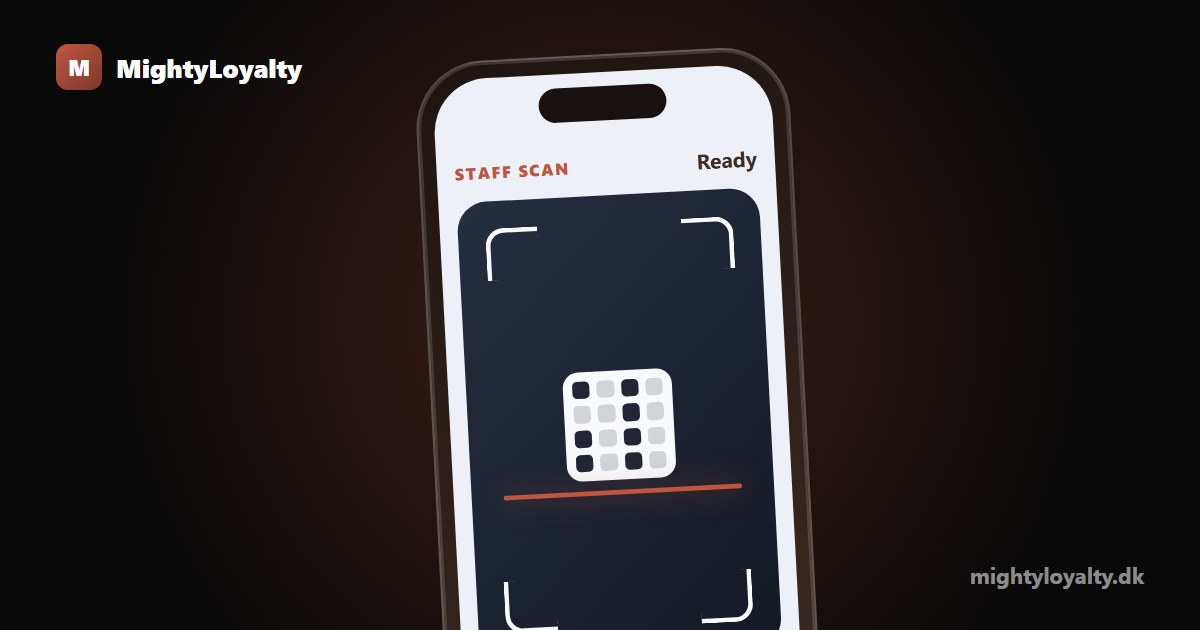
The stamping itself is fast. Staff open the scan screen on a phone or tablet at the counter, the customer holds up their QR code, and the stamp is recorded. Two or three taps.
The part that costs time is the sentence. Someone has to say "do you have our stamp card?" often enough for the member list to grow, and in a venue where the queue never drops below six people, that sentence gets dropped first. If you know your team will not say it, the honest answer is that the card will not work, regardless of the software.
Training is not the obstacle: a five-minute demo covers it. The habit is. One useful test is to ask the sentence yourself for a full shift before you commit, and see whether it feels possible on a normal day.
Test 3: Does your POS already do this?
If your point-of-sale system has a real loyalty module that your staff already use, adding a second system on top is usually a mistake. Two places to look up a customer means neither one gets used consistently.
The distinction worth drawing is between a POS that has a loyalty feature and a POS that has a loyalty feature people actually use. Plenty of tills ship one that nobody has switched on. If yours is genuinely running, keep it. If it exists on a settings page and nowhere else, a standalone card that runs independently of the till is usually simpler than trying to revive it.
A standalone card also survives you changing POS provider later, which an integrated one does not.
Test 4: Do you want the data, or just the mechanic?
This is the test that decides whether digital beats paper for you specifically.
If all you want is a reward mechanic, paper works. It costs a print run and a hole punch, and customers understand it instantly. What paper cannot do is tell you anything afterwards.
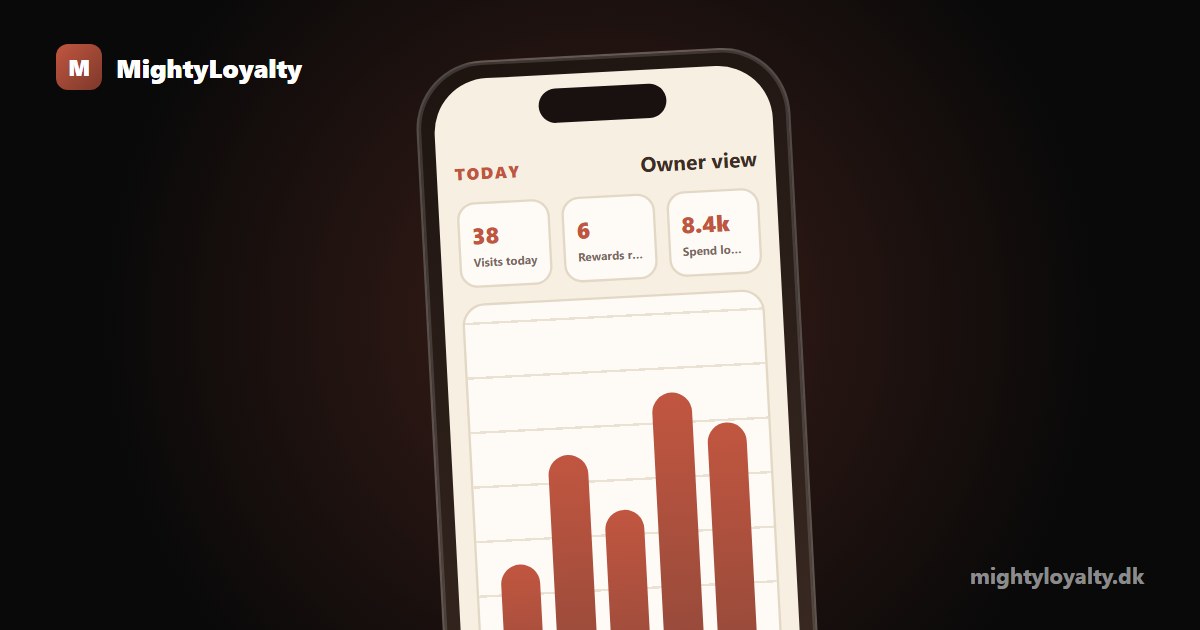
A digital card gives you three things paper never will:
Names and visit history. You know who your regulars are, when they last came in, and whether someone is drifting away. Imagine a cafe that notices a customer who used to visit twice a week has not been in for five weeks. Paper never surfaces that signal.
Rewards you can change from a phone. You can create and deactivate offers from the dashboard and they appear on customers' cards immediately. A quiet-Monday campaign needs no new signage and no print run.
Numbers to steer by. If rewards are rarely redeemed, your goal is too high. High sign-up rate but few return visits? The reward is not pulling hard enough.
If none of that appeals and you will never open the dashboard, be honest about it. Paper is cheaper. Our comparison of digital and paper stamp cards sets the two side by side without pretending the answer is always digital.
What it looks like if you pass all four
The guest side is deliberately unremarkable. She spots the QR poster at the counter, scans it with her camera, the card opens in the browser, she gives consent, and the card is active. There is no app to install and no password to remember, and the whole thing takes under a minute. From then on she shows her personal code at each visit.
Most owners are surprised by how rarely guests hesitate, and the reason is that there is nothing to hesitate about. If you want to see that join screen from the guest's side before setting anything up, our punch card app page walks through the same four steps.
For the decisions to make before you build the card, from the reward to the counter script, see our stamp card setup guide. To see the same choices in a program that is running daily, we describe our own restaurant's setup in the Maiya Nepali Kitchen write-up.
What it costs to find out
Standard costs 99 DKK per month and includes unlimited stamping, a printable QR poster, a join screen, and the owner dashboard. Pro at 249 DKK per month adds personalized offers, a spin-the-wheel draw, and advanced statistics. There is no binding period and no setup fee, and you cancel in the portal, so testing the four tests against reality costs you one month.
Realistic expectations: most businesses see their first sign-ups on day one if staff ask actively. A measurable change in visit frequency typically takes two to four weeks to appear, as customers watch the reward getting closer. It is a foundation that compounds with consistency, not a switch that flips.
Frequently asked questions
Do customers need a smartphone?
Yes: a phone with a camera and a browser. That is a bar most customers clear easily today, and customers without one can usually be enrolled manually by a staff member if the platform supports it. If a large share of your customers are unlikely to own a smartphone, that is a fifth test your business should apply before choosing digital.
What happens to their stamps if a customer gets a new phone?
Stamps are stored in the system, not on the phone. Customers log back into their card via email or a direct link and pick up exactly where they left off. Switching phones does not mean losing accumulated stamps, which is the main practical advantage over a paper card that lives in a wallet.
Can I customize the card with my own branding?
Yes. Most platforms let you set your primary color, upload your logo, and write your own reward description, so the card looks like yours rather than the platform's. That matters more than it sounds: your best customers open this screen repeatedly, so it is a small piece of your brand rather than a utility screen.