The reward is the engine of your stamp card: it is the reason customers remember to scan at the counter, and the reason they come back rather than trying somewhere new. Yet choosing a reward is something most business owners rush through, picking the first idea that comes to mind. This guide walks you through selecting a reward that motivates your customers, fits your business, and does not cost more than it earns back.
What makes a reward work?
A good reward has two qualities, and both must be present.
The first is perceived value: the customer has to feel the reward is worth waiting for. A coffee that costs little to make but that a guest experiences as a genuine gift has strong perceived value. A small percentage off an already modest bill feels, by comparison, more like a sales tactic than a reward.
The second is clarity: the customer must grasp the reward in three seconds. "Free coffee after ten visits" works because there is nothing to interpret. "Save up to 20% on selected mains at the weekend with a minimum of two courses" does not work because the customer stops listening halfway through. If a new staff member cannot explain the reward on their first shift, it is too complicated.
The rule of thumb: perceived value clearly above your actual cost. That is exactly what makes the free-product reward the most common choice in cafés and restaurants.
Three types of rewards
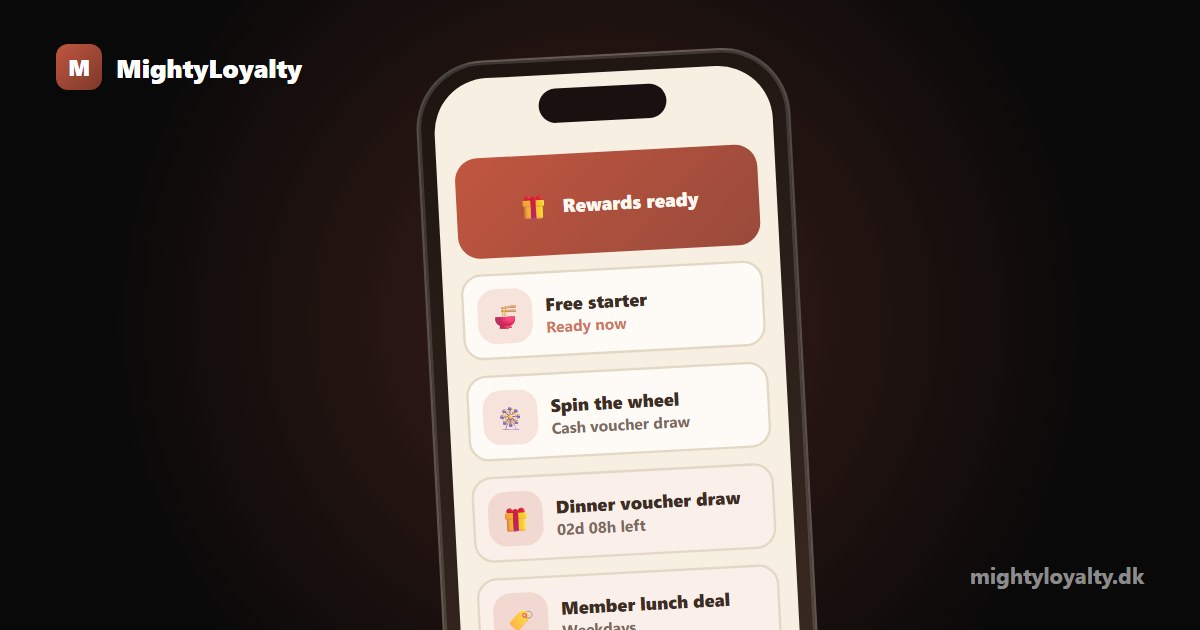
Free product. The most popular choice. You give the customer one product free, typically whatever they usually order: a coffee, a piece of bread, a dessert. It is simple to communicate and simple to redeem. The drawback is that the customer expects exactly the named item, not a substitute.
Discount on the next visit. Either a fixed amount off or a percentage of the bill. It is flexible and can encourage a slightly larger spend, since customers want to make good use of the discount. The downside is that customers can forget to use it, and a small discount can feel like a routine price reduction rather than a reward.
Upgrade or extra. The customer gets something added on top of what they already ordered: a larger size, an add-on, a free side, a glass of wine with their meal. This type works well because it does not ask the customer to choose anything new; it simply makes their usual order a little better. The challenge is communicating it precisely when you have a wide menu.
These three types are not mutually exclusive. Imagine a restaurant offering either a free dessert at eight stamps or a bottle of wine at twelve. Customers choose the goal that suits them, and both options draw them further into the program.
Match the reward to your type of business
The right reward also depends on what kind of business you run.
Café: A free drink after six to ten stamps is hard to beat. Visit frequency is high, customers know the product, and coffee has strong perceived value. If you want to stand out, offer the choice between a free drink or a slice of cake. Our guide to stamp cards for cafés covers stamp-count benchmarks in detail.
Restaurant: Dinner guests visit less frequently than morning-coffee regulars, so the stamp target needs to reflect that. A free starter or dessert works well because the cost to you is relatively low while the perceived value is high. Avoid offering a free main course: it is your most expensive item.
Hair salon and treatment studio: Visit frequency is low, but the spend per visit is high. Four to six stamps fits better than ten. A free add-on treatment or a discount on a service package makes a stronger reward than a free full appointment, which costs you a full hour of time.
Bakery and takeaway: High visit frequency and busy service calls for a simple, fast reward. A free item at your lowest price point is the obvious choice. Bear in mind that customers often have a favourite product: give them the option to choose it.
The stamp count and the reward go together
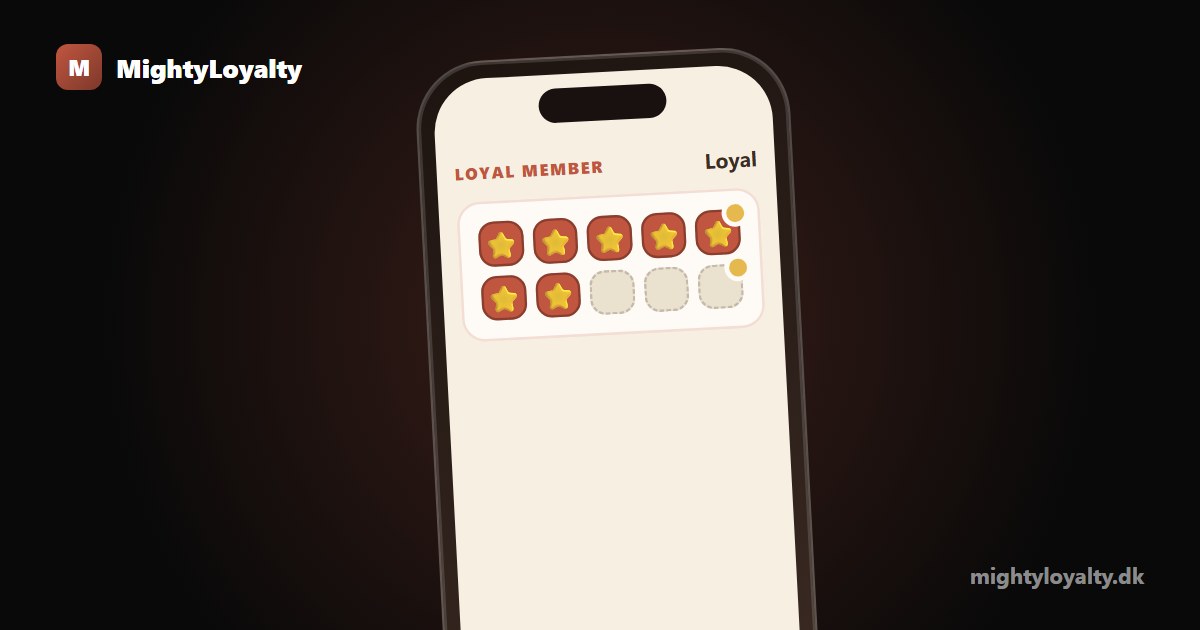
The reward and the stamp target are two halves of the same decision. A high-value reward needs a higher target; a small upgrade can work with a lower one. The balance matters: a target that is too low erodes your margin, while one that is too high causes customers to lose confidence that the reward is achievable.
A practical benchmark: the stamp target should equal roughly two to three months of normal visits for your average customer. If a customer comes twice a week, a target of eight to twelve stamps is reasonable. If they come once a month, four to six stamps is the right range.
Start lower than you think you need to. Customers who reach the reward give you two things: proof that the program works, and a moment to invite them to start a new series. You can always raise the target later, but lowering it after the fact is harder without disappointing customers who are already partway through.
For a step-by-step walkthrough of the full setup, including stamp targets and reward copy, see our guide to creating a stamp card program.
The most common mistakes
A reward that is too complicated. If the reward description takes three sentences to explain, it is too complicated. Customers remember rewards as a single image, not as a list of conditions.
A reward with too little perceived value. A very small discount on a café bill motivates almost no one. Remember the rule: the customer has to look forward to the reward, not just note it.
A stamp target that is unrealistically high. Many businesses set the target too high because they are calculating what they can afford rather than what will actually keep the customer engaged. A program that nobody completes does not help, even if it is cheap to run.
A reward that creates awkward redemption timing. A free lunch main in a busy lunchtime service can attract redemptions precisely when you are at full capacity. If you want to limit redemptions to certain times of day, communicate that clearly from the start.
Check the numbers
After three to four weeks, your dashboard will tell you whether the reward is pulling its weight. Redemption rate is the key signal: if it is very low, the stamp target is probably too high or the reward is not attractive enough. If it is very high, the target may be too low.
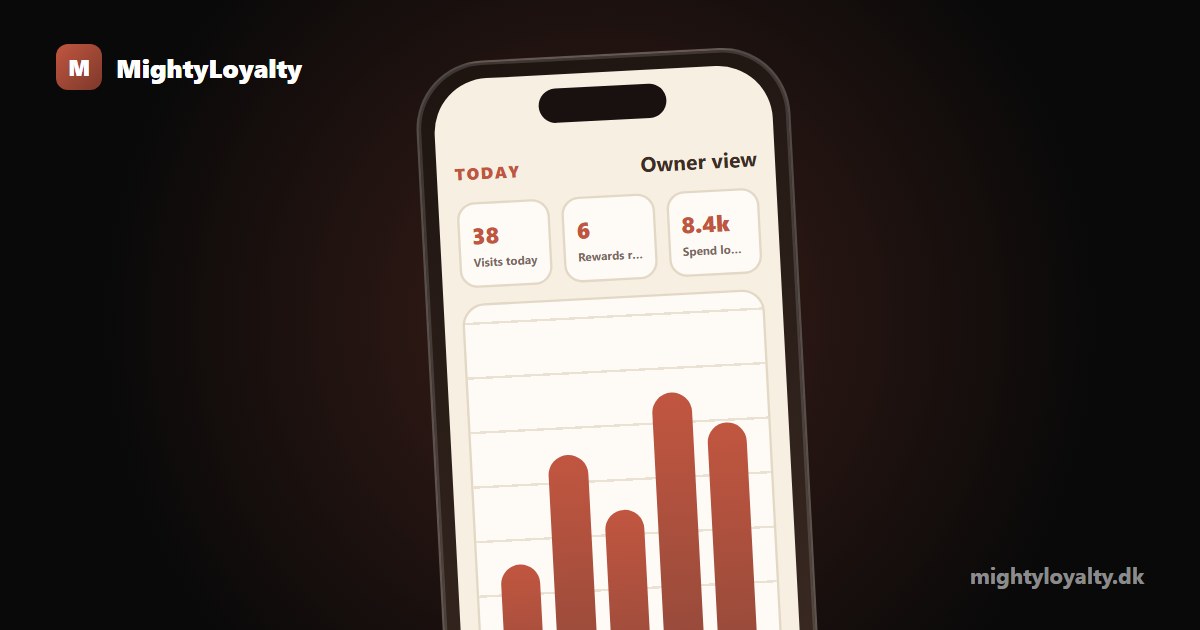
The two numbers to watch are sign-up rate and redemption rate. Use them actively to fine-tune the reward and stamp count over time, so the program keeps its momentum. Pair those numbers with consistent staff engagement, and you have the foundation for a program that grows rather than quietly fading. For broader tactics on turning first-time visitors into regulars, see our guide to getting more regular customers. To see what the complete stamp card looks like from the customer's side before you finalize your reward, visit the stamp card app page.
Frequently asked questions
What is the most popular reward in cafés and restaurants?
Free product is the most common choice. A free coffee, a free dessert, or a free piece of bread is easy for everyone to understand, and the perceived value is high relative to the cost. Many businesses that start with a more complex reward simplify it after the first few weeks, because simplicity is what works in practice.
Can I offer more than one reward on the same stamp card?
Yes. You can set a primary target and a secondary milestone, for example a small bonus at the fifth stamp and the main reward at the tenth. This is particularly effective for keeping customers engaged in the early phase when the program is new and the habit has not yet formed. Make sure both rewards are simple enough to explain in a single sentence.
What if my reward does not seem to motivate customers?
The first step is to check the stamp target. A target that is too high can undermine even a good reward, because customers lose confidence that it is reachable. The second step is to ask a few regulars directly: what would they appreciate? That takes two minutes and gives you better insight than any statistic. From there, you can adjust the target, the reward description, or the reward type itself. MightyLoyalty has no setup fee and no binding period, and you cancel in the portal, so you are free to keep refining the reward until it lands.