A QR poster for your stamp card is cheap to print and easy to swap out. What determines whether customers scan it is where you put it. This guide gives you specific guidance on which spots work and which are wasted space.
Placement beats design: here is why
Most business owners spend time making the QR poster look good. That is fine, but design is the wrong thing to start with. A well-designed poster hanging where nobody looks gets fewer sign-ups than a plain one positioned exactly where a customer's attention is.
Timing is everything. Customers scan a QR code when they have time, inclination, and their phone in hand. Those three things rarely align, except at specific moments during a visit. Those are the moments your placement needs to catch.
Imagine a coffee shop that puts a QR poster in the outside window. It is visible from the street, but the person walking by is heading somewhere else and does not have their hands free. Five seconds later, the poster is forgotten. The same design on the table while the customer waits for their drink has a completely different effect.
The counter and checkout: your best spot
The checkout counter is the most effective position for a QR poster. The customer is paying, already in conversation with staff, and the phone is likely already out for card payment. The visit has just ended well, and trust is at its peak.
Position the QR poster so it is visible from the customer side of the counter. The customer should not have to lean forward to find it. A small upright display often works better than a flat A4 sheet that gets covered by bags or receipts.
One good poster at the checkout beats three scattered around the room. Staff can naturally gesture toward it, giving a physical anchor to the line: "Scan this and you are in."
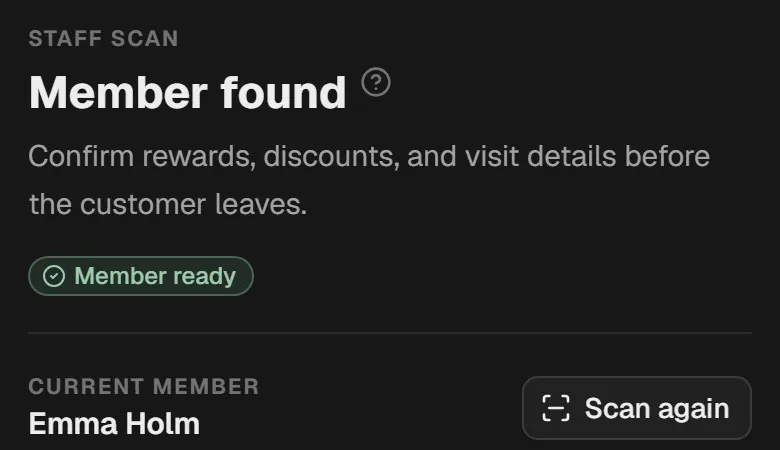
Staff are the most important element in the checkout flow. A poster alone cannot break the silence. Staff need a consistent line: "Do you have our stamp card?" Those five words take two seconds to say and can do more for your sign-up rate than almost anything else. See the full setup walkthrough in How to launch a stamp card program in a day.
The table: customers with time and phones out
The second-best spot is wherever the customer actively waits. In a coffee shop, that is the table. In a restaurant, it is the waiting area or the table while the menu is being read. In a hair salon, it is the mirror station while the hair is being treated.
Here the customer has their hands free and is not in a hurry. The phone is often out. Attention is looking for something. A QR poster on the table or as a small table tent is ideal for this moment.
For tables, a small table tent or a laminated A5 card works better than a large poster. Something that looks at home on the table without crowding the service area. A card with the QR code on the front and a short description of the reward on the back is a clean solution that starts the conversation naturally.
Avoid cluttering the table if you already have menus, table numbers, and other items. In that case, keep your table tent small and direct so it does not get lost among everything else on the surface.
The exit: the last moment of contact
The exit is the third position that makes sense. The customer is on their way out, the visit just ended, and there is a brief window while they put their jacket on or wait for the rest of their group.
That window closes fast. An exit poster needs to be at eye level with a short, clear message: "Scan and earn your reward next time." Two lines maximum. The customer is not in the mood to read.
The exit works best as a backup to the checkout position. It catches customers who passed the counter without scanning and who now have a second to act.
The position that usually disappoints: the window
Many businesses put a QR poster in the window because it feels logical as outward-facing promotion. It rarely works well for QR codes. The person outside is heading somewhere, does not have their phone ready to scan, and the light often reflects off the glass so the code cannot be read anyway.
A window QR poster can serve as a reminder for existing customers on their way in. It should never replace the spots inside. Think of the window as a secondary position rather than a sign-up tool for new visitors.
How many placements is enough?
One or two good placements beats six mediocre ones. When QR codes appear everywhere, they start to feel like visual noise and customers filter them out mentally.
Start with the counter. Add a table tent if you have a sit-down format. Add an exit position if the logistics allow. That is all most businesses need to start.
Make sure all posters look the same. Mixing different designs makes the program look unfinished and undermines trust. A digital stamp card is a professional service, and it should look that way from the first glance.
What does the customer scan into?
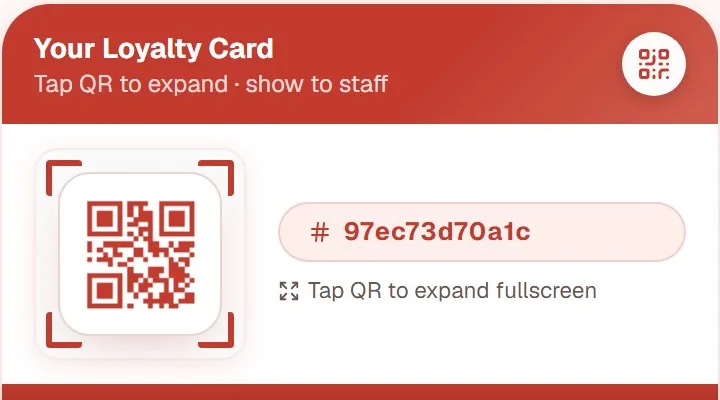
The QR code is a door. Behind it is your sign-up page, and the customer needs to understand in half a second what happens when they scan. The text on the poster must promise exactly what the sign-up page delivers.
Avoid poster text like "Join our community" or just "Loyalty program." Use instead: "Scan to earn a free coffee." Specific, no app download, the page opens directly in their browser.
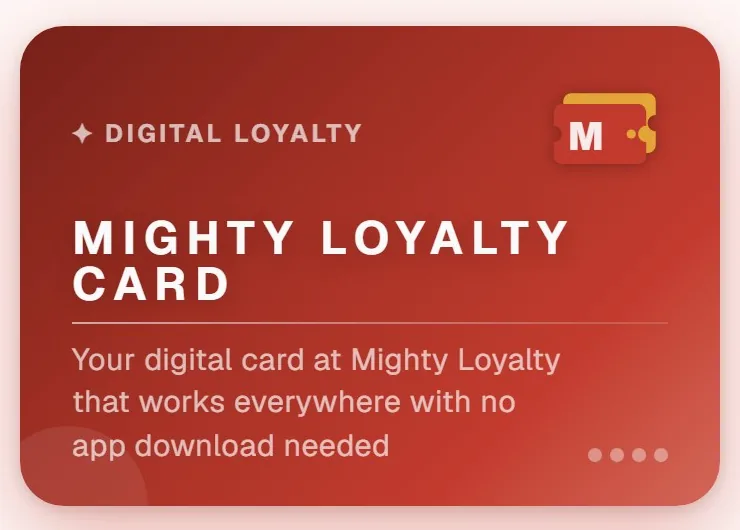
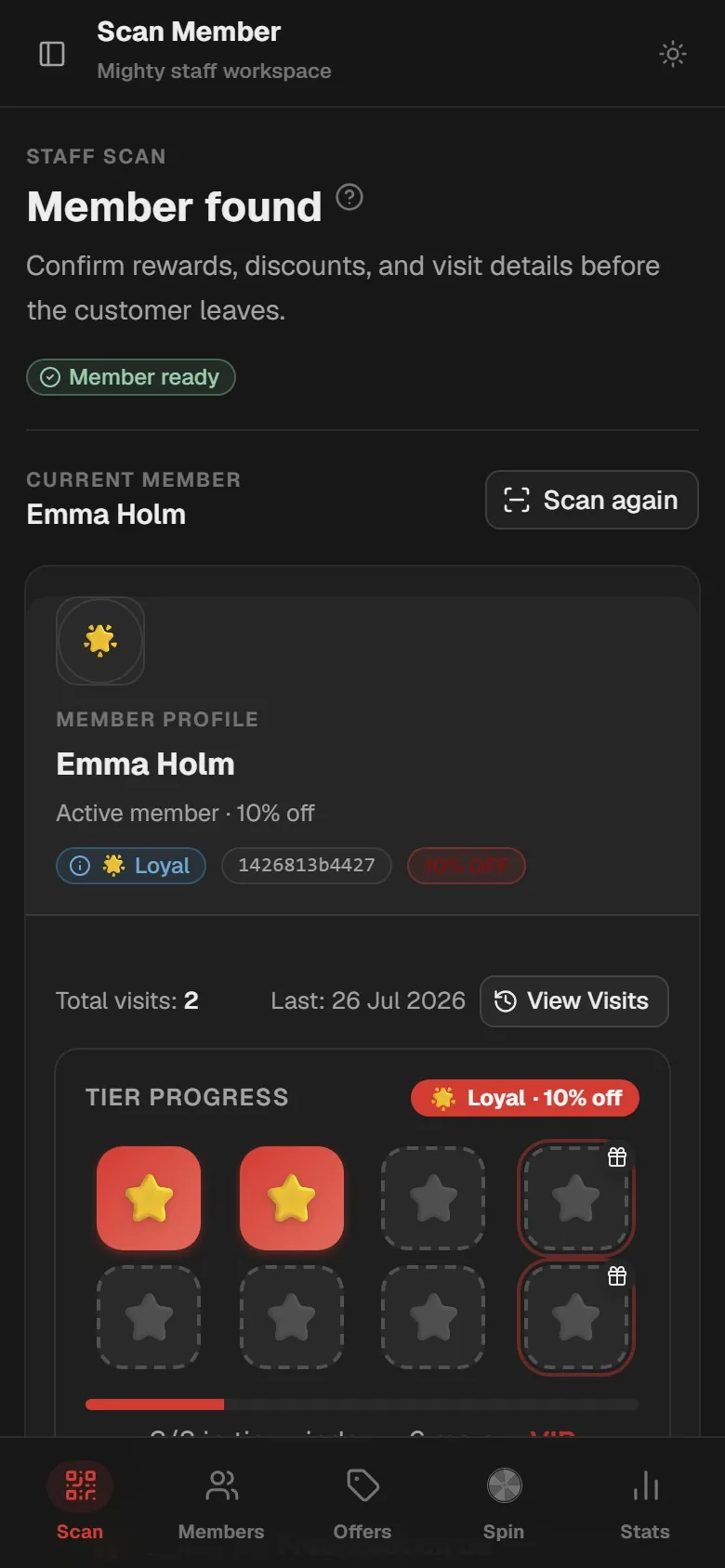
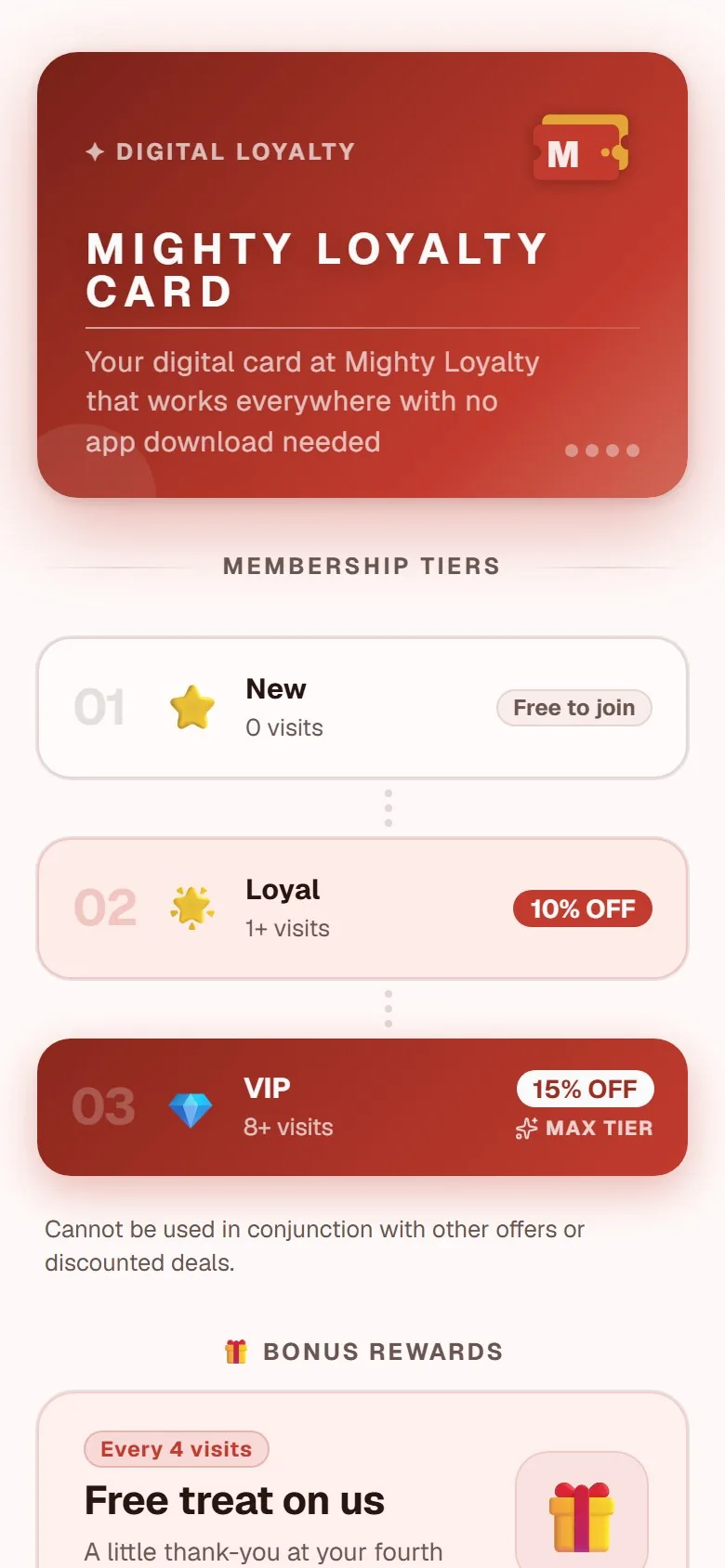
Many customers hesitate at QR codes because they are not sure whether they need to download something. A short note below the code: "No app download. Opens in your browser." removes that hesitation and lowers the barrier. You can see the full customer experience live at loyalty.maiya.dk.
For an overview of what to look for in a solution before you print your first poster, read our guide to stamp card apps. To see exactly what customers experience when they scan your poster and create their card, visit the stamp card app page. To combine the poster with other methods for getting sign-ups, you will find practical tactics in Get more regulars.
Frequently asked questions
Can I have the QR poster on the table and at the checkout at the same time?
Yes, and it is recommended. The two spots catch customers at different moments: the table during the visit, the checkout at the end. Both QR codes can point to the same sign-up page. The key is that the customer sees the program more than once and has multiple chances to act.
What do I do if staff keep forgetting to mention the poster?
This is the most common problem. The best fix is to make it part of the checkout flow rather than a mental reminder. Put a small note next to the register screen: "Asked about stamp card?" That builds a habit rather than relying on intention. In the first couple of weeks, stand by the counter during a busy hour and watch when staff remember and when they do not.
Does the QR code need to be at eye level?
On walls and doors, the QR code should be at eye level, roughly 150 to 170 cm from the floor. A code at 120 cm requires the customer to bend down, and that friction costs scans. The checkout is the exception: customers naturally lean toward the counter during payment, and a flat poster or small display works fine there.