Bakeries have a natural head start with loyalty programs: the morning regular who picks up a roll and a coffee on the way to work already visits you far more often than the typical restaurant guest. A digital stamp card for your bakery gives that customer one concrete reason to choose you over the competitor two streets away. Here is what actually works.
The bakery's daily rhythm
Bakeries differ from most businesses that use loyalty programs: they already have what cafés and restaurants work hard to achieve. Morning customers are creatures of habit. They show up at roughly the same time, order roughly the same thing, and rarely go looking for an alternative.
The challenge is not to create the behaviour from scratch. The challenge is to formalise it. A regular morning routine at your bakery means the customer is already happy with you. A stamp card makes that satisfaction visible and gives the customer one extra reason to stick with you, even when a new competitor opens nearby.
The same core principles apply to cafés. The guide to stamp cards for cafés covers the mechanics in detail; the main difference is that bakeries typically have an even more consistent daily rhythm to build on.
Getting the stamp target right
Picture a morning regular who picks up fresh bread and a coffee three times a week. That customer collects ten stamps in under four weeks if the target is set there. That is fast enough for the program to feel progressive and motivating from day one.
Set the target too low, say five stamps, and the morning guest redeems their reward in under two weeks. It makes a nice first impression, but it does not build the habitual behaviour you want to reinforce. Set it too high, fifteen to twenty stamps, and the customer who only comes twice a week loses faith that they will ever get there.
A practical rule of thumb for bakeries: set the stamp target so that a two to three times per week customer can reach the reward within four to six weeks. For most bakeries that means eight to twelve stamps.
For a deeper look at how to balance reward value and stamp targets, the guide to choosing the right reward for your stamp card gives a solid framework.
Rewards that fit a bakery
A good reward at a bakery should feel like a thank-you gesture to a regular, not a discount on goods. The morning customer who has collected ten stamps is already your best customer. The reward confirms that you know it.
Free coffee is the strongest option if you serve coffee alongside your baked goods. A free morning cup for a regular who has hit ten stamps is low in actual cost and high in perceived value. It can be handed over naturally at the counter: "You have hit ten stamps. The coffee is on us."
Free baked goods is the obvious alternative if coffee is not part of your offer, or if you would rather reward with what your bakery does best. A free croissant, a bread roll, or a Danish pastry is concrete and immediately understandable from the very first interaction.
A seasonal reward can keep the program feeling alive across the year. A free cold drink in summer or something special in December signals that you keep the program active and in step with what is happening in your shop.
Avoid percentage discounts and complicated conditions. Morning customers are usually in a hurry. The shorter and more concrete the reward, the easier it is for staff to mention it and the more convincing it is for the customer.
The QR code at the bakery counter
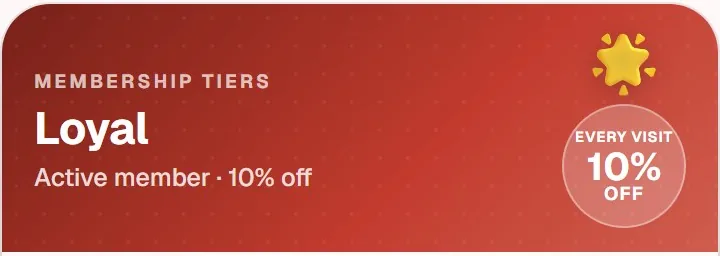
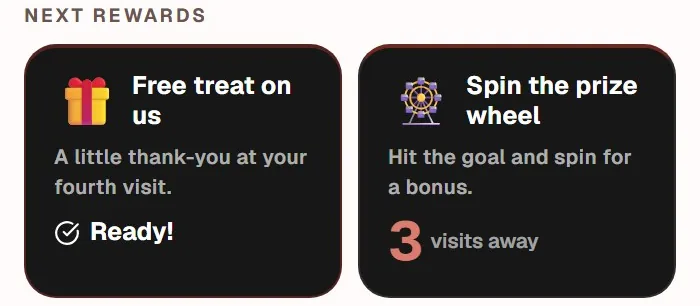
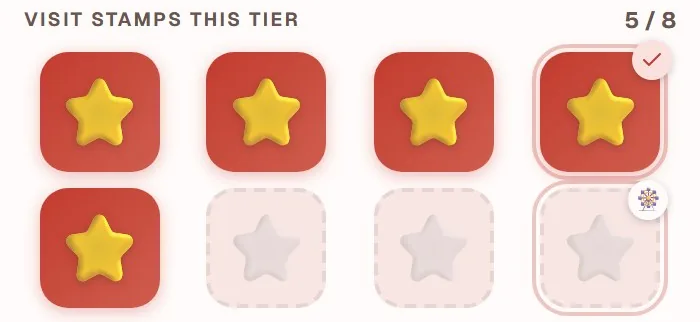
The morning rush at a bakery demands a frictionless sign-up process. A QR code placed visibly at the till lets the customer scan while they wait. No app download, no form-filling: the customer's phone opens the sign-up screen directly in the browser, and they are enrolled in under a minute. What the customer sees from QR scan to first stamp is shown step by step on our stamp card page.
Placement matters. A stand-up card at the payment terminal is the starting point. A small sign on the counter near the pastry display, a sticker by the entrance, or a stand next to the takeaway window all give customers a chance to scan while waiting to be served. The earlier in the visit the customer sees the code, the greater the chance of sign-up. For a thorough look at which placements generate the most scans, the guide to QR poster placement is a good starting point.
Staff are the deciding factor in the morning
A stamp card that nobody mentions will be used by almost nobody. In a bakery, the staff at the counter have direct contact with morning customers, many of whom they recognise by face.
Train staff to mention the program at payment with a simple line: "Do you have our digital stamp card?" is enough. When a customer signs up, give them their first stamp on the spot. A card with one stamp on it is far more motivating than a blank card, because the customer can already see their progress.
It does not take long to build a good routine, but it does require everyone at the counter to know what to say. The guide to getting staff on board with your loyalty program includes a practical checklist for a short morning briefing.
From morning ritual to a base of regulars
Picture a bakery that opens at six in the morning and sees 80 to 100 customers during the morning hours. If even a fraction of those sign up over the first two months, a foundation of active cardholders builds up, all tracking their progress towards a reward.
Customers who are halfway to the target are significantly more likely to choose your bakery next time the morning ritual comes around. Not because they consciously think about it, but because your shop is the place that has something concrete to return to. When a new bakery opens nearby, that pull is a far stronger retention factor than a good Google review.
The Standard plan at 99 DKK/month gives unlimited stamps and a dashboard for tracking visit activity. The Pro plan at 249 DKK/month adds email marketing and automations for special occasions. There is no binding period and no setup fee, and you cancel in the portal. Current plans and pricing are on the pricing page.
Frequently asked questions
What is the right stamp target for a bakery?
It depends on your typical customer's visit frequency. A customer who picks up breakfast two to three times a week is well served by a target of eight to twelve stamps: they reach it within four to six weeks, which gives enough visible progress to keep motivation up. A customer who only comes once a week needs a lower target, four to six stamps, so they do not lose faith in ever reaching the reward.
Does a digital stamp card work in a small bakery with just one counter?
Yes. A single digital stamp card works well with one member of staff and one device for stamping. Staff use a web browser on a phone or tablet to scan the customer's QR code, and the customer sees their progress on their own phone. The setup requires no specialist hardware, no app installation, and no technical integration with the till system.
Can the stamp card be used for both bread and coffee in a combined bakery and café?
Yes. The stamp card is independent of what the customer buys. They earn a stamp per visit regardless of whether they grab a coffee only, pick up bread to take home, or sit down for a full breakfast. You decide whether each visit earns one stamp or whether certain purchases earn extra. The important thing is that the rules are simple enough for staff to explain in ten seconds.