The paper stamp card has survived for decades for a reason: it is cheap, everyone understands it, and it works without electricity. So why are more and more cafés, restaurants, and salons switching to a digital stamp card? Here is the honest comparison, round by round.
Round 1: Signup
Paper: You hand the card across the counter. Quick, but the card disappears into a bag and is usually forgotten. Plenty of guests politely accept one and never look at it again.
Digital: The guest scans a QR code and the card lives on their phone. The phone is always with them, so the card is too. The catch: the scan has to be easy. If the poster is hidden away, nothing happens.
The winner depends on your QR placement. With a visible poster at the till, digital wins clearly, because the card can never get lost. Our guide to QR poster placement covers the positions that actually catch guests' attention before they walk out.
Round 2: Repeat visits
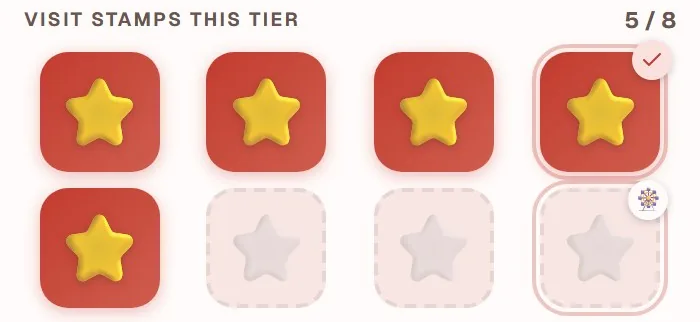
This is where the gap really shows. A paper card only reminds the guest about you when they happen to see it. A digital card can show progress ("2 stamps to your free coffee") and can be combined with offers that give guests a concrete reason to come back on a quiet Tuesday.
The psychology is different too. When a guest can SEE how close they are to the reward, motivation to finish increases. It is called the goal-gradient effect: the closer to the goal, the harder people chase it.
Round 3: Fraud and leakage
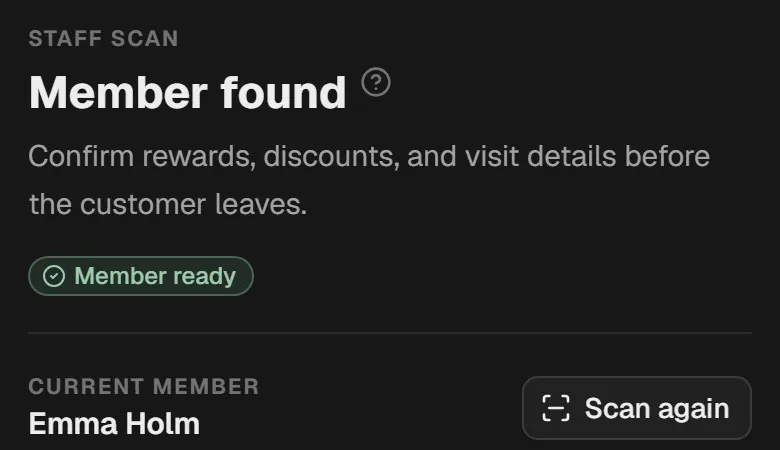
Paper cards can be stamped at home with a pen or a store-bought stamp. Most owners never find out, but it quietly drains the program. A digital stamp is issued by staff in a scan screen, so every stamp is tied to a real visit. That keeps rewards credible, including for you when you tally the cost.
Round 4: Data and overview
Paper: You genuinely know nothing. How many cards are in circulation? How many are full? Are people coming more often? It is guesswork.
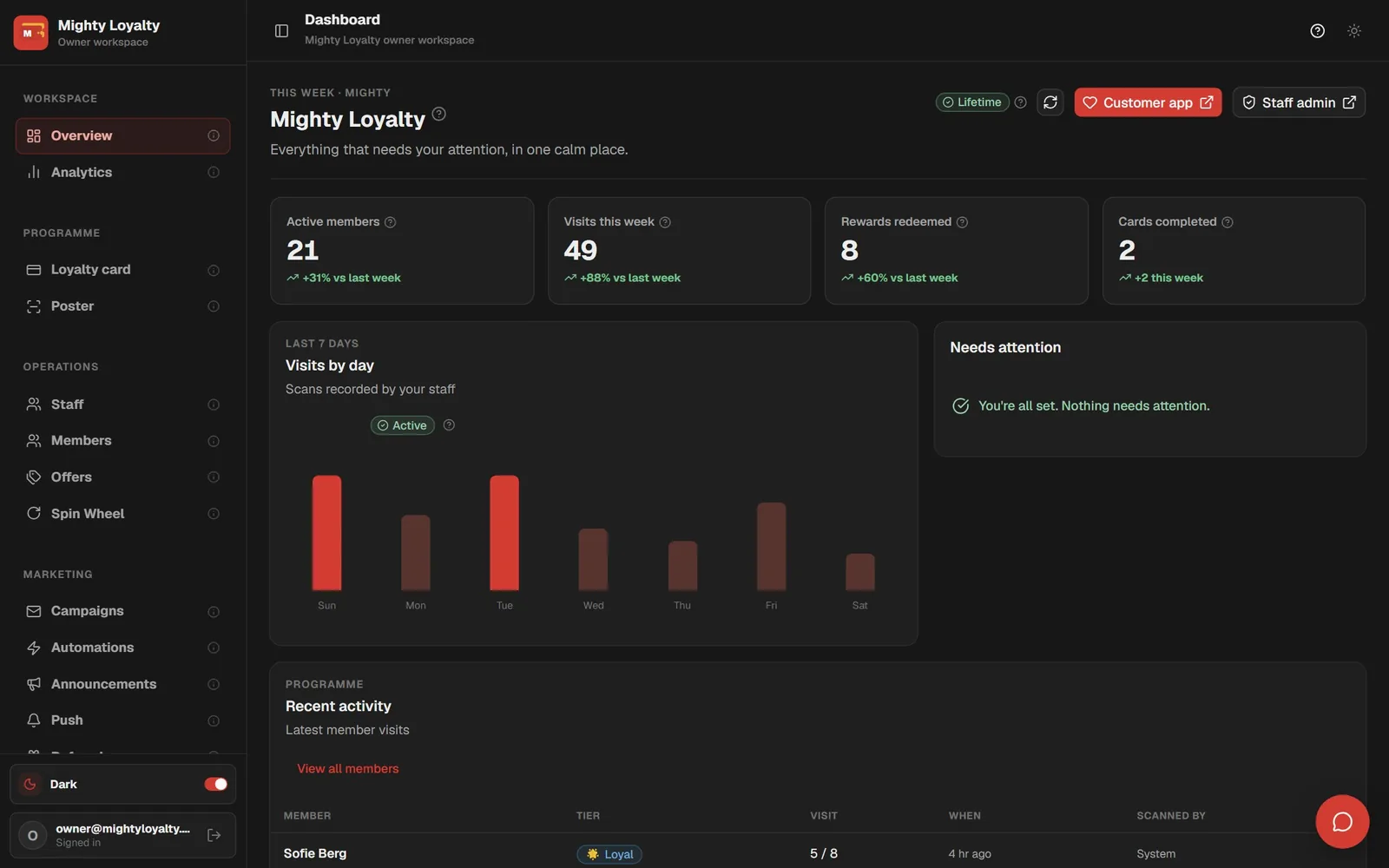
Digital: You can see member counts, visits per week, and which rewards get redeemed. It sounds nerdy, but it is the difference between tuning your program on gut feeling and tuning it on facts. If the reward is too cheap, you will see it. If visits dip, you will catch it early.
And most importantly: you know who your regulars actually are. Imagine having a list of the guests who visit most often, with their visit history and email address. With a paper card, that list is empty. With a digital program, it is there, and you can use it to reach guests who have drifted away.
Round 5: Price
Paper cards cost almost nothing to print, and that is their strongest argument. A digital program is a subscription; with MightyLoyalty from 99 DKK per month, with no cap on stamps or members. The math comes down to whether the extra repeat visits cover the subscription. For most businesses, a handful of extra visits per month is enough for digital to win on the bottom line.
If you are unsure what to look for in a digital solution, start with our guide to stamp card apps, or see how our own digital stamp card works at the counter.
Round 6: The staff experience
Paper: No training required. Staff stamp with the stamp that has always sat at the counter. Simple and error-free.
Digital: A scan takes two staff actions: open the scan screen, hold it against the guest's QR code. In practice that is about three seconds and takes five minutes to learn. Our guide to training staff on a loyalty program covers exactly what to tell the team on day one.
The critical factor is consistency. A digital system bypassed during the lunch rush produces no useful data. A visible QR code and a fixed scanning routine are the best guarantee that the program actually works for you.
The verdict
Choose paper if you want zero fixed costs and can live with never knowing for certain whether the program is actually working. It can make sense in the first few weeks while you test whether your guests will engage with a loyalty program at all.
Choose a digital stamp card if you want cards that never get lost, stamps that cannot be faked, and numbers that tell you whether regulars actually come back more often. You can see what that looks like in production in our Maiya Nepali Kitchen case study.
Frequently asked questions
Can I run paper and digital at the same time?
Yes, many businesses run both during a transition period. Let paper-card guests carry over their stamps so nobody loses earned progress, and follow the changeover plan for switching from paper punch cards to digital so your staff know what to say at the counter while both systems are live. That reduces friction and gives the new routine time to become second nature before you retire the paper option.
Do guests need to download an app?
No, not with a web-app based solution. They scan a QR code and the card lives in the browser. That removes the biggest barrier of older loyalty apps.
What happens if a guest changes phones?
The card is tied to the guest's login, not the physical phone. They simply sign in on the new phone and their stamps and rewards follow along.