Every regular customer you have is a person who chose to come back when they could have gone somewhere else. A loyalty club is how you make that choice easier next time. The decision is not whether to have one, but what format it should take.
There are three realistic options: a physical stamp card, a downloaded native app, and a web app that works like an app but requires no installation. All three can work. None of them is right for everyone.
Physical stamp cards: simple but limited
The paper stamp card is the format most people already know. The customer gets a card, you stamp it, and after ten visits they get a free coffee or a discount.
The advantages are obvious. No technology is required, setup time is zero, and almost every customer understands how it works immediately. There is no sign-up barrier because there is no sign-up.
But the limitations are real.
Cards get lost. When a customer loses their card, they also lose their accumulated loyalty. You cannot do anything about it because there is no record behind the card.
You cannot communicate with your regulars. The paper card gives you no contact details and no way to send a message about a promotion, a menu change, or updated opening hours.
You do not know who your regulars are. You can count the cards, but you have no names, visit frequencies, or patterns to work from. Planning becomes guesswork.
Fraud prevention is also minimal. A stamp card can be stamped once and handed to someone else. It rarely matters much day to day, but it does happen.
Downloaded apps: full features, but fewer sign-ups
A native loyalty app gives you everything the paper card lacks: customer profiles, push notifications, detailed analytics, and direct communication with your regulars. For a chain with multiple locations and an established brand, a native app is worth considering.
The problem is the sign-up rate. The download requirement creates friction that many customers skip. A guest who enjoyed their visit will often not open the App Store, search for your app, download it, and create an account. That is too many steps, and most customers drop off somewhere in the middle.
For a single venue, the problem is compounded. A phone screen is already full of apps, and one from a single cafe or pizzeria is hard to justify. It slips out of attention quickly and is rarely used.
Downloaded apps are typically relevant for chains with strong existing brands and app infrastructure that want loyalty integrated into a broader platform with many features.
Web apps: low friction and full digital features
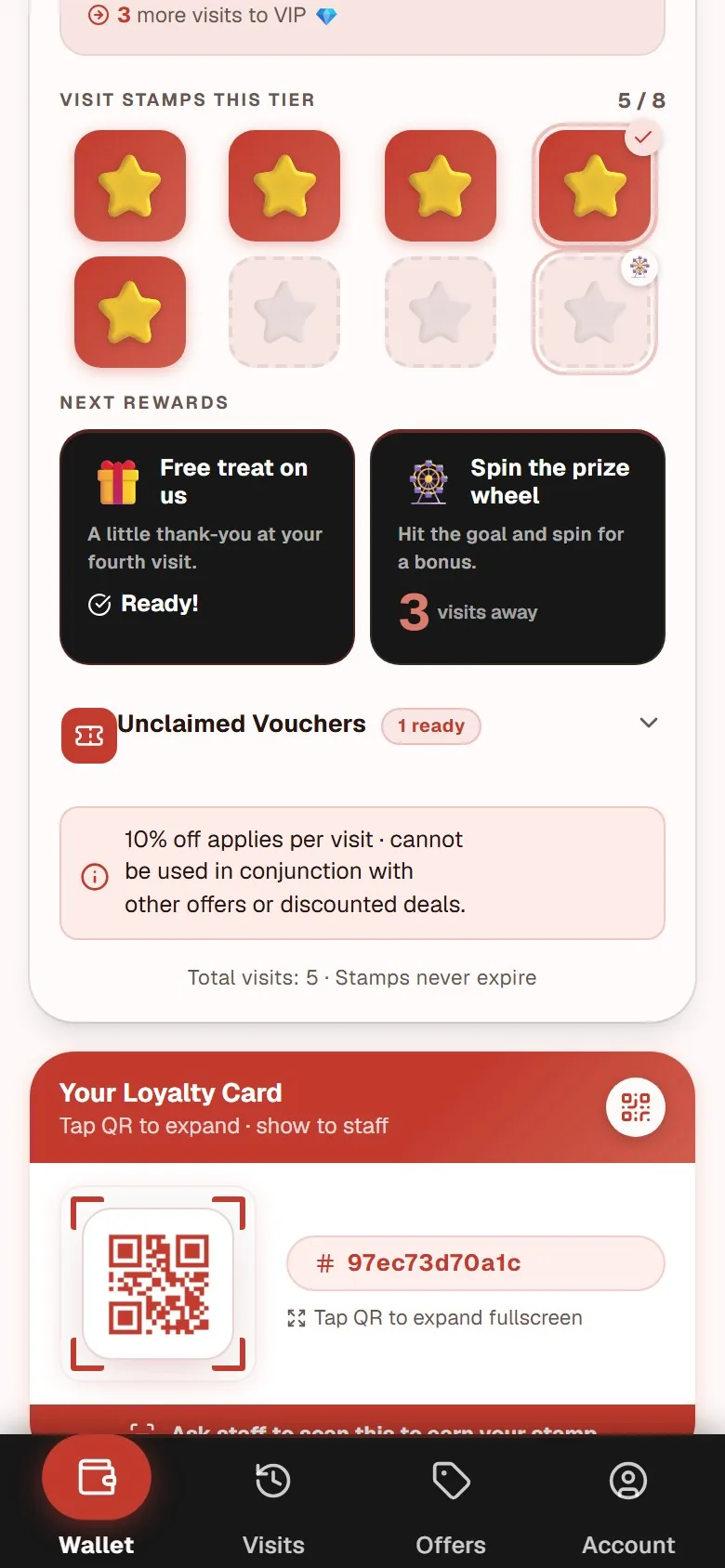
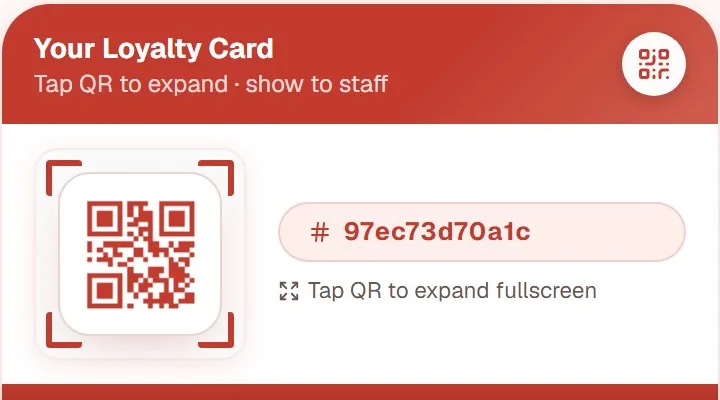
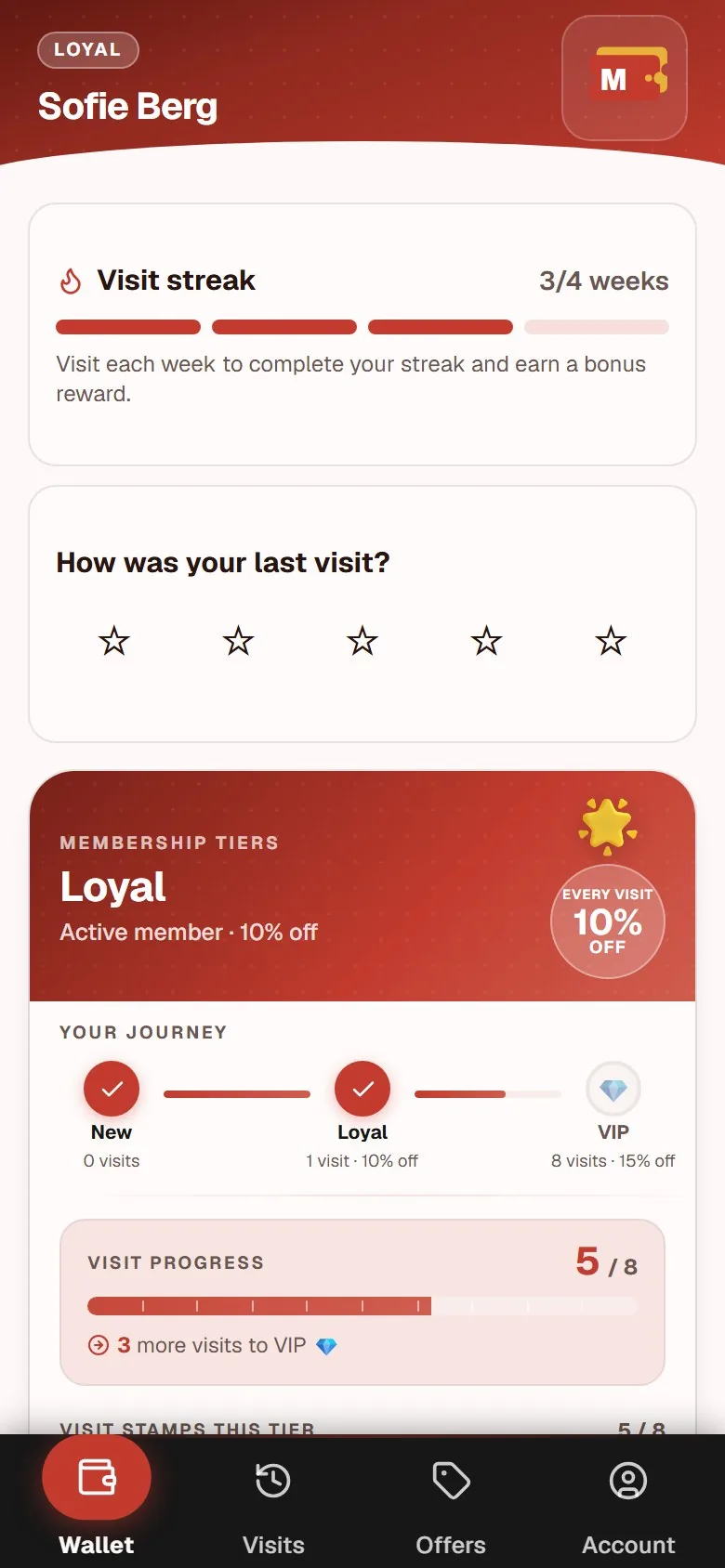
A web app (also called a PWA, progressive web app) looks and behaves like an app but lives in the browser. The customer scans a QR code at the counter, signs up with their email address, and the loyalty program is active. No download, no App Store, no extra steps beyond the first visit.
That removes the main friction point of the downloaded app. Our head-to-head on building your own app or using a web app goes further into what the download requirement actually costs you in sign-ups.
You keep the advantages from both worlds:
Low sign-up friction. The customer scans, fills in two fields, and is enrolled. Most guests complete it at the table in under thirty seconds.
Customer data. Unlike the paper card, you know who your regulars are, when they last visited, and what they have earned.
No app maintenance. You update a web-based system. The customer updates nothing.
Communication and offers. You can send promotions directly to active members and track whether they drive visits.
The downside is that a web app is slightly harder to pin to a home screen than a native app. Most smartphones support it through the browser menu, but it does not happen automatically. For most single venues, it is still the easiest path to getting started quickly.
If you want a focused comparison of the browser approach against Apple Wallet-based loyalty specifically, Apple Wallet loyalty card: browser vs Wallet explained covers that directly.
Comparison: which format fits which situation?
No format is universally best. Here is a summary of the three:
| Physical card | Downloaded app | Web app | |
|---|---|---|---|
| Sign-up barrier | None | High | Low |
| Customer data | None | Full | Full |
| Customer communication | None | Push notifications | Email/offers |
| Cost to start | Low | High | Low to medium |
| Fraud protection | None | Yes | Yes |
| Technical setup | No | Yes | Minimal |
A physical card works well if you want to test the idea before committing to any technology. Keep in mind that you cannot automatically transfer stamps from paper cards to a digital system. Customers would need to re-enroll and start from scratch, unless you manually credit their earned stamps.
A web app works for most single venues: restaurants, cafes, salons, bakeries, clinics. Low sign-up friction, fast setup, and access to the data you need to understand your customers. Read our guide on what a customer loyalty program looks like in practice before you decide.
A downloaded app works for chains with strong brands and existing infrastructure that want loyalty integrated into a broader platform.
What do the three formats cost?
A physical stamp card costs almost nothing: printing and a stamp. That is the lowest possible starting cost, but scalability and data are absent.
A dedicated native app typically requires a significant development budget or a costly enterprise-platform subscription. It is rarely relevant for single venues.
A web-based loyalty club costs 99 DKK a month for Standard, about 13 EUR, or 249 DKK a month for Pro, about 33 EUR, per location. There is no binding period and no setup fee, and you cancel in the portal. Both plans include unlimited members and unlimited stamping, so the price does not climb as the club grows. See our stamp card app pricing guide for a detailed breakdown of what each tier includes.
The decision you are actually making
The most important question is not which format is most sophisticated, but which format your customers will actually use.
A physical card gives you no data. You cannot tell whether the program is working, who your best customers are, or when you are losing them. You also cannot contact them.
A digital loyalty club gives you something to work with: a list of customers who chose to sign up, and a channel to reach them. Whether you use it for promotions, reminders, or something else is up to you.
A loyalty club is not a technology project. It is a business decision: do you want to know who your best customers are?
If you want to see the web app version working before you commit to anything, our stamp card app page shows the customer side and the staff side together.
Frequently asked questions
Can I start with physical cards and move to digital later?
Yes, but you cannot automatically transfer stamps from paper cards to a digital system. You can invite customers to sign up for the new system and start fresh. A good transition approach is to offer a starter bonus of two or three stamps to anyone who switches, so they do not feel they are losing what they already earned.
Can customers use the web app without a smartphone?
No. The web app requires a smartphone to scan the QR code and display the digital stamp card. Customers without a smartphone would need a paper card or manual check-in at the counter. In practice this is rarely a problem: most guests at restaurants, cafes, and salons carry a smartphone.
What is the difference between a loyalty club and a loyalty program?
No formal difference. A loyalty club is one way to describe a loyalty program, typically emphasizing the membership aspect and the sense of belonging. Both terms cover the idea of rewarding customers who return repeatedly. The format, whether stamps, points, or tiers, is a separate choice.