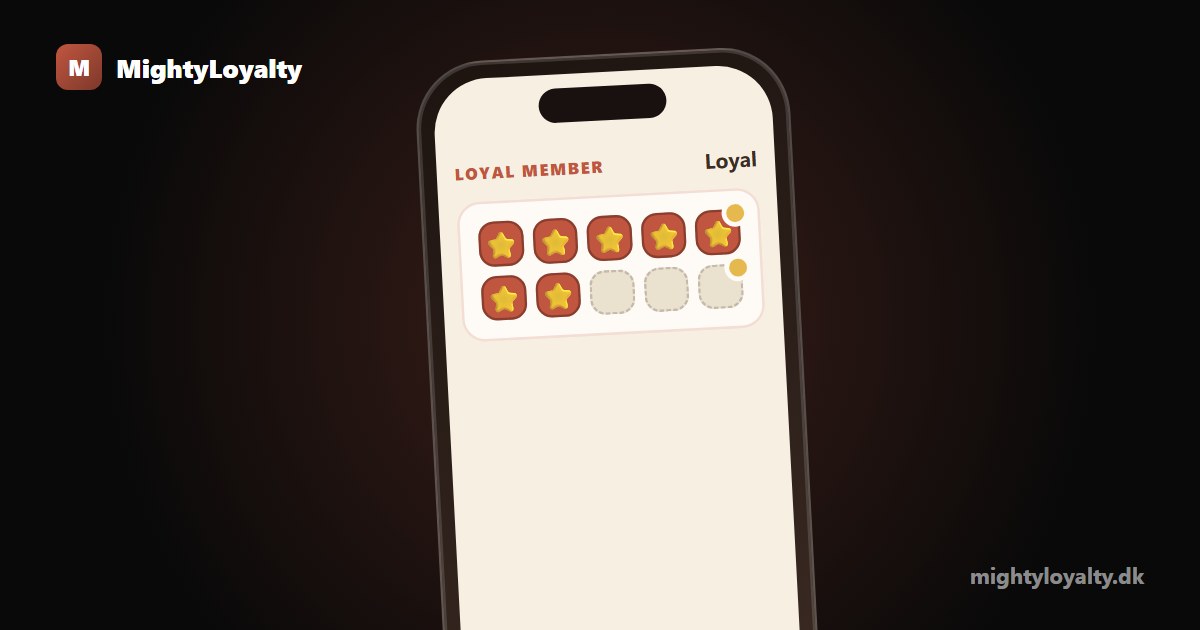
A loyalty card app is the digital replacement for the paper stamp card your customers keep losing. Choosing the right one can feel daunting when there are many options, but most small businesses need the same thing: simple for the guest, simple for staff, and priced in a way that makes sense.
What is a loyalty card app?
A loyalty card app stores a customer's stamp card on their phone instead of in their wallet. The customer signs up once, usually by scanning a QR code at the counter. After that, staff log visits digitally, and the customer can see their stamps and rewards directly on their phone.
The digital version solves two problems that were always built into paper cards: the card gets lost, and there is no address to use when you want to tell a customer about a good offer.
With a loyalty card app, you can:
- See who your active customers are and when they last visited
- Deliver rewards at exactly the right moment
- Prevent double-stamping and fraud, because every scan is recorded and time-stamped
- Adjust your rewards over time without printing new cards
If you want a broad view of what the market offers, our overview of loyalty solutions walks through the main approaches and their trade-offs.
What to look for in a loyalty card app
Not every loyalty card app is built for the same audience. A solution designed for large chains is rarely the right fit for a café with a single location. Here are the criteria that matter most for a small business:
Simple sign-up for the guest: The customer should be able to join by scanning a QR code and confirming their email. The fewer steps, the higher the sign-up rate. If the process requires downloading an app first, you will lose a significant share of potential sign-ups at the counter, because customers in the queue do not have time.
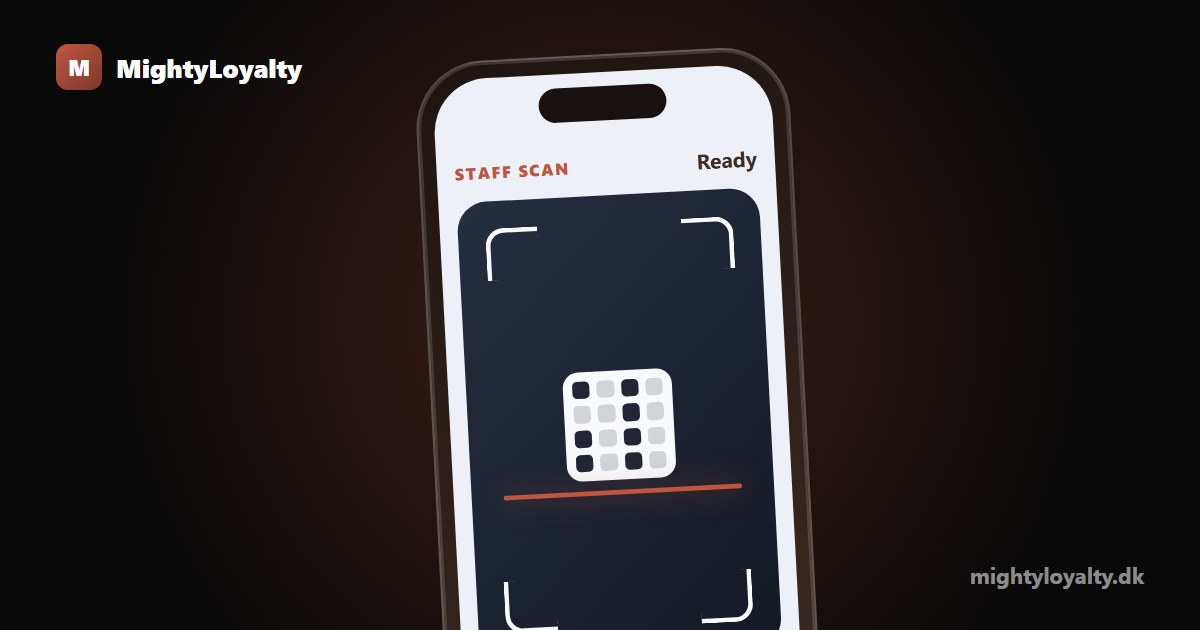
Fast and reliable staff scanning: Staff scan the guest's code and the stamp is logged. This should take under five seconds. A scan that requires logging in, searching, or manual input slows the queue and frustrates your team.
Real-time visibility: A basic dashboard showing active members, visits today, and rewards redeemed gives you a starting point for judging whether the program is working.
Flexible reward rules: Rewards should be straightforward to adjust as you learn what your guests respond to. A free coffee, a free main, a spin of the prize wheel: your options should not require technical support to change.
Transparent pricing: Avoid solutions with large setup fees or opaque per-scan or per-active-user charges. What you pay each month should be clear and should not rise unexpectedly with traffic volume.
Native app or web app?
The biggest practical choice you make is whether to use a native app (one guests download from the App Store or Google Play) or a web app that opens directly in the mobile browser.
Native apps offer a polished experience but require the guest to download the app before they can sign up. In practice, this extra step filters out a meaningful share of potential sign-ups. When a customer is in the queue and wants to join on the spot, the likelihood of them abandoning the process is high if they have to navigate to the App Store first.
Web apps and PWAs (Progressive Web Apps) behave like apps but open in the browser. The guest scans the QR code at the counter and is signed up within a minute, with no download and no account in an app store. They work on every smartphone regardless of operating system.
We have compared the advantages and drawbacks of both models in our article on loyalty stamp cards without app download.
What does a loyalty card app cost?
Pricing models vary widely. Some solutions charge per transaction, per scan, or per active user. Others use a flat monthly subscription. For a small business with a predictable flow of guests, a flat monthly fee is usually easier to plan around.
Imagine a café with 200 loyal customers and 30 visits per day. A per-scan pricing model can quickly exceed a flat monthly fee during busy periods, while a subscription keeps the cost constant regardless of how many people come through the door.
MightyLoyalty costs 99 DKK per month (Standard) or 249 DKK per month (Pro), both excluding VAT and with unlimited members and unlimited stamping. There is no binding period and no setup fee, and you cancel in the portal.
See the full pricing breakdown on the pricing page, and read our honest comparison of the different pricing models in our guide to what a loyalty program costs.
What separates cheap solutions from ones that work?
Free and very cheap apps are rarely free in practice. The cost is usually paid in one of three ways:
Your guest data feeds a shared platform: Many free loyalty apps drive traffic to all businesses on the platform, not specifically to yours. The customer joins an app that markets your competitors to them.
No meaningful branding: You share the platform's name and design language with hundreds of other businesses. Your loyalty program does not look like it belongs to you.
Limited functionality: Free tiers are built to sell you something more expensive. The dashboard is minimal, the reward options are restricted, and exporting your own member data is locked behind an upgrade.
Our guide to free stamp card apps and what the catch is gives an honest picture of what you are typically signing up for with the cheapest options.
Which loyalty card app suits your business?
The answer depends on three questions:
- Do you want to own your guest data outright, or are you comfortable with it being shared across a platform?
- Are you willing to pay for a solution that presents itself as yours, or is a free solution with compromises acceptable?
- Do you need a solution that scales to multiple locations, or is one venue enough for now?
A café with a single location and a goal of knowing its regulars better typically needs a straightforward solution with a flat monthly price, a clear dashboard, and QR-based sign-up that requires no download.
You can experience the digital loyalty card flow yourself at the live demo: https://loyalty.maiya.dk/ To see what the card looks like for the customer from sign-up to stamp progress, visit the stamp card app page.
Frequently asked questions
Do my guests need to download an app to use the loyalty card?
It depends on the solution. Native apps require a download. Web apps and PWA solutions open in the mobile browser and require no app installation. The latter typically produces a higher sign-up rate because there are fewer steps for the guest.
Do loyalty card apps work on all types of phone?
Web-based solutions work on any smartphone that can open a browser, whether that is an iPhone or an Android device. Native apps require two separate versions (iOS and Android) and depend on the guest using a supported operating system.
What happens to my guest data if I want to switch apps?
That depends on what export rights you have with the solution you are leaving. Ask before you start: can you export a complete list of your members with their sign-up date and stamp history? If that option is absent, it is a red flag.