A loyalty program monthly review is 20 minutes in which you look at the same few numbers every time and decide on one thing to change. It sounds small, but it is what separates a stamp card that keeps working from one that just sits by the till. Here is the checklist, five minutes at a time.
Why a fixed review, and why only 20 minutes
Most owners look at their program when something already feels off: the place is quiet, or staff mention that nobody asks about the card any more. By then a few months have usually passed, and it is hard to tell when the slide started.
A fixed monthly slot solves that, because you see the numbers while the changes are still small. Keeping it short is the other half of the trick. A two hour review gets postponed; a 20 minute one gets done. Put it in the calendar on the same day each month, say the first Monday, before you open.
This is not the same exercise as working out whether the program pays for itself. That bigger calculation is in measuring loyalty program ROI, and it is worth doing a couple of times a year. The monthly review is maintenance: a quick service check so problems show up early.
The 20 minutes, block by block
Split the time into four blocks of five minutes. The order matters: numbers first, then rewards, then guests, and the decision last.
Active members, visits and stamps against last month
How many cards were filled and how many rewards were collected
New members, and who has gone quiet
Pick one thing, write it down, set a date
Minutes 1 to 5: the numbers
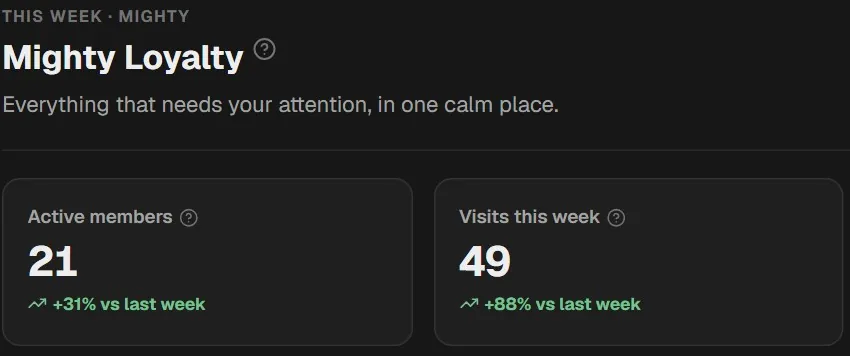
Start with three numbers and compare them with last month, not with your gut feeling:
- Active members. How many came in during the period? That matters more than the total member count, because a customer list always grows, even when nobody comes back.
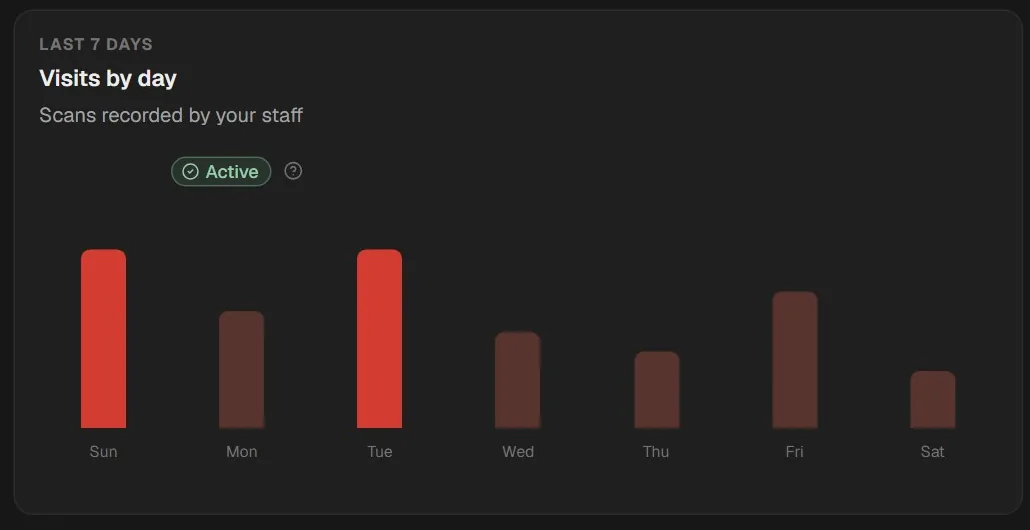
- Visits. How many times was a card scanned? If visits fall while membership rises, people are joining without returning.
- Stamps. If you stamp per item or per amount spent, stamps and visits are different numbers. Check both. The difference is explained in customer visit frequency.
Write the numbers down. It takes a minute and makes next month's review much easier.
Minutes 6 to 10: the rewards
Look at how many cards were completed and how many rewards were actually collected. Two patterns are worth knowing:
Lots of full cards, few rewards collected. Guests may not know a reward is waiting, or it is not appealing enough to bother with. Ask your staff whether they mention it at the counter.
Hardly any full cards. The goal may be too far away for how often your guests come in. Picture a cafe whose regulars visit twice a week on a card that needs 20 stamps: that is ten weeks to the first reward, and plenty of people give up on the way.
Minutes 11 to 15: the guests
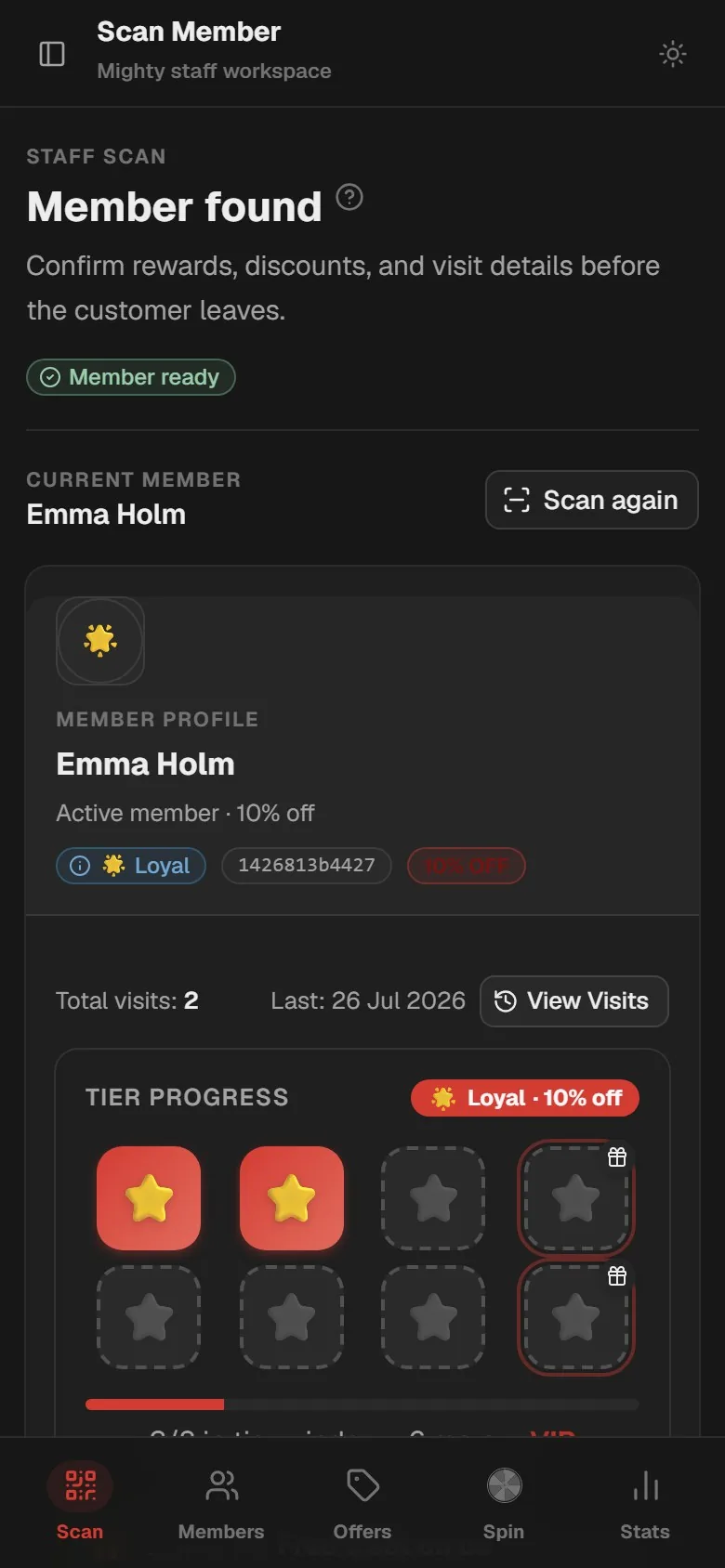
Check how many new members joined this month and whether that matches what you did. If you put up a new QR poster or ran an event, it should show here.
Then open the member list and sort by last visit. The guests who used to come weekly and have not been in for a month are the ones to notice. One or two names is normal. A whole row of them is a signal. What to do about it is in how to win back lapsed customers.
If you have guest feedback switched on, read the comments that came in this month. It takes two minutes and often tells you more than the numbers do.
Minutes 16 to 20: one change
This is the block that matters most and the one most people skip. Pick exactly one thing to change, write it down and give it a date. Not three things. Change several at once and next month you cannot tell which one worked.
What the numbers might mean
Use this table for the last block. It is not an answer key: the numbers point you where to look, and you are the one who knows the business.
What you see | Possible cause | Try this |
|---|---|---|
| More members, fewer visits | People join and do not return | A welcome offer for the second visit |
| Full cards, few rewards collected | The reward is unknown or dull | Have staff mention the reward |
| Hardly any full cards | The goal is too far away | Shorten the goal or add a midway reward |
| Few new members | Nobody mentions the card at the till | Move the poster, brief the staff |
| Regulars have gone quiet | Something changed for them or for you | A personal message to the regulars |
If the change you land on is the reward itself or the stamp goal, handle it fairly for the people already collecting. How to do that without disappointing anyone is in how to change loyalty program rewards.
Keep a simple log
What makes the review valuable over time is being able to look back. A note on your phone or a sheet of paper in the drawer is enough. For each month, write down:
- the three numbers from the first block
- the one change you decided on
- whether last month's change made a difference
After six months you have a history no report can give you: you can see that the poster by the door beat the poster by the till, or that the shorter goal produced more completed cards. It is also the history you will lean on when you do the bigger ROI calculation.
Where to find the numbers in MightyLoyalty
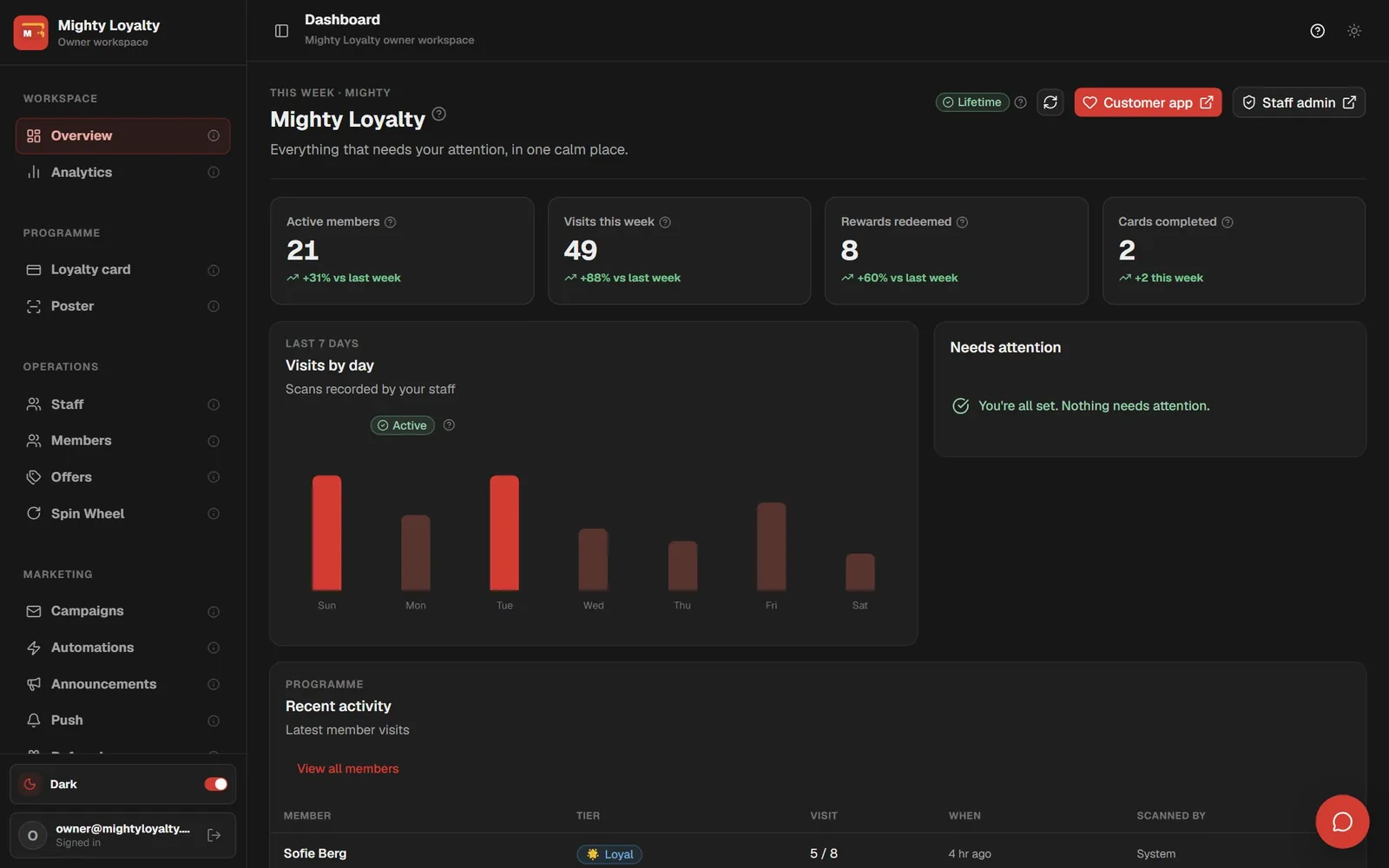
The owner portal overview shows active members, visits and stamps for the week and the month against last week, plus how many cards were completed and rewards redeemed. The member list shows each guest's last visit and exports to CSV if you would rather keep your log in a spreadsheet.
Peak hours, busiest weekdays and where new members come from sit in advanced analytics. That is an add-on on Standard from 19 DKK a month and included in Pro, as is guest feedback. How a loyalty program is set up with us is described on the free loyalty program page.
Common mistakes
Watching the total member count. It only ever goes up and says nothing about whether people return. Active members and visits are the numbers that move.
Changing everything at once. A new reward, a new goal and a new poster in the same month make it impossible to know what worked.
Skipping a month. One skipped review easily becomes three. A ten minute review beats none.
Doing it alone. Once a month, ask your staff what guests say about the card. They hear what the numbers do not show.
Frequently asked questions
How often should I review my loyalty program?
Once a month suits most small businesses. It is often enough to catch a drop before it grows, and rarely enough for the numbers to actually move. The bigger question of whether the program pays for itself only needs a look a couple of times a year.
Which metrics matter most in a monthly review?
Active members, number of visits and number of rewards redeemed, each compared with last month. If you stamp per item or per amount spent, look at stamps separately too. The total member count is the least useful number of all.
What should I do if the numbers drop one month?
First check for an obvious reason, such as holidays, weather or a day you were closed. If there is none, pick one change that fits what you see and judge it at the next review. One dip is not a crisis, but three in a row is a pattern.