Sooner or later you will need to change your loyalty program rewards: an item leaves the menu, costs go up, or a reward turns out to be too expensive or too dull. Whether your regulars shrug or grumble depends less on the change itself than on how you announce it and what happens to the stamps they already hold. Here is a way to do it that works for a café, restaurant, salon or shop.
Why a change can feel like a broken promise
A half-full stamp card is a promise. Your guest has collected five stamps with a particular reward in mind, and every visit has been a small investment in it. Change the rules halfway and it feels to them as if you moved the finish line, even when you have a perfectly good reason.
So it helps to split changes into two kinds. Some make the card better for the guest, or just as good, and you can roll those out with hardly any notice. Others make the card harder to fill or worth less, and those need care.
Four kinds of change, and how sensitive each one is
Most changes fall into one of four groups. The more a change costs the guest, the more notice and goodwill it needs.
Change | The guest feels | What you do |
|---|---|---|
| New reward of equal value | Variety | Mention it when you switch |
| Better reward or lower goal | A gift | Shout about it, it is good news |
| Higher stamp goal | A longer road | Give notice and be generous |
| Reward removed, nothing in its place | A loss | Avoid it, or allow a long grace period |
A new reward of equal value
The free croissant becomes a free cinnamon bun, or the free coffee becomes any hot drink. To the guest it is roughly the same, and plenty will see it as an upgrade. Telling people when you switch is enough.
A better reward or a lower goal
Going from ten stamps to eight, or adding a small reward halfway along the card, is good news. Use it as a reason to contact your members: an improvement is one of the few messages nobody reads as advertising.
A higher stamp goal
This is the change that causes most of the trouble. If your card is too generous and you want to move from eight stamps to ten, say so honestly and early. Picture a guest with seven stamps who suddenly needs three more instead of one. That is exactly the guest you cannot afford to lose, because they are one of your most loyal.
A reward removed with nothing in its place
Avoid this if you can. If a reward has to go, replace it with something else, or give guests a long window to claim the old one.
How to make the change
Whatever kind of change it is, the same five steps apply. They do not take long, but the order matters.
Reward, stamp goal or both, and why
Give guests time, especially if the goal goes up
A short note: date, change, and what happens to their stamps
One sentence they can say at the counter
Change it on the date, then watch redemptions
1. Decide exactly what changes
Write the change down in one sentence: "From 1 December the reward is any hot drink instead of a coffee", or "From 1 December the card needs ten stamps instead of eight". If you cannot say it in one sentence, it is too complicated and guests will get it wrong.
Ask yourself, too, whether you really need a higher goal. If the problem is that the reward has become expensive, picking a different reward of similar value to the guest is often the easier fix. How to pick one that motivates and still pays is covered in how to choose a stamp card reward.
2. Pick a date and allow time
A like-for-like reward can change overnight. A higher goal deserves notice, so guests close to the end can still fill their card on the old rules. How much notice is fair depends on how often your guests come in: a bakery with daily morning regulars can give less than a hair salon where five weeks pass between visits.
3. Tell your members
The message has to answer three things: what is changing, when, and what happens to the stamps the guest already has. Keep it short and friendly, and do not wrap bad news in marketing language. "Coffee prices have gone up, so from 1 December the card needs ten stamps. Any stamps you have now are yours to keep, of course." Guests respect plain speaking more than spin.
If you have email or push switched on, that is the natural channel; push notifications for restaurants covers how to write messages people actually read. Put a line on the sign at the counter as well, because not everyone reads their messages.
4. Brief your staff
Your team gets the questions, so give them the answer in advance. One sentence will do: "Yes, the card goes to ten now, but you keep every stamp you already have." A staff member who knows what changed turns bad news into a short chat. One who does not turns it into an argument.
5. Switch on the date and follow up
Make the change on the date you announced, not before and not after. Then watch whether guests keep coming and redeeming at the same pace. If redemptions drop sharply, the new reward may be less tempting than you hoped, and adjusting again beats waiting.
What happens to the stamps guests already have?
That is the first thing guests will ask. The safe rule: earned stamps never disappear because of a change. The guest keeps them and can use them toward the new reward.
If your terms say you give notice of changes and that earned stamps keep their value, you have already made that promise. If they say nothing, this is a good moment to write it down. What else your terms should cover is in loyalty program terms and conditions.
When the goal goes up, you can go a step further for the guests who were nearly there: give them an offer on their card, or let them claim the old reward one last time. It costs you a little, and these are precisely your best customers.
How it works in MightyLoyalty
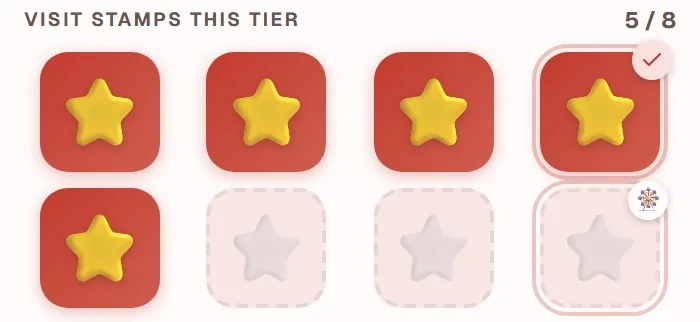
In MightyLoyalty you change the stamp goal and the rewards in the owner portal, with a preview of the card as your guests will see it while you work. Rewards sit on specific stamps, so you can put a small one halfway and the big one on the last stamp. When you save, the change applies straight away to every member's card. Guests' earned stamps stay on their account, but from that moment they count toward the new goal.
That means your announcement has to go out before you save, not after. How the card itself works is on the stamp card app page.
Common mistakes
Changing things quietly. The guest finds out at the counter, and your staff end up explaining something they did not know either.
Changing too often. A card whose reward changes every month loses its simplicity. If you want variety, run time-limited offers alongside the card and keep the card itself stable.
Forgetting the sign. If the old reward is still on the poster by the till, guests will believe the poster.
Frequently asked questions
Can I change the reward on my stamp card once the program is running?
Yes. Announce the change in advance and let the stamps guests have already earned keep their value. If your terms say you may change the program with notice, you are covered. This is not legal advice, so check with an adviser if you are unsure.
How much notice should I give before raising the stamp goal?
Enough for guests close to the end to fill their card on the old rules. That depends on how often your guests visit: less notice for daily regulars, more for guests who come once a month.
Do guests lose their stamps if I change the reward?
They never should. Earned stamps stay on the guest's account and count toward the new reward. If you raise the goal, consider giving guests who were close to finishing an offer as thanks for their patience.