Customer visit frequency is how often a guest comes to your business within a fixed period, such as twice a month or once every ten days. It sits under two of the biggest decisions in a loyalty program: how many stamps the card should need, and when a regular is starting to slip away. Here is how to calculate it for a café, restaurant or shop in Denmark, and what to do with the number.
Visits are not stamps
Before you count anything, be clear about what you are counting. Visit frequency is about how often someone walks through the door, so you count visits, not stamps.
If your café gives one stamp per visit, the two numbers are the same. But if you stamp per item or per amount spent, one visit can be worth three or four stamps. A guest who comes once a month with a big order can then fill a card as fast as someone who drops in every week for a coffee. Those are two very different guests, and only the visit count shows it.
How to calculate visit frequency
The simple version needs two numbers from the same period, say October:
- The total number of visits by members.
- The number of different members behind those visits.
Divide the first by the second and you have the average number of visits per active member for that period.
Picture a café where 200 different members made 600 visits in October. That is 3 visits per member in a month, or roughly one visit every ten days. It is a useful first number. It is also an average, and averages mislead.
The average hides the guests who matter
Almost every business has a few guests who come very often and many who come rarely. The few pull the average up until it describes almost nobody.
So split your members into three groups by how many visits they made in the period. Staying with the same made-up café: of its 200 members, 30 came weekly or more, 70 came two or three times, and 100 came once.
The average says "every ten days", yet half the members came only once. The 30 weekly guests are your real regulars, and the 100 one-time guests are the people the program has to bring back. Those are two separate jobs, and a single average shows you neither.
These figures are invented to show the method. Your own split may look completely different, which is exactly why it is worth counting.
Use frequency to set the stamp goal
This is where the number earns its keep. A stamp card only works when the reward feels within reach, so work backwards: how long does it take a typical regular to fill the card?
With ten stamps and one stamp per visit, it looks like this:
The guest comes | Card full after |
|---|---|
| Twice a week | 5 weeks |
| Every week | 10 weeks |
| Every other week | 20 weeks |
| Once a month | 10 months |
For a weekly guest, ten stamps is fine. For a monthly guest it is nearly a year, and they will have forgotten the card long before the end. Set the goal by your regular guests' rhythm, not by your handful of most devoted ones. If you run a restaurant with fewer but larger visits, how many stamps a restaurant card should need walks through that case.
If the numbers show your guests come less often than you thought, the answer is not to give up on the stamp card. Shorten it, or add a small reward halfway, so something happens before the card is full.
Use frequency to spot regulars drifting away
The second thing frequency tells you is when a guest has gone quiet. Three weeks without a visit means one thing for a guest who usually comes twice a week, and something else entirely for one who comes once a month.
A workable rule of thumb: treat a guest as drifting once two to three times their usual gap between visits has passed. For a weekly guest that is two to three weeks; for a monthly guest, two to three months. It is not a law of nature, but it beats one fixed cut-off for everyone.
Once you have found them, the next step is a friendly, personal nudge before the habit is fully broken. How to write it and follow up is in the plan to win back lapsed customers.
Frequency, retention and what to do with both
Visit frequency and retention are related, but they answer different questions. Retention tells you how many of last month's guests came back at all. Frequency tells you how often they come when they do. You can have strong retention and falling frequency: the same guests still come, only less often. That is an early warning retention alone will not show. The other half is covered in the guide to customer retention for a small business.
Use the same period every time so the numbers compare. A month usually suits a café; for a salon where clients come every other month, a quarter works better.
Finding the numbers in practice
Paper cards cannot give you visit frequency, because you never know who held the card. A digital stamp card records every visit against a member, so the numbers are simply there.
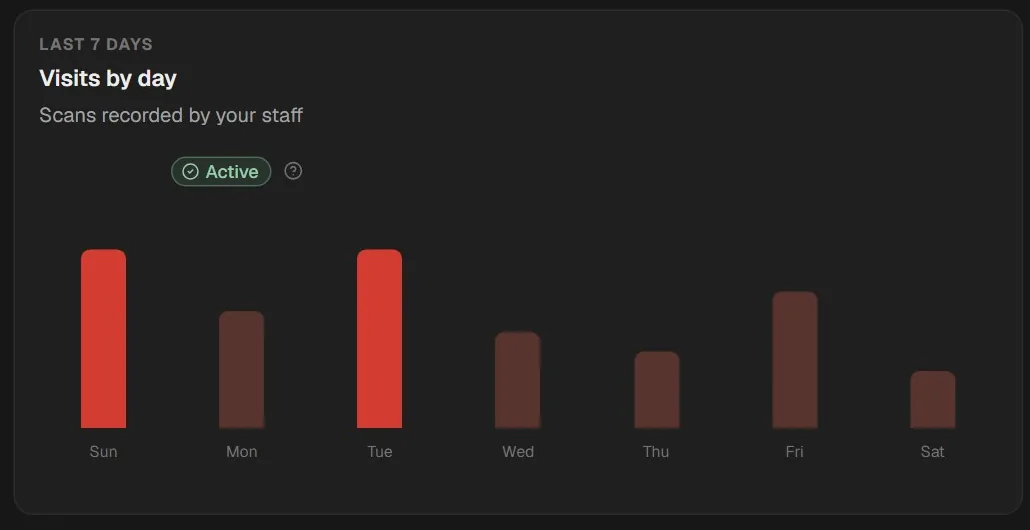
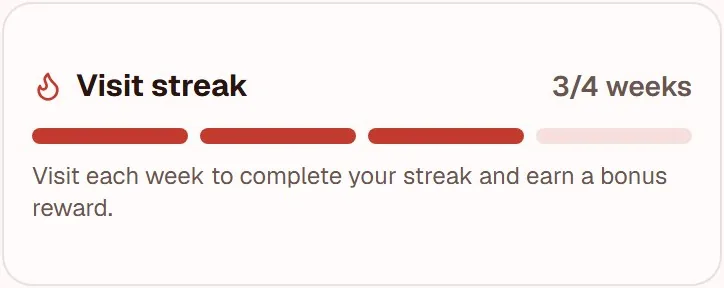
In MightyLoyalty, the owner dashboard shows visits per day and active members week by week. The member list sorts by most recent visit or most visits, and each member profile shows their visit count, when they were last in, and their full visit history. That is enough to do the count above in half an hour. Streaks, which reward a guest for coming a number of weeks in a row, are an add-on on Standard and included in Pro, and they exist to keep frequency up.
Standard costs 99 DKK/month and Pro 249 DKK/month, both excl. VAT. You can try every Pro feature for 14 days with no payment card, and after that there is no setup fee and no binding period.
Frequently asked questions
What is a good visit frequency for a café?
There is no number that fits everyone, and we will not invent one. It depends on your location, your menu and who your guests are. What matters is your own trend: if the same members come more often than they did six months ago, what you are doing works.
Should I use the average or the median?
Start with the average because it is easy, then always split members into groups. The median, the guest in the middle, is closer to a typical guest, but the groups tell you more: who your regulars are, and who has only been in once.
Does a visit worth several stamps count as one visit?
Yes. Visit frequency counts how often the guest comes, so a visit is a visit, however many stamps it earned. Stamps are for tracking how far along the card the guest is.