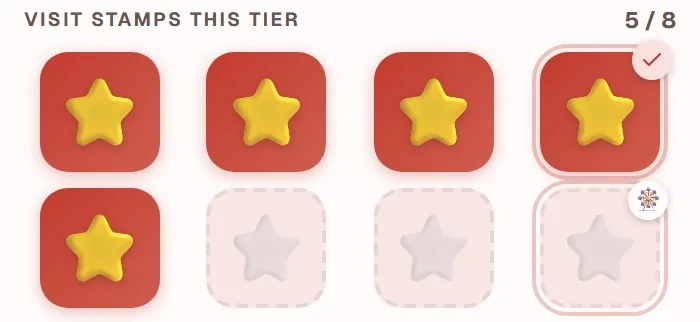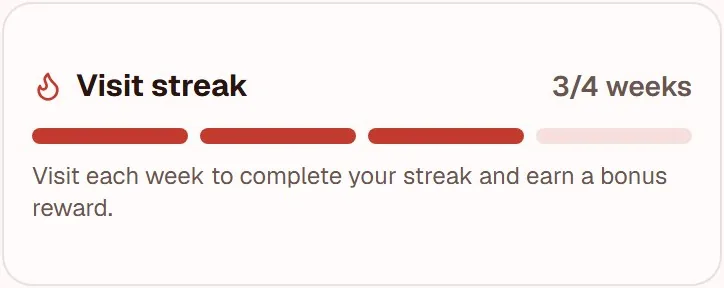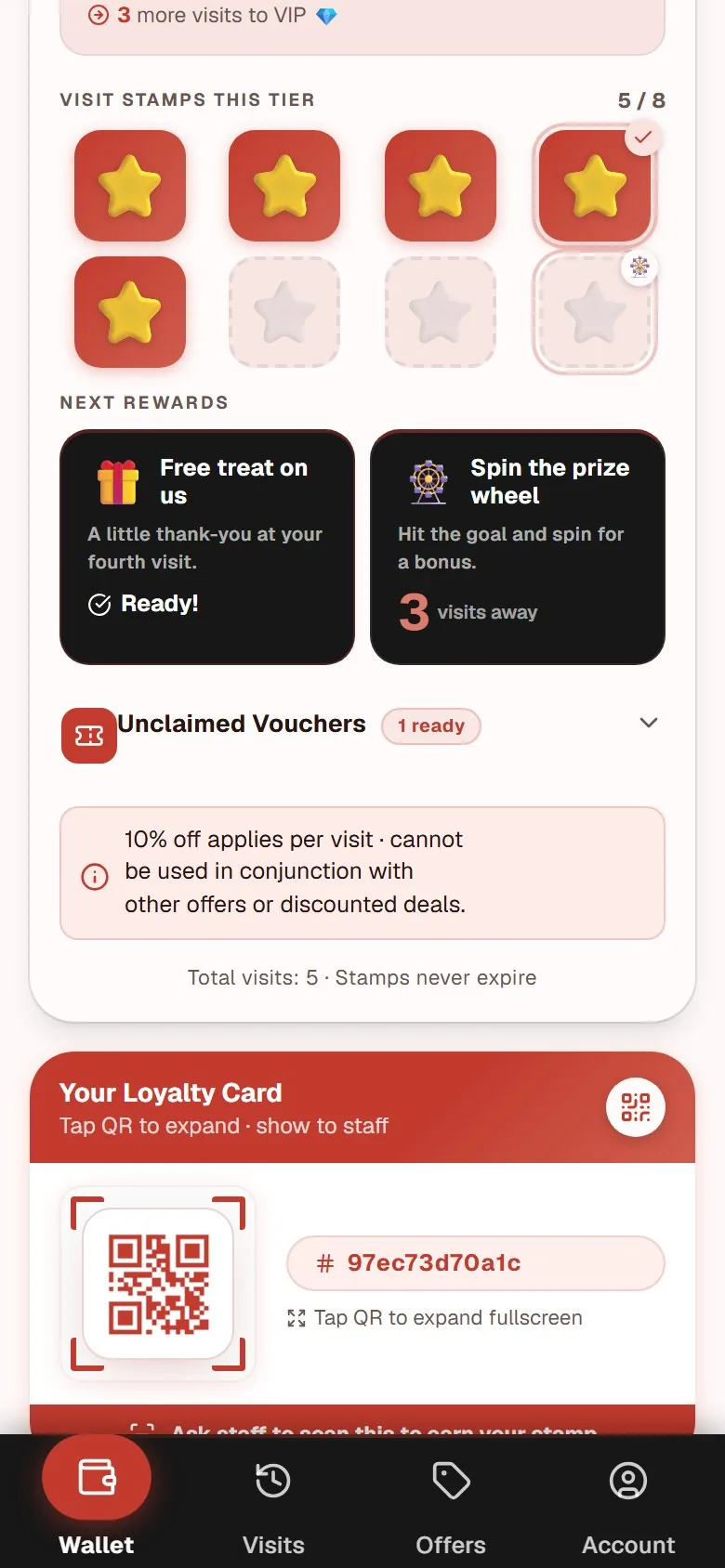
A butcher shop loyalty program has one job: to make your counter the fixed stop in a customer's weekly shop, instead of the pre-packed meat in the supermarket fridge. A butcher's or deli's regulars often come every week, but the basket varies enormously, from a couple of sausages on a Tuesday to a whole roast for the family at the weekend. This guide shows how to set up a digital stamp card that feels fair for both, and how to use barbecue season and Christmas without giving too much away.
Regulars with a steady rhythm
A butcher has an advantage many shops can only wish for: the customers already have a habit. Plenty of them shop on the same day each week, often ahead of the weekend, and they come because they trust the quality and the advice across the counter. That is a relationship, not just a transaction.
But habits are fragile. The supermarket is on the way home, and on a busy day it is easy to grab a tray of mince there instead. A stamp card does not change the quality of your meat, but it gives the customer a small, visible reason to make the detour to you. It also gives you a way to stay in touch with customers you would otherwise only see when they happen to remember you.
Stamps per amount spent suit a butcher's basket
MightyLoyalty can award stamps three ways: per visit, per item and per amount spent. For a butcher, per amount spent is nearly always the right choice, because baskets vary so much.
With a stamp per visit, the customer who buys two sausages earns the same as the one buying meat for a birthday party, which feels wrong to the bigger spender. With a stamp per item, staff have to count pieces, and a slice of pâté is not the same as a turkey. With a stamp per amount spent, staff enter the receipt total when they scan, and the system works out how many stamps it is worth.
Picture a butcher who gives one stamp for every full 100 kroner, capped at 5 stamps per scan. Here is how that plays out for four different purchases:
Purchase | Kroner | Stamps |
|---|---|---|
| Sausages for dinner | 85 | None |
| The family's weekly meat | 240 | 2 |
| Weekend roast and sides | 460 | 4 |
| An order for a big party | 1,200 | 5 (the cap) |
The small purchase below the threshold earns no stamps, but it still counts as a visit. That matters, because visits and stamps are two different things in the system: stamps fill the card, while visits tell you how often the customer comes in. The cap protects you against typing mistakes and against the large party order that would otherwise fill the whole card in one go. The trade-offs between the three rules are covered in more depth in the retail loyalty program guide.
Set the threshold from your own receipts. Look at the last few weeks of purchases and pick an amount so that a typical weekly shop earns one or two stamps. That way a regular sees progress every single time.
Rewards that taste of your shop
A percentage off the whole basket is the easiest reward to promise and the most expensive to keep. It also teaches customers to think about price. Something from your own counter feels more valuable, and it only costs you the raw ingredients and the work:
- A piece of house-made cold cuts or a pack of your own sausages.
- A portion of this week's marinade or spice rub for the barbecue.
- A jar of house-made stock, gravy or red cabbage at Christmas.
- A recipe and a tip from the butcher, packed with the reward.
- A small taster of something new you would like customers to try.
The last one deserves a thought. A reward can double as a way to introduce a new product. The customer gets something free, and you get an honest reaction to an item you are thinking of adding to the range for good.
Set the goal to suit a regular's pace. If a typical weekly shop earns two stamps, a goal of 10 is reached in a little over a month, a rhythm the customer can feel. A goal of 30 takes a quarter or longer, and by then many people have forgotten the card. You can also put a smaller reward halfway, so there is something to look forward to along the way.
Barbecue season and Christmas: two peaks a year
Most butchers have two busy periods: barbecue season in summer and Christmas. Both are good moments to sign up new members, because customers come in who do not normally shop with you.
Put the QR code at the counter before barbecue season
Tell members about this week's marinade and new sausages
Send a reminder to customers you have not seen for a while
Give new customers a reason to come back in January
Christmas takes a little care. Many customers spend more than usual, and with stamps per amount spent that can fill a card fast, which is exactly what the per-scan cap is for. You could also run double stamps in a quiet week rather than the busiest one, so you shift demand instead of discounting purchases that would have happened anyway. More ideas for planning across the year are in the seasonal promotions guide.
If you have push and email switched on, you can let members know when this week's specials are ready, or when the shop opens for Christmas orders. Both are add-ons on Standard from 19 DKK/month and included in Pro. Write rarely and concretely, so the message reads as a service.
Quick at the counter, even with a queue
At a butcher's counter time is short, especially on a Friday afternoon. The customer shows the card on their phone, staff scan the QR code with a phone or tablet and enter the amount. There is nothing for the customer to install and no till integration. The card opens in the phone's browser, so there is no app to download.
Because the amount is typed in by hand, agree a few simple rules with your staff: enter the amount on the receipt, not a round number, and scan only once per purchase. How to keep the program free of abuse more generally is covered in the loyalty program fraud prevention guide. And if you also sell open sandwiches or lunch dishes from the counter, much of the advice on morning regulars in the bakery stamp card guide applies to you too.
What does it cost?
MightyLoyalty costs 99 DKK/month on Standard and 249 DKK/month on Pro, both excl. VAT, with unlimited members and unlimited stamping. Paid yearly, it is 990 DKK or 2.490 DKK a year. You can try every Pro feature free for 14 days with no payment card, and there is no setup fee and no binding period. See how a digital loyalty program works, or go straight to pricing.
Frequently asked questions
Should a butcher give stamps per visit or per krone?
Per krone works best, because a butcher's baskets vary so much. Pick an amount so that a typical weekly shop earns one or two stamps, and cap how many stamps a single scan can award. Small purchases below the threshold still count as visits.
What is a good reward at a butcher shop?
Something from your own counter, such as house-made cold cuts, your own sausages or this week's marinade. It feels more valuable than a percentage discount and only costs you the raw ingredients and the work. A reward can also be a taster of a new product.
What if the Christmas shop fills the card in one go?
Use the cap on how many stamps a single scan can award. The big Christmas purchase still counts, but the customer cannot redeem a reward from one receipt. If you want to hand out extra stamps, put them in a quiet week rather than the busiest one.