Loyalty program fraud prevention for a café, restaurant or shop is mostly about small leaks, not organised crime: a stamp given without a purchase, a photocopied card, a double scan on a busy Saturday. Each leak is minor, but together they cost you rewards you never earned back and make your numbers hard to trust. This guide covers the four kinds of misuse a small business in Denmark realistically meets, and the measures that close each one.
Why it is worth a few minutes of your time
A reward on a stamp card is a discount you agree to in advance, in exchange for one behaviour: the guest coming back. When a stamp is handed out without a visit behind it, you pay for that discount and get nothing in return. One free coffee is not a disaster, but the leak dilutes the economics of the whole program and muddies the data you would use to judge whether it works.
There is a softer cost too. Regulars notice when other people seem to reach the reward suspiciously fast. A program that feels fair is one people keep using, and fairness is mostly about stamps meaning the same thing for everyone.
The good news is that most forms of misuse are easy to close once you know where they happen.
1. The paper card stamped at home
The classic fraud belongs to paper. A rubber stamp from a craft shop looks just like yours, a card can be photocopied, and a nearly full card can be passed to a friend. Most owners never find out, because a paper card leaves no trail. Our comparison of digital and paper stamp cards covers this alongside lost cards and the lack of data.
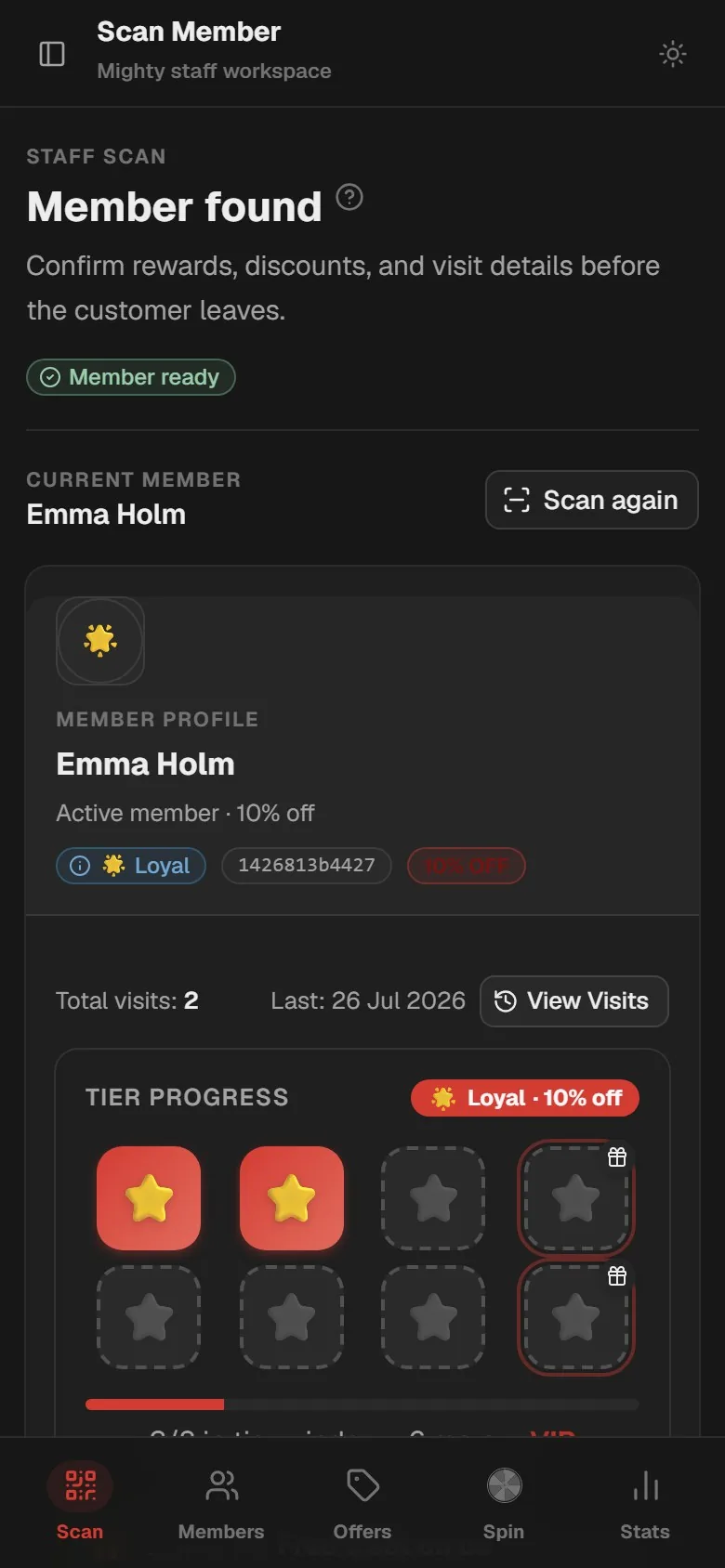
A digital stamp card removes the problem at the root, because the guest cannot add a stamp themselves. The guest's QR code identifies the card; it does not award anything. The stamp is written by a staff device after a scan, and each one is saved with a timestamp. A screenshot of a guest's code earns no extra stamps: it simply points at the same card. If you have wondered what happens when someone scans your counter poster from their sofa, the guide to QR code loyalty programs answers exactly that.
2. The accidental double scan
The next leak is not bad intent but a busy counter. One team member scans the guest, the screen pauses for a second, and a colleague scans again. Two stamps for one visit.
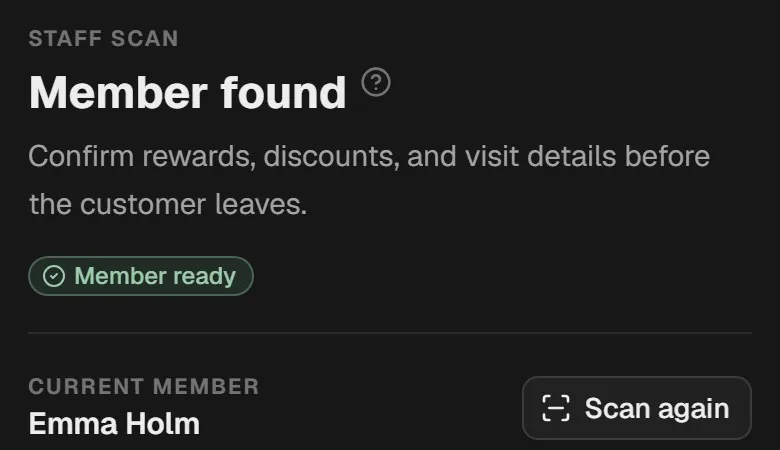
MightyLoyalty guards against this by default when you award one stamp per visit: a member can only be stamped for one visit a day. A second scan of the same guest on the same day is refused with a message saying the visit is already recorded.
If you award stamps per item or per amount spent instead, that rule is lifted on purpose, since a customer can genuinely buy twice in one day. In its place you can set a cap on how many stamps a single scan may give, and the staff screen shows how many times the guest has already been stamped today. A typo of 50 instead of 5 cannot fill a card in one go.
When a mistake does slip through, staff can take stamps back off the card. Mention that during training, so nobody leaves a wrong stamp in place because they assume it cannot be undone.
3. Staff stamping their friends
The realistic risk in any loyalty program rarely stands in front of the counter. It stands behind it: a friendly team member who gives mates a couple of extra stamps, or stamps their own card during a quiet hour. It feels harmless, which is exactly why it happens.
Treat it as a management question first, and handle it with three habits:
- One login per person. In MightyLoyalty the scanner sits behind a staff login, and every stamp is stored with the login that gave it. Shared logins make it impossible to tell who did what. If you have several employees, give each their own (extra staff logins are an add-on on Standard and included in Pro).
- Remove access when someone leaves. A former employee should not be able to stamp anything. Delete their staff account in the owner portal and the old login stops working.
- Say the rules out loud. Most staff have simply never been told that a stamp without a purchase is a problem. Put it in your onboarding next to everything else. Our staff loyalty program training guide shows how to brief a team in fifteen minutes.
One feature to be aware of: from the member list, staff can add a visit by hand, for example when a guest has forgotten their phone or a scan fails. That manual add is not covered by the one-visit-a-day rule, precisely because it is the emergency exit. Agree with your team that it is the exception, not the routine.
Finally, glance at the patterns. You do not need to suspect anyone to look at your statistics once a month. A sudden spike in visits on an otherwise quiet day, or one guest filling their card far faster than everyone else, is a good prompt for a friendly question.
4. Extra accounts and bonus hunting
The last kind is guests creating several accounts to collect a welcome gift or a referral bonus more than once. It helps to know how the system is set up:
- Members sign in with a code sent to their email or with Google, so every account is tied to an email address the guest controls. That will not stop someone with five addresses from opening five accounts, but it makes it tedious enough that few bother.
- A referral only counts if the new guest has no visits on their card yet, and the person who referred them gets their reward only once the friend has made a real first visit. Referrals are an add-on on Standard and included in Pro.
- The bonus stamp for a Google review can be awarded only once per member.
Your strongest tool, though, is your own reward design. A big gift for merely signing up invites extra accounts; a reward that requires real visits does not. Put the value where the guest has to come back to get it and bonus hunting loses its point. For help picking a reward that motivates without wrecking your margins, see how to choose a stamp card reward.
A short checklist
To close most of the gaps in an afternoon:
- Replace the paper card with a digital one, so only staff can give stamps.
- Give every team member their own login, and delete accounts for people who have left.
- Set a cap on stamps per scan if you stamp per item or per amount spent.
- Agree that manual visits from the member list are an exception.
- Put the reward's value on repeat visits, not on signing up.
- Check your statistics monthly for patterns that stand out.
None of this requires distrust of guests or staff. It just makes the honest path the easy one. For an overview of everything the digital card does, see the stamp card app page.
Frequently asked questions
Can a guest give themselves stamps on a digital stamp card?
No. The guest's QR code only identifies the card. Stamps are given by a staff device behind a login, so there is no code a guest could scan to stamp themselves. The poster code only leads to the sign-up page.
What should I do if a team member gives a stamp by mistake?
Staff can take stamps back off the guest's card, so the mistake can be fixed on the spot. If it happens often, that is a sign the training or the routine at the counter needs adjusting.
Is loyalty fraud a big problem for small businesses?
Rarely in money terms. The real damage is a program that feels unfair and numbers you cannot rely on. That is why the simple measures are worth putting in place from day one, before a bad habit has time to settle in.