A retail loyalty program for a small shop has to solve a problem most cafés never think about: shop customers come in less often, and a basket can be anything from a single packet of tea to a full Christmas shopping list. So the decision that matters most is not the reward but what one stamp is worth. This guide walks you through choosing between a stamp per purchase, per item or per amount spent.
Why a shop is not a café
In a café, almost every visit looks the same. The guest buys a coffee, maybe a pastry, and the bill barely moves. One stamp per visit is fair and simple.
A shop is different. Think of a small deli, a gift shop, a clothing boutique or a wine merchant in Copenhagen. The same customer might buy one thing this week and fill a bag the next. If both visits earn one stamp, you reward the small purchase exactly as much as the big one, and the customer who actually spends the most with you soon notices there is no point in buying everything from you.
Shop customers also come back less often. A café regular can collect ten stamps in a month; a shop customer might need half a year for the same card. Both facts belong in your decision. If you are still unsure whether a loyalty program suits a business your size at all, our guide to loyalty apps for small businesses covers the basic questions first.
Three ways to award stamps
There are three basic rules for what a visit is worth. MightyLoyalty supports all three, and you pick one when you set up your program.
A stamp per visit. Every purchase earns one stamp, whatever the amount. It is the easiest rule to explain and the fastest at the till. It suits shops where baskets look much the same each time, such as a kiosk or a shop that mostly sells one kind of product.
A stamp per item. Staff enter a quantity when they scan, and the customer earns one stamp for each item of a given kind. You name the unit yourself, so the card can read "per bag of coffee beans" or "per bottle". It works well for a shop with one clear core product, like a coffee roaster's retail counter or a specialist tea shop.
A stamp per amount spent. Staff enter the amount on the receipt, and the system works out how many stamps it is worth, for example one stamp for every full 100 kroner. A purchase below the threshold is still recorded as a visit but earns no stamps. This is the rule that fits shops with very uneven baskets, because it rewards what the customer actually spends with you.
With per-item and per-amount stamps you can also cap how many stamps a single scan can award. That protects you against typing mistakes and against the rare very large purchase that would otherwise fill a whole card in one go.
How stamps and points differ as motivators is covered in our points versus stamps comparison. In short: stamps per amount spent give you the fairness of points while keeping the stamp card's simple picture of how far the customer is from the goal.
Choosing the right rule for your shop
Start by looking at your own receipts from the last few weeks. You do not need a sophisticated analysis; the overview in your till system is enough.
If most purchases fall within a narrow range, a stamp per visit is the right choice. It is the quickest at the counter and customers get it immediately.
If there is one product customers buy again and again, and it is the reason they come in, consider a stamp per item. It makes the card concrete: the customer can see that the tenth bag of beans is free.
If baskets vary a lot, a stamp per amount spent is the fairest. Set the threshold so a typical purchase earns one or two stamps. Picture a gift shop where an ordinary purchase is a couple of hundred kroner: with one stamp per 100 kroner, the customer collects a couple of stamps per visit, while the big Christmas shop earns more, up to the cap you have set.
Stamp goals and rewards when customers come rarely
Pace is a shop's biggest challenge. A goal of twelve visits is fine for a café, but in a shop where the customer comes once a month it means a whole year. Few people stay motivated that long.
Work backwards: how often does your typical regular come in, and how long should it take before the first reward is in sight? For most shops, three to six months is a sensible limit. With stamps per amount spent you can tune the pace by adjusting the threshold instead of the number of stamps on the card.
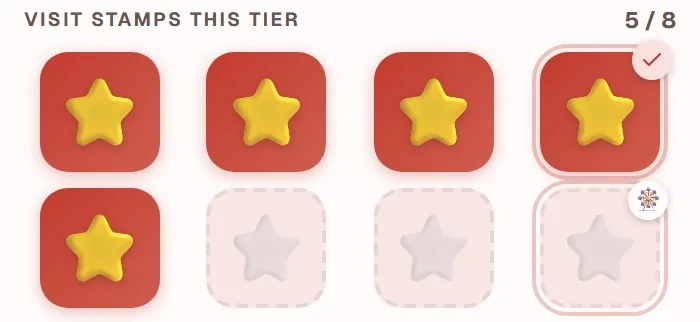
The reward should suit the shop. An item from your own range feels more valuable than a percentage discount, and it costs you the wholesale price rather than the retail price. It might be a small gift, a sample of something new, or a service you normally charge for, such as gift wrapping or an alteration. More ideas, and how to think about the value, are in our guide to choosing a stamp card reward.
At the till: fast, even with a queue
In a shop the customer spends only a moment at the till, and in December there is a queue. The program must not slow down payment.
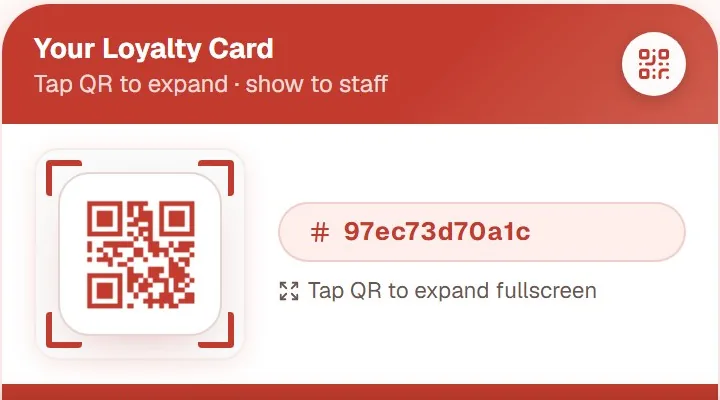
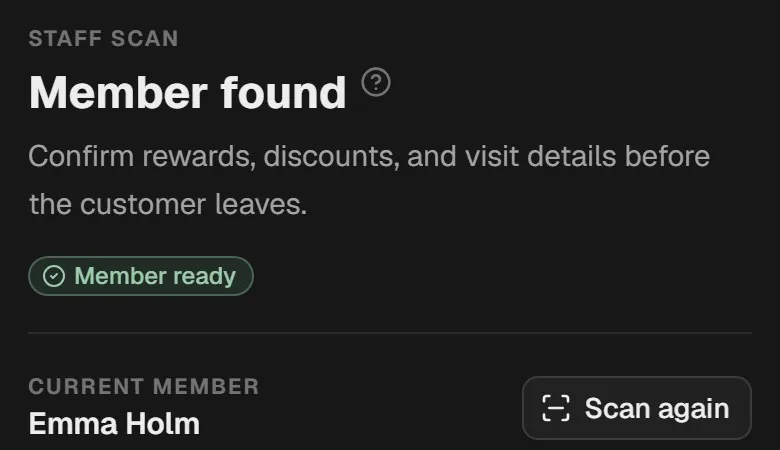
The customer shows the card on their phone, staff scan the QR code with a phone or tablet and enter the amount or quantity if your rule needs it. There is nothing for the customer to install and no till integration to wait for. Joining takes a scan of a QR code at the counter, and the card opens in the browser. You can see what the customer sees on our stamp card app page.
Sign-ups are the critical part. A customer who visits once a month hears about your program on few occasions, so every purchase counts. A short line at payment and a visible sign at the till are the foundation, and our guide to getting more loyalty program sign-ups shows how to get more people on board from the start.
What does it cost?
MightyLoyalty costs 99 DKK/month on Standard and 249 DKK/month on Pro, both excl. VAT, with unlimited members and unlimited stamping. Paid yearly, it is 990 DKK or 2.490 DKK a year. You can try every Pro feature free for 14 days with no payment card, and there is no setup fee and no binding period. See the details on our pricing page.
Frequently asked questions
Can I switch from a stamp per visit to a stamp per amount later?
Yes, the rule is a setting, not a fixed part of the program. But think before you switch: customers are used to what a stamp is worth, and a new rule has to be explained at the till and on the card. Switch once with a clear message rather than several times.
What happens if a customer spends less than the threshold?
The visit is recorded but earns no stamps. You can still see how often the customer comes in, even when a single purchase was small. Set the threshold so an ordinary purchase earns at least one stamp, or the program quickly feels stingy.
Does a stamp card suit a shop where customers only come a few times a year?
Often not. If your typical customer only shops with you for Christmas and birthdays, they rarely reach a reward, and the card loses its point. A low stamp goal, a bigger reward or stamps per amount spent work better here, because those few large purchases then count for more. Florists know this problem better than most, and the florist loyalty program guide shows how to use the big occasions to sign up members. If customers do not come back at all within a year, a loyalty program is probably not the right tool.