A cafe loyalty program rewards repeat visits with a free drink after a set number of purchases, usually tracked by a digital stamp card the customer opens on their phone. For coffee shops the two numbers that decide whether it works are the stamps required per reward, which sets your effective discount, and the seconds it adds at the till during the morning rush.
Everything else is detail. Get those two wrong and you have either an expensive habit you cannot switch off or a card nobody ever fills.
The arithmetic of giving away one coffee in N
Start with the discount, because that is what a stamp card is once the accounting is done. Give away every tenth coffee and you have handed your most frequent customers a 10 percent discount. Every fifth is 20 percent. That number belongs next to your margin, not next to what the shop down the road prints on their card.
Imagine a flat white where the beans, the milk, the cup and the lid come to roughly 20 percent of the menu price. That is an example to reason with, not a benchmark: work out your own first.
On that example, ten cups sold at full price bring in ten prices of revenue and cost two prices of ingredients, so eight prices of gross profit. Give the tenth cup away and you still make ten cups and still pay two prices of ingredients, but collect only nine prices of revenue. Gross profit drops from eight to seven. One tenth off the top line becomes roughly one eighth off the gross profit on coffee, because the ingredient cost does not shrink when the price does.
Now the useful half of the sum: what does the reward have to produce to pay for itself?
Each paid cup earns you 80 percent of its price in gross margin. The free cup costs you, at worst, that same 80 percent: the margin on a cup that customer was going to buy anyway. So one extra visit per reward cycle covers the entire cost of the reward. At ten stamps that means lifting a regular's visit frequency by roughly 10 percent. At five stamps you need a 20 percent lift to break even, a much harder ask of the same person.
That "at worst" matters. If the free cup pulls in a visit that genuinely would not have happened, it costs you only its ingredients, around 20 percent of a price, and anything bought alongside it is upside. The truth sits between the two, and you will not know where until you have a few months of data. Set the stamp count on the pessimistic version and let the other one be a pleasant surprise.
Why ten is usually the wrong default
Ten stamps is inherited from businesses with a high ticket and an occasional visit, where the reward is worth real money and the customer is happy to be patient. Coffee is the opposite: the reward is small in absolute terms, so the pull comes from how soon it lands, not how big it is.
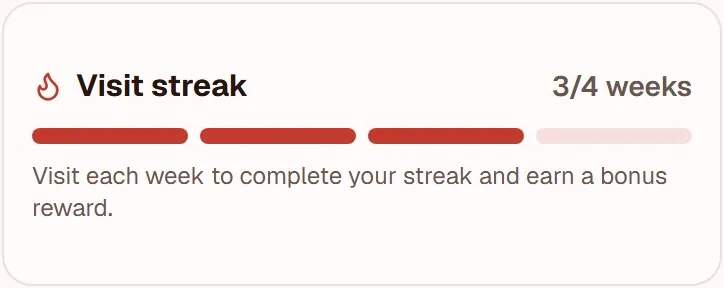
So stop counting stamps and count weeks. Decide how quickly a member should reach a reward, aim for the two to four week range, and divide by how often that customer actually comes in.
A commuter cafe where regulars come three mornings a week reaches ten stamps in a little over three weeks. That works. A neighbourhood cafe where the same people come once a week takes ten weeks, and most of them quietly stop caring around week four with a half filled card.
The reverse problem is just as real. If your best customers already come in every weekday, ten stamps hands 10 percent off to people who were coming regardless, and you have bought loyalty you already had. There the smarter move is usually a bigger reward at a higher count, or a reward that is not the drink they buy anyway (a pastry with the coffee, a bag of beans).
One round number cannot serve a daily commuter and a Saturday regular at once. Pick for the customer you actually have. There is a longer walk through reward choices in how to choose the right stamp card reward, and a broader look at the format in stamp cards for cafes.
The morning rush: the scan has to be faster than the queue
Between 8:00 and 9:00 your throughput is your revenue. Every second added at the till is a cup that does not get made, and once the queue starts stalling, staff quietly stop offering the program. That is how most cafe loyalty programs die: not cancelled, just never mentioned.
Treat the scan as an operational problem with a hard budget: five seconds, no hands off the drinks.
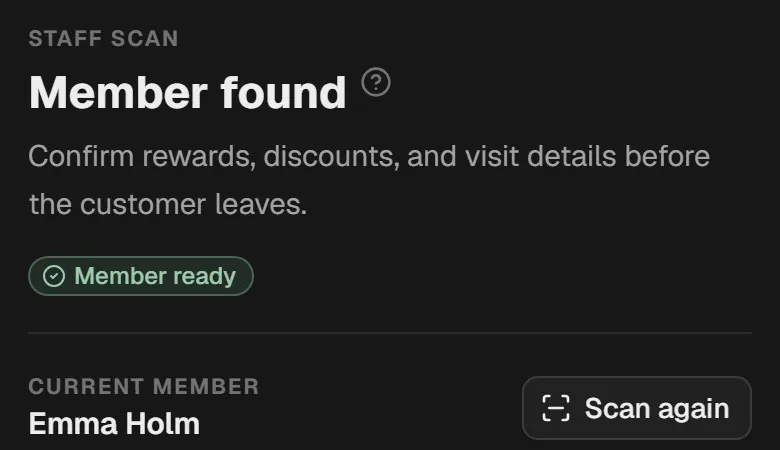
Five rules that keep it inside the budget:
Move sign-up out of the queue. Nobody installs an app with six people behind them. Sign-up has to be a QR code that opens a web page, and the poster needs to be where people wait, not only at the till where they are already paying.
Keep the staff device on the scan screen all shift. If a barista has to unlock, navigate and find the right screen, the five seconds are gone before the customer has done anything.
Scan while the drink is being made, not during payment. The card machine and the scan are two separate moments. Stacking them creates the visible pause everyone in the queue notices.
Never let a stamp block a payment. If the customer cannot find their code, take the money, hand over the drink and say "get it next time." A stamp is worth a fraction of a coffee; a stalled queue at 8:15 costs you several.
Ask the regulars to have it open. After a few weeks as a member, one sentence ("have it ready and it takes a second") moves the whole interaction into the dead time while they queue.
What the barista actually says
Scripts matter more than posters. The wrong sentence is a yes or no question during a rush, and the reflex answer to "would you like to join our loyalty program?" is "no thanks."
Use these instead:
- At sign-up: "Scan that code while I make this, and I will put your first stamp on now." It assumes the action and uses the dead time.
- To a returning customer: "Are you collecting?" Three words, no jargon, no decision required.
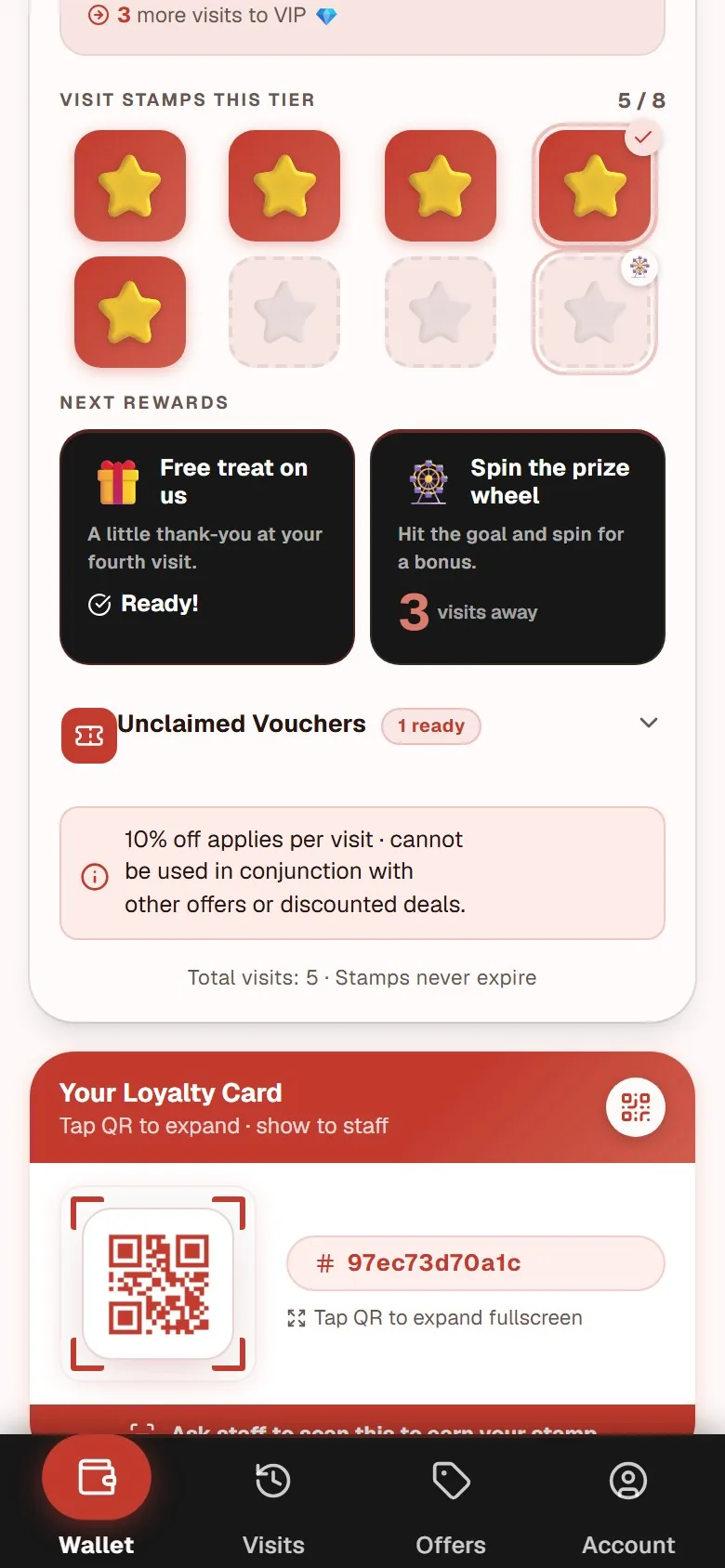
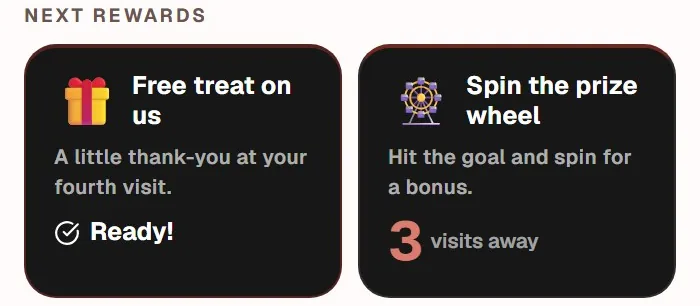
- On the reward: "That is your tenth, this one is on us." Say it loud enough that the queue hears it. Best advertising you have, and it costs nothing extra.
- Near the end: "Two more and your next one is free" rather than "you need two more." Same fact, opposite feeling.
Always give the first stamp at sign-up. An empty card is a demand; a card with one stamp is already in progress.
A loyalty card is not a discount
This is where owners get talked into the wrong thing. A discount lowers the price for everyone, on every transaction, including people who would happily have paid full price, and it resets what customers think your coffee should cost. Putting it back up later reads as a price rise.
A loyalty reward is paid after the behaviour, only to people who repeated, and it is self liquidating: it costs you only in the cases where it worked. Its perceived value is the full menu price of a coffee, while the actual cost to you is the margin, or just the ingredients, depending on how incremental that visit was.
A discount trains price sensitivity. A card trains a habit. A monthly coffee subscription is a third option with its own trade-offs, compared in coffee subscription vs loyalty card. For an argument you can use with your own staff, see loyalty without discounts.
What it costs to run
Standard is 99 DKK a month and Pro is 249 DKK a month, both with unlimited stamps and no cap on members. There is no setup fee and no binding period, so a single month is the sensible way to test the numbers above before committing. Details are on the pricing page, what the card looks like and includes from the customer side is on the stamp card app page, and the coffee shop loyalty program page covers the café-specific setup. Our own restaurant runs the product publicly at loyalty.maiya.dk if you want to see it live.
Frequently asked questions
How many stamps should a coffee shop require for a free coffee?
Work backwards from time, not from a round number. Decide how fast a member should reach the reward, two to four weeks is a reasonable window for coffee, then multiply by how many times a week your typical regular visits. Three visits a week suggests eight to twelve stamps. One visit a week suggests five or six, or a smaller reward.
Will a loyalty program slow down the morning rush?
Only if you let it. Keep the staff device parked on the scan screen, scan while the drink is being made rather than during payment, and never hold up a payment for a stamp. Sign-ups belong outside the peak: a QR poster where people queue, not a conversation at the till at 8:15.
Are my regulars just getting a free coffee they would have bought anyway?
Some of them, yes, and that is the real cost of the program. The break even test is simple: the reward pays for itself if it produces roughly one extra visit per reward cycle. Watch visit frequency for the members you signed up first; if it is flat after a couple of months, your stamp count or your reward is wrong.