Running a food truck loyalty program is different from loyalty at a fixed restaurant: your customers cannot simply walk back to the same address tomorrow. A digital stamp card changes that by giving every customer a concrete reason to track down your truck and come back for the next stamp.
The core challenge for food truck loyalty
A brick-and-mortar café or restaurant has one advantage that is easy to overlook: a fixed address that anchors it in customers' daily routines. They know where you are, they can plan a visit, and habit forms around proximity.
A food truck does not have that anchor. You might be at the farmers market on Saturday and a corporate lunch event on Thursday. A customer who loves your food still has to actively look you up to find you again. That extra step is where loyalty slips away.
A loyalty program solves this by making the search worthwhile. A customer who already has four stamps on their card has a personal reason to check your social media for your next location and make the trip. Without the program, that same customer might enjoy your food once and never think to find you again.
Food trucks share a lot with takeaway formats in terms of how loyalty works in practice. The guide to loyalty for takeaway spots covers the underlying mechanics and reward structures that apply equally well to a truck.
A stamp card as your permanent customer channel
Many food truck owners treat social media as their loyalty strategy. Posts let customers know where the truck is, which is valuable. But a social media post competes with everything else in the feed, and a customer who scrolls past it is not coming back.
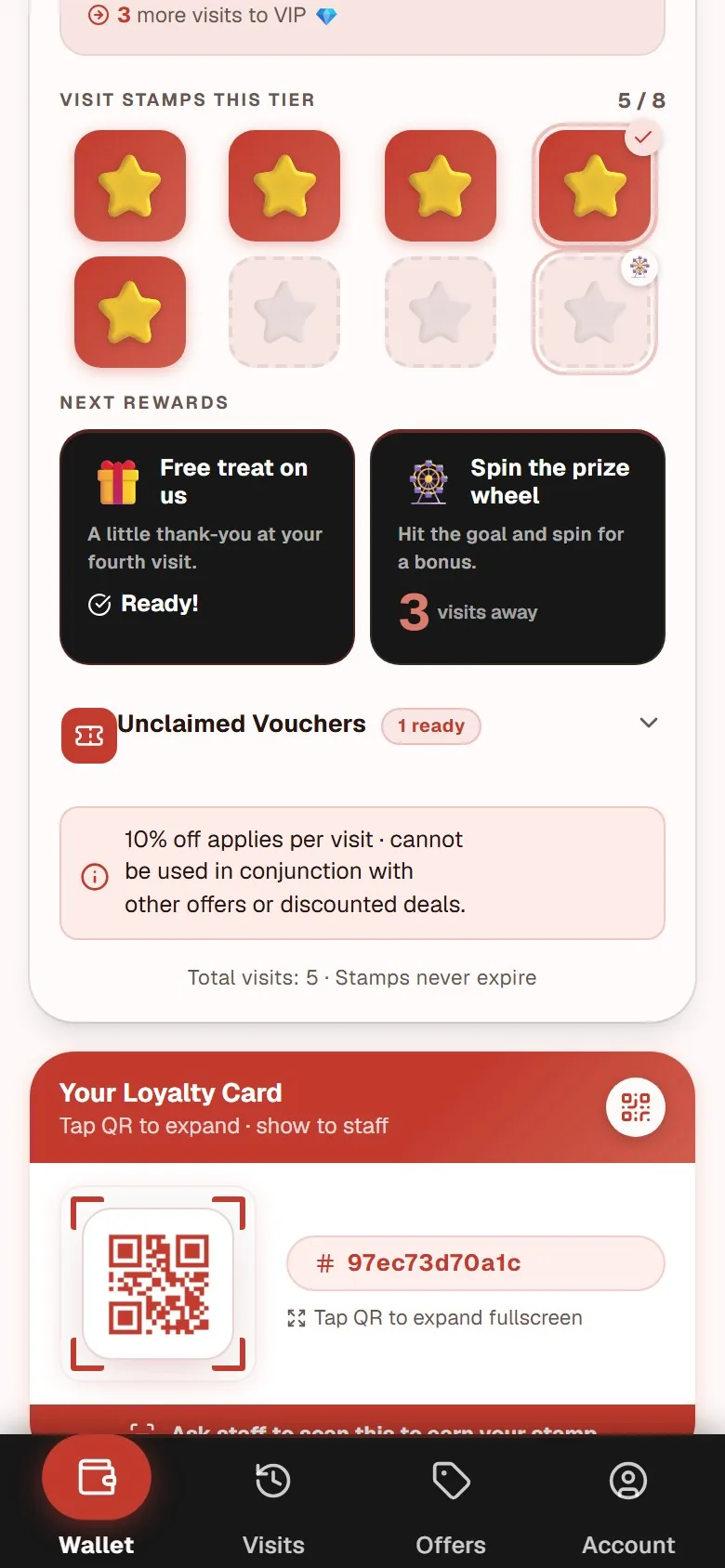
A digital stamp card works differently: the customer has opted in, and their progress toward a reward sits on their phone. When they see your location post, they are not just mildly interested: they have a card with six stamps and the reward is two away. That post becomes a reason to act.
The combination works well: social media announces where you are. The stamp card gives customers a personal reason to show up. The sooner you build your sign-up list, the sooner you have a direct channel that no algorithm can filter out. See the guide to getting more sign-ups for practical tactics you can use during your busiest service window.
Where to put the QR code on a truck
In a fixed restaurant, the QR code goes on the counter, the table, or near the register. A food truck has none of those. All customer contact happens at the service window, in the queue, or in the brief handoff when food changes hands.
Your QR code needs to be where customers look naturally while waiting or receiving their order. Three placements that work well:
The truck side near the window. A poster at eye level is visible to everyone in the queue before you have said anything. It does its own work.
The payment terminal. The customer is already focused on the transaction. A small sign next to the card reader catches attention at exactly the right moment.
The packaging. A sticker on the bag, cup, or container is a quiet reminder that travels with the customer. They find it in the park while eating and remember to scan next time.
The guide to QR codes for loyalty covers which positions produce the most scans in high-throughput service situations.
One point that matters especially for food trucks: the stamp card opens directly in the phone browser with no app download required. A customer meeting your truck for the first time will not install an app for a single stamp. Removing that barrier makes on-the-spot sign-ups far more likely.
Rewards that fit the food truck format
A good food truck reward is portable, quick to hand over, and does not require a sit-down experience. Think in single products rather than experience-based rewards.
A free drink works well if you sell coffee, juice, or soft drinks alongside food. It is delivered naturally with the order and feels like a thank-you rather than a price reduction.
A free side fits trucks that sell burgers, wraps, tacos, or similar. A complimentary portion of fries or an extra sauce is low in actual cost but high in perceived value. The customer receives something extra and knows they earned it by coming back.
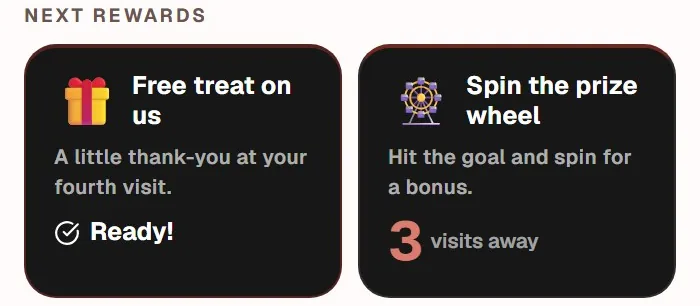
A spin-the-wheel moment suits the casual, event-like atmosphere that many food truck locations carry. The customer does not know exactly what they win, but they know they win something. It adds a brief, engaging moment to an otherwise routine transaction.
Avoid percentage discounts as your main reward. Food trucks already compete on price and convenience, and a discount reward reinforces price thinking rather than loyalty to your specific truck.
One line at the window
You are likely one or two people during service. A long explanation about the program during a busy queue is not realistic. One line fits naturally into the payment exchange:
"Do you collect stamps?"
Customers who are signed up show their phone immediately. Customers who are not hear about the program and can sign up quickly while waiting for their food. Nothing more is needed. The guide to staff training for loyalty programs includes practical tips for building this habit, even if you work solo.
What the data tells you about your locations
The owner dashboard in MightyLoyalty shows when stamps are recorded and when customers return. For a food truck, this is particularly useful because you can start to see which locations attract returning customers and which mainly produce one-time visits.
Imagine discovering after a season that customers from your regular Thursday market return within three weeks on average, while customers from a summer festival visit only once. That is a signal that your regular market spots are where your loyalty base lives, and that large one-off events serve better as brand awareness than as loyalty recruitment. That insight can guide where you invest the most effort in sign-up promotion. If you only trade in the summer months, you share a problem with ice cream shops, and the ice cream shop loyalty guide shows how to keep members through the winter.
Standard plan: 99 DKK/mo, unlimited stamping and a visit dashboard. Pro plan: 249 DKK/mo, adds email marketing and automations. There is no binding period and no setup fee, and you cancel in the portal. For a complete overview of what the stamp card includes, see the stamp card app page. See current plans at pricing.
Frequently asked questions
Can a digital stamp card work for a food truck with no fixed address?
Yes. The stamp card is tied to your program, not your location. A customer signs up at their first visit and finds their card whenever they see your truck again. You do not need a fixed address: the only requirement is that your staff scans the customer's QR code at each visit.
What is a good stamp goal for a food truck?
Eight to ten stamps works well for most food trucks. With eight stamps and two visits per month, a regular customer reaches the reward in four months: long enough to build a habit, short enough that the goal stays motivating throughout. Below eight, the reward is too easy and loses its retention pull. Above twelve, occasional visitors lose momentum before reaching the halfway point.
What if my truck mainly does private events, not regular markets?
Loyalty still applies, but the sign-up strategy shifts. Guests at private events are often invited once and may not be recurring customers. Here the stamp card works best as an invitation to follow you to future public events rather than as a classic returning-customer program. Pair the QR code with clear communication about where you will be next.