A customer loyalty program is a structured offer that rewards repeat purchases: customers earn stamps, points or status for coming back, and trade them in for something worth returning for. For a small business, the program does one job. It turns an occasional buyer into a habit, and it gives the owner a record of who the repeat buyers actually are.
The rest of this guide is practical: why regulars cost less than new customers, which of the three mechanics fits your shop, how to measure loyalty without buying software, and the mistakes that quietly kill a program.
Why repeat customers cost less than new ones
You do not need a study for this. Work it through on your own margin.
Imagine you give away every tenth purchase. On the menu price that looks like a 10 percent discount, which sounds expensive. But you are not giving away cash, you are giving away an item, and the item costs you only what it costs you. If your cost of goods is roughly a third of the sale price, the reward costs you roughly a third of that 10 percent. The rest of the discount is money you never held.
Now set that against a new customer. A new customer has to be found before they buy anything: an ad, an intro offer, a delivery platform commission, a flyer, an hour of your time. That cost lands before the first visit, and it lands again next time, because a new customer is not automatically a returning one. The regular's reward, by contrast, only lands after nine purchases have already happened.
That is the whole argument. Loyalty spend is variable and paid in arrears; new customer spend is fixed and paid up front. A loyalty program survives a slow month far better than an ad budget does.
The three mechanics: stamps, points and tiers
There are really only three base mechanics. Everything else is a variation on one of them.
| Mechanic | Best for | What the customer thinks |
|---|---|---|
| Stamp card | Similar ticket size each visit: coffee, lunch, a haircut | "Two more and it is free" |
| Points | Baskets that vary a lot in size | "I am saving up for something" |
| Tiers | Customers who come back all year | "I have made it to silver" |
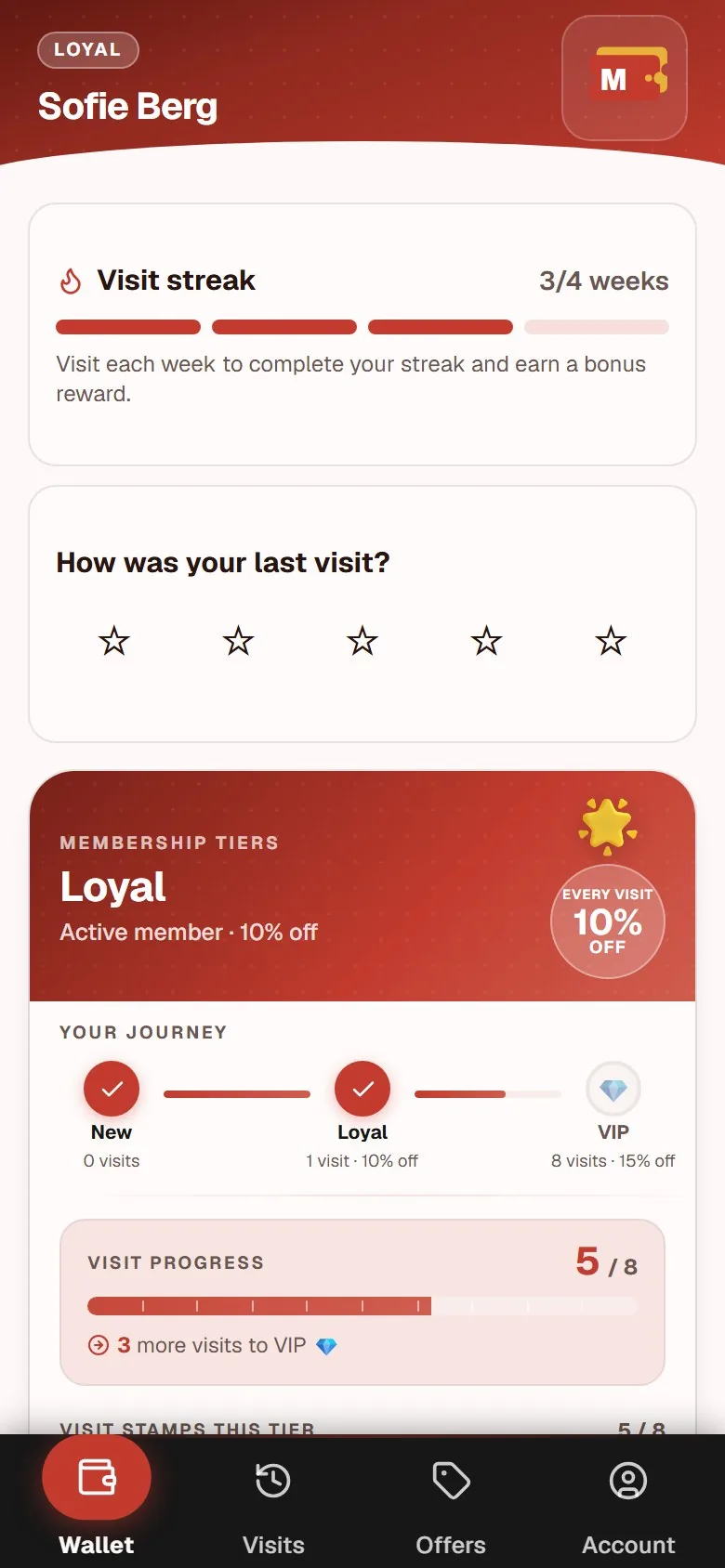
Stamp cards are the simplest option and the right one for most small businesses. One purchase, one stamp; a fixed number of stamps earns a reward. A customer can explain it to a friend in five seconds, and staff can mention it at the till without thinking. To see what the customer experience looks like from the QR scan to a finished card, visit the stamp card app page.
Points make sense when the bill swings widely. A guest spending three times what the next table spends does not think it is fair to receive the same single stamp. The trade-off is communication: with points, the customer has to do arithmetic to know how close they are. The two are compared side by side in our guide to points or stamps.
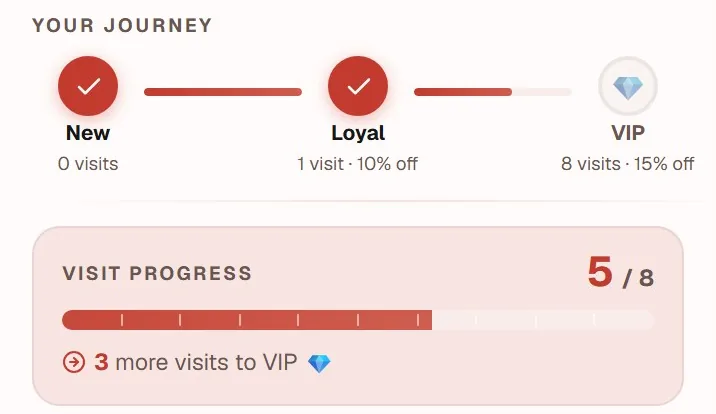
Tiers sit on top of one of the other two. Bronze, silver and gold give your most committed customers something to aim for once the first reward stops feeling new. See loyalty tiers for thresholds people can realistically reach.
Pick one mechanic to start. A program that launches with stamps, points and tiers at once is a program nobody behind the counter can explain on a busy Friday.
How to measure loyalty without expensive software
You do not need a CRM or a consultant. Three numbers are enough, and all three can be worked out on a Monday morning.
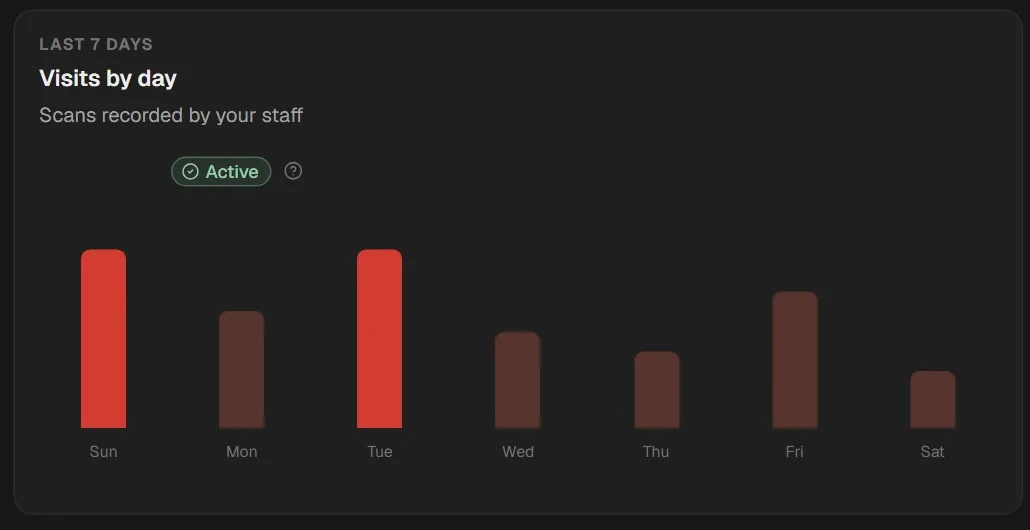
1. Do they come back? Take the customers who were active a month ago and count how many have been in since. That number is the core of customer loyalty. Everything else is decoration. Choosing the right period and improving the number is covered in customer retention for small business.
2. How often do they come? Total visits divided by active members over the same period. If that number climbs across a quarter, the program is working. If it sits flat, the reward or the target is wrong.
3. How many reach the reward? Your redemption rate. If almost nobody gets there, the stamp target is too high. If nearly everybody gets there within a fortnight, it is too low and you are giving away margin you did not need to.
With a digital card, all three sit in the dashboard and the weekly review takes five minutes. On paper cards you can still get most of the way with a tally in a notebook every time a card is redeemed: you lose the names, but you catch the rhythm. To turn those numbers into money, the full calculation is laid out in measuring loyalty program ROI.
The mistakes that kill a loyalty program
The target is too far away. Twenty stamps for a free coffee does not feel like a reward, it feels like homework. Set the target so a typical customer arrives within a few weeks.
The reward is just a discount. Percentages are hard to get excited about. A specific thing the customer can picture (a pastry, a starter, a scalp treatment) beats the same value handed back as money off.
Staff never mention it. This is the single most common way a decent program dies. A poster by the door does not replace one sentence at payment. Agree on a standard phrase everyone uses, and give the first stamp immediately.
Too much small print. Not at weekends, not on offers, not with other discounts. Every exception costs trust and makes the program harder to explain. One clear promise is worth more.
Nobody looks at the numbers. A program that has run unchanged for a year without anyone checking the redemption rate is almost certainly either too tight or too generous. Review it monthly.
If sign-ups are the part you are stuck on, the tactics are collected in how to get more regulars.
Getting started without turning it into a project
Start with one mechanic, one target and one reward, then leave it alone for a month before changing anything. A digital card the customer opens from a QR code at the counter needs no app download and no extra hardware, and you will have your three numbers from the first week. If you want to see what a no-cost starting point looks like, there is a breakdown on the free loyalty program page.
At MightyLoyalty, Standard is 99 DKK per month and Pro is 249 DKK per month; the full comparison is on the pricing page. If you would rather see the customer side first, our own restaurant runs on it at loyalty.maiya.dk.
Frequently asked questions
What counts as customer loyalty in a small business?
Customer loyalty is the customer choosing you again when alternatives exist. It is behaviour, not opinion, so it is measured through repeat visits, visit frequency and how long the relationship lasts. A customer can be perfectly satisfied without being loyal: they enjoyed it, but nothing pulls them specifically back to you rather than the place next door. A loyalty program's job is to supply that pull.
How many stamps should a reward take?
It depends on how often people buy from you. The rule of thumb is that a typical customer should reach the reward within three to five weeks. A coffee shop with customers who come in several times a week can comfortably set the target at eight to ten stamps. A salon where clients visit every couple of months needs a far lower number, otherwise nobody gets there and the program quietly dies.
Is a loyalty program worth it for a very small business?
Usually yes, because a small business depends more heavily on its regulars than a chain does. With a limited number of customers, keeping the ones you already have is the cheapest growth available. Start simple, keep the running cost low, and judge it on the three numbers above after a couple of months. If repeat visits are not moving at all, change the reward before you conclude the whole idea does not work.