Customer segmentation means splitting your customers into groups that behave alike, so you can say something different to each group. For a small business like a café, restaurant or salon, it does not take a market research project: two numbers per guest are enough to build five groups that cover almost everything you need. Here are the five groups, how to set the cut-offs, and what each one should hear from you.
Why one message for everyone falls flat
Send the same email to your whole list and it lands on five different people at once. The guest who joined yesterday gets a message that reads as if you have known each other for years. Your most loyal regular gets an offer written to tempt newcomers, and wonders why being loyal earns them nothing extra. And the guest who has not been in for six months gets yet another routine update they will not open.
The message is not the problem. The problem is that it was written for an average guest who does not exist. Segmentation fixes that by swapping the average for a handful of real groups you can picture while you write.
Five segments built from two numbers
You need two facts about each guest: how many times they have visited, and how long it has been since their last visit. From those come five groups:
- New guests have visited once and joined recently. The job is to make the second visit happen.
- Building guests have visited two or three times. A habit is forming, but it is fragile.
- Regulars come back again and again in a rhythm you would recognise.
- Drifting guests used to come often but have stayed away longer than usual.
- Lapsed guests have not been in for a long time, and the habit is broken.
Segment | Who | What they need |
|---|---|---|
| New | One visit, joined recently | A reason for a second visit |
| Building | Two or three visits | Visible progress on the card |
| Regulars | Come in a steady rhythm | Recognition and thanks |
| Drifting | A regular who has gone quiet | A personal nudge |
| Lapsed | No visits for a long time | One friendly invitation |
What makes these five groups useful is that they follow the guest's journey. A guest starts out new, hopefully becomes a regular, and may later drift. Segmentation tells you where each guest is on that path, and so which message fits.
Setting the cut-offs for your business
There is no official number for when a guest becomes a regular or when they count as gone. It depends on how often it makes sense to visit you. A café whose regulars come every morning and a salon whose regulars come every six weeks cannot share the same thresholds.
Start from your regulars' normal gap between visits. A workable rule of thumb is to treat a guest as drifting once two to three times their usual gap has passed, and as lapsed once considerably longer has gone by. How to find that usual gap is covered in the guide to customer visit frequency.
Two things matter when you set the cut-offs:
- Count visits, not stamps. If you give stamps per item or per amount spent, one big order can earn many stamps at once. That does not make someone a regular. A segment is about how often a guest comes back, and that is measured in visits.
- Write the cut-offs down and keep them. Whether you pick 30 days or 45 matters less than using the same numbers every month, so you can see whether your regulars are growing and whether more guests are drifting.
What each group should hear from you
New guests need a concrete reason to come back, ideally soon. The second visit is the hardest one to win. A small offer for next time or a bonus stamp at sign-up does more here than with any other group. How to set one up is in welcome offers for new customers.
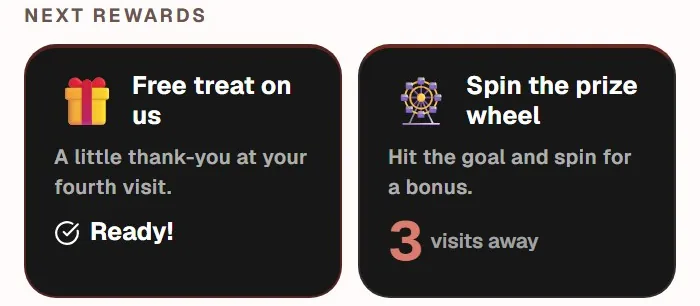
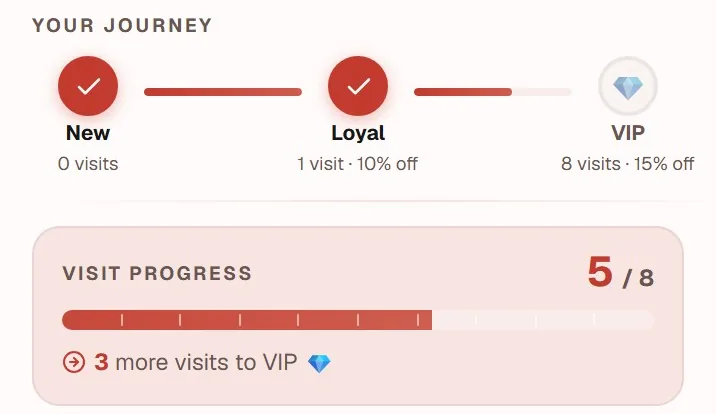
Building guests rarely need a discount. They need to see the card moving. A reminder that they are halfway to their reward is useful information, not advertising.
Regulars do not need to be lured in; they already come. For them it is about being recognised: a thank you, a small perk that is only for them, or hearing about something new first. Never give them a worse deal than newcomers get.
Drifting guests are where a message makes the biggest difference, because the habit is still alive. A short, personal note along the lines of "We have not seen you for a while" works better than a campaign. The full plan is in how to win back lapsed customers.
Lapsed guests get one friendly invitation, not a stream of messages. If they do not return, it is fine to let them go. Many have moved, changed jobs, or simply found a new routine.
Three mistakes that make segmentation hard work
- Too many segments. Ten segments sound thorough, but you will never write ten different messages a month. Start with five, and only split a group when you have a concrete message that suits just part of it.
- Segmenting on spend alone. The guest who spends the most in one go is not necessarily your most loyal. A bakery can have a regular who buys one roll every morning. Visit count and time since the last visit say more about loyalty than the size of the bill.
- Forgetting consent. Segmentation is never an excuse to send marketing to people who have not agreed to it. Promotional emails may only go to members who have opted in; in Denmark and the rest of the EU that is GDPR and marketing law, not a nicety. The rules are in the loyalty program GDPR guide.
Doing it in practice
With paper cards you cannot segment at all, because you do not know who holds which card or when they last came in. With a digital card every visit is recorded against a member, so both numbers are simply there.
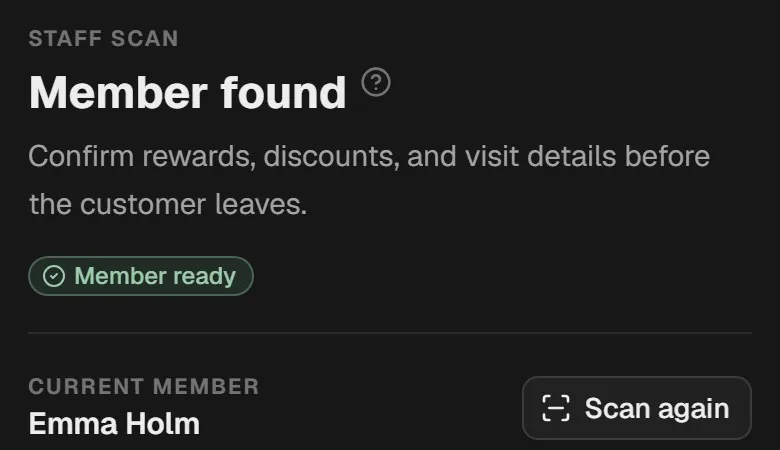
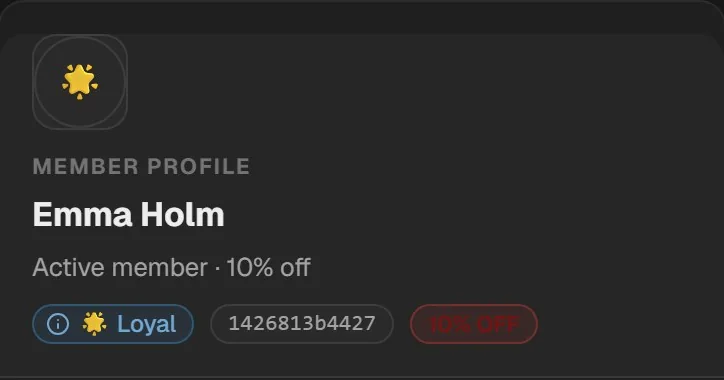
In MightyLoyalty the member list sorts by most visits or most recent visit, and each member profile shows the visit count, when the guest last came in, and their full visit history. When you send a campaign or a push message, you choose the recipients with filters: a minimum or maximum number of visits, how long the member has been inactive (over 30, 60 or 90 days), and when they joined. You see straight away how many members match, and emails only go to members who have opted in to marketing. It all sits inside the same customer loyalty program your guests already use.
Email marketing and push are add-ons on Standard, from 19 DKK/md each, and both are included in Pro. Standard costs 99 DKK/md and Pro 249 DKK/md, both excl. VAT. You can try every Pro feature free for 14 days with no payment card, and after that there is no setup fee and no binding period.
Frequently asked questions
What is customer segmentation for a small business?
It is splitting your customers into groups that resemble each other, so you can talk to each group differently. For a small business, the most useful groups come from visit count and time since the last visit: new, building, regulars, drifting and lapsed.
How many customer segments does a small business need?
Fewer than you think. Five groups cover a guest's journey from first visit to regular and beyond. More segments only make sense when you actually have a separate message for each, and few small businesses have time for that.
Can I segment customers without a digital loyalty program?
Only very roughly. Without a record of who comes in and when, you cannot count visits per guest or see when someone last visited. A digital stamp card gives you both numbers automatically, because every visit is recorded against a member.