The psychology of loyalty programs is about how visible progress towards a reward changes behaviour: the closer guests are to the goal, the sooner they come back. This is not agency folklore; researchers have measured it on real stamp cards. Here are the three mechanisms that matter most for a small business, and what you can actually do with each of them.
The goal gradient: guests speed up as the goal gets closer
In 2006 Ran Kivetz, Oleg Urminsky and Yuhuang Zheng studied a coffee card at a café on a university campus. They found that members bought coffee at shorter intervals the fewer stamps they had left to collect. The researchers called it the goal-gradient hypothesis, after a much older observation that rats run faster the nearer they get to the food.
What that means for you: a stamp card does not pull equally hard the whole way. The first stamps are the heavy ones, because the guest has a card but the reward still feels far off. The last stamps almost collect themselves, because the reward is now close and concrete.
Two practical consequences follow:
- The card must not be too long. If the goal is so distant that guests never feel it getting nearer, you never get the final sprint. How many stamps to ask for is covered in how many stamps a restaurant card should need.
- Progress has to be visible. The sprint only happens when guests know they are close. A card forgotten in a drawer, or a points balance the guest has to convert in their head, does not have the same pull.
Endowed progress: a card that is already started gets finished
The same year, Joseph Nunes and Xavier Drèze published a study of what they called the endowed progress effect. Customers at a car wash got one of two cards. One needed eight stamps and started empty. The other needed ten stamps but came with two already filled in. Both required eight purchases, yet the card with the head start was completed noticeably more often, and faster.
The explanation is that guests do not see a card with a head start as a new project. They see it as something they have already begun, and finishing is easier than starting.
That is why a small welcome offer of a bonus stamp works better than it looks on paper. It costs you only a slightly earlier reward, and it moves the guest past the hardest part of the card. Setting one up is covered in welcome offers for new customers.
The reset: momentum drops after the reward
Kivetz and his colleagues also looked at what happened after the reward. Once members had their free coffee and started a fresh card, their pace slowed again to look like the start of the first card. The sprint resets.
That is not a flaw, but it is an opening. Right after redeeming, the guest is as far from the next goal as they will ever be, and that is where many stamp cards lose people. Two things help:
- Put a stop halfway. A small reward in the middle of the card, say a pastry after five stamps and a free coffee after ten, gives the guest a nearby goal again.
- Offer something that outlasts the card. A tier the guest moves up into after a number of visits does not reset when the card is full. See loyalty tiers.
Mechanism | What it means | What you do |
|---|---|---|
| Goal gradient | Guests visit more often near the goal | A card that is not too long, with visible progress |
| Endowed progress | A started card is finished more often | A bonus stamp at signup |
| The reset | Pace drops after the reward | A halfway reward on the card, or a tier |
Visible progress is the whole game
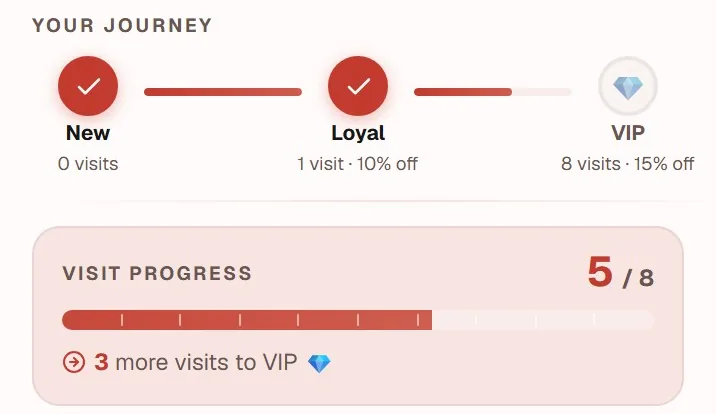
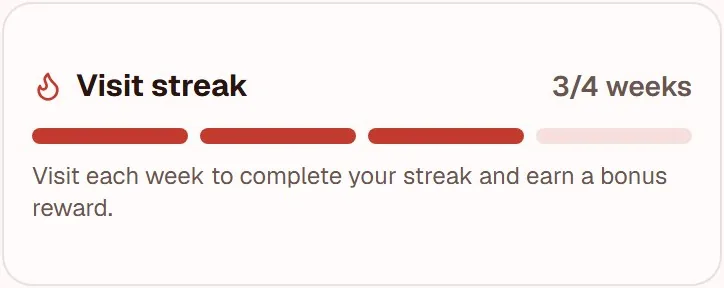
All three mechanisms only work if guests can see where they stand. A paper card does that well, as long as the guest has it on them. A digital card does it every time it is opened, and can also show how far away the next reward is.
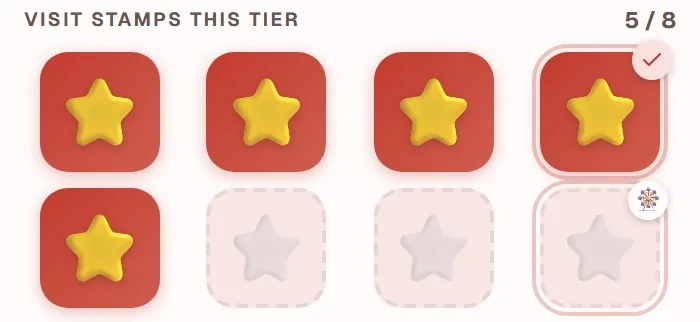
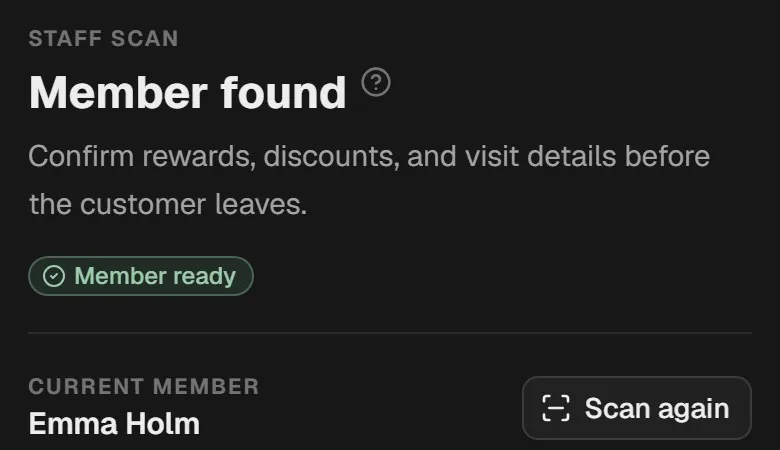
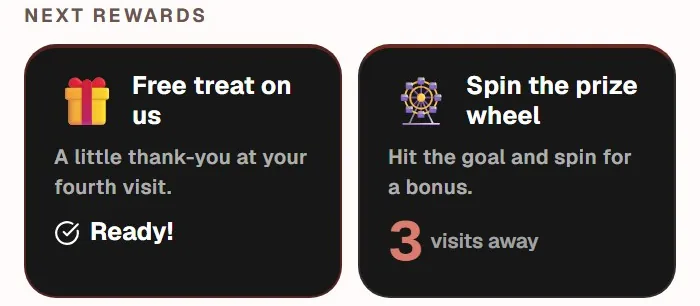
In MightyLoyalty, guests see their stamps on the card on their phone, and under the card are the next rewards with the distance to each one. You can place rewards at several positions on the same card, so there is always a goal close by. How the digital card works from the guest's side is on the stamp card app page.
A reminder can help too, but only when it points at something the guest already cares about. "One more stamp to a free coffee" is useful information. "Come and buy something" is advertising. The first uses the goal gradient; the second wears out the guest's patience.
What psychology cannot do
It is tempting to read this research as a recipe for making people do things they do not want to do. It is not one, and it should not be used as one.
- The reward has to be worth having. The goal gradient only works if guests actually want what waits at the end. A reward nobody cares about produces no sprint. More in choosing the right reward.
- The head start has to be real. A bonus stamp is a gift the guest can see. A fifteen-space card with three "free" spaces is just a long card with decoration, and guests see through it.
- The product comes first. No stamp card rescues bad coffee. The card makes it easier to choose you once more when the guest already likes coming.
Used honestly, the psychology of loyalty programs simply explains why a short, clear card works: guests can see the goal, they have already started, and there is always something close.
Frequently asked questions
What is the goal-gradient effect?
It is the observation that people put in more effort the closer they get to a goal. On a stamp card it shows up as guests returning at shorter intervals when they only need a few more stamps. Kivetz, Urminsky and Zheng measured it on a coffee card in 2006.
Is a bonus stamp at signup manipulative?
No, not if it is a genuine gift. The guest gets a stamp they would not otherwise have had, and the reward arrives sooner. It only becomes a problem if you lengthen the card to hide that the head start is worth nothing.
Does this work the same on a digital stamp card as on paper?
The mechanisms depend on guests seeing their progress, and a digital card can show that as clearly as paper. The difference is that a digital card does not get lost, and it can show the distance to the next reward every time it is opened.