A regular customer is someone who comes back out of habit, often enough that the visit has become part of their routine rather than a coincidence. Most owners can point to their regulars at the counter, but few can say how many they have, or when a new guest crossed the line. Here is how to write a definition that fits your own business, and what to do with it once you have one.
Guest, repeat customer, regular: what is the difference?
People use the words loosely, but keeping them apart helps:
- A guest has visited you, once or a few times, with no pattern.
- A repeat customer has come back at least once. That is the first sign something worked.
- A regular keeps coming back in a rhythm you can recognise: every morning, every Friday, every six weeks for a haircut.
The word that matters is rhythm. Someone who has visited ten times in two years is not necessarily a regular. Someone who has visited four times this month almost certainly is.
A regular does not have to spend much, either. At a bakery, the most loyal customer might buy one roll every morning. The habit is what makes them valuable: they come when it rains, when the shop next door runs a promotion, and on days they had not planned to.
When does a guest become a regular?
There is no official number of visits, and we are not going to invent one. The line depends on how often it makes sense to visit you at all. A café and a hair salon cannot use the same number.
So write your own working definition in two parts: a number of visits and a time window. Start from how often a happy customer would naturally come, and set the bar a little above what could happen by chance.
Here are some starting points to adjust against your own numbers. They are a place to begin, not a benchmark:
Business | Regular once the guest has |
|---|---|
| Café or bakery | 4 visits in 30 days |
| Lunch spot | 6 visits in 60 days |
| Restaurant | 3 visits in 90 days |
| Hair or beauty salon | 3 visits in 6 months |
Whether you pick four visits or five matters far less than picking one number, writing it down and using it every month. Then you can see whether your count of regulars is growing or shrinking, and that trend is what tells you something.
Count visits, not stamps. If you stamp per item or per amount spent, one big order can earn several stamps at once, but it is still one visit. A regular is defined by coming back, not by how much they bought on one occasion. How to find your own business's normal rhythm is covered in our guide to customer visit frequency.
From first visit to regular
Most regulars pass through the same stages, and each one has its own challenge:
The guest tries the place and joins at the counter
The hardest step: the guest needs a reason to come back
Visits come at steady intervals and the card fills up
The guest comes out of habit and needs recognition, not bait
The second visit matters most. Plenty of guests come once and never return, even when they enjoyed it. They forget, or nothing gave them a reason to pick you over everything else nearby. A stamp card that already carries the first stamp, or a small welcome offer for the next visit, gives them a concrete reason to come back.
The rhythm follows when the goal feels close. When a guest can see the reward is three visits away rather than thirty, choosing you again gets easier. That is why the number of stamps should match how often your guests actually come.
Regulars want to be recognised. Once the habit is there, discounts stop being the main thing. What counts is staff knowing the name, remembering the order and noticing how long they have been coming. Which rewards work at that stage is covered in rewards for loyal customers.
Why it pays to know who they are
Once you know who your regulars are, you can do three things you otherwise cannot.
You notice when they drift away. A regular who used to come every week and has not been in for a month is a signal you can act on while the habit is still alive. Without a definition, you find out the day you think: "I haven't seen them in ages."
You treat them for what they are. A regular should not get the same welcome offer as a first-timer. They should get something that says thank you for coming back again and again.
You can put a value on them. When you know how many regulars you have and how often they come, you can also work out what one of them is worth to you over a year. That calculation is in customer lifetime value for restaurants.
How to see your regulars in practice
With paper cards you do not know who holds them, so you cannot count visits per person. With a digital card every visit is recorded against a member, and your definition works from day one.
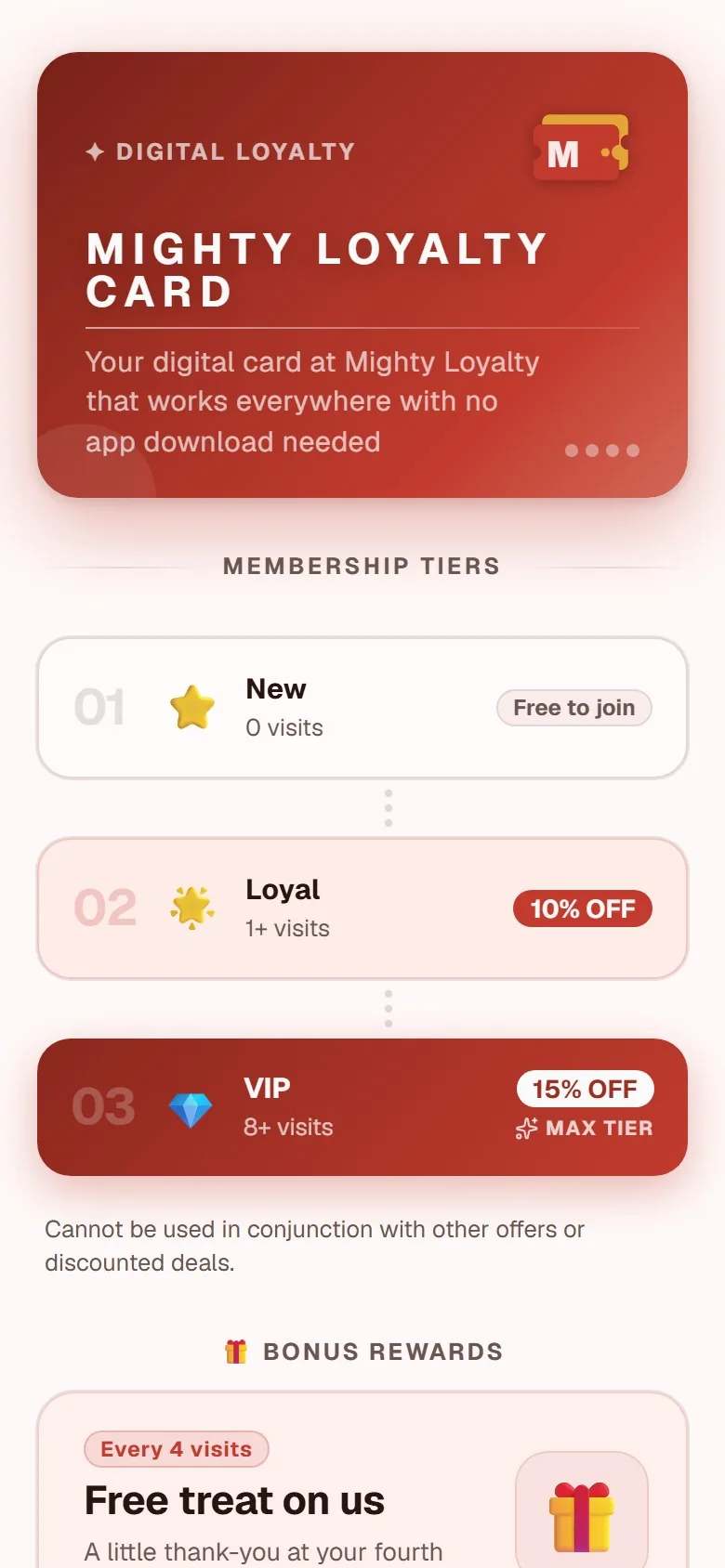
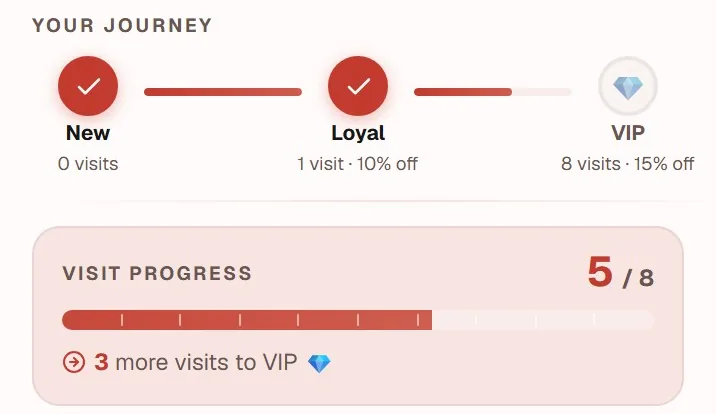
In MightyLoyalty the member list can be sorted by most visits or most recent visit, and each member profile shows the visit count, when the guest was last in, and the full visit history. You can also build your definition into the programme itself with tiers that promote a guest by number of visits, so both you and the guest can see when they have become a regular.
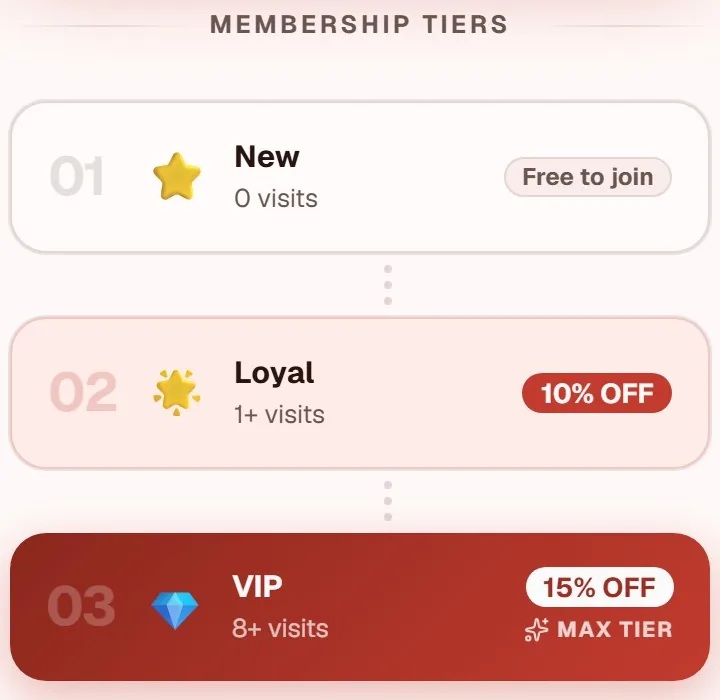
Tiers count visits, not stamps, so one big order cannot buy regular status. That is the point: the tier rewards coming back. If you want to bring tiers and member perks together in one club, see how it fits on our page about a free loyalty program.
Standard costs 99 DKK/month and Pro 249 DKK/month, both excl. VAT with unlimited members. You can try every Pro feature for 14 days without a payment card, and after that there is no setup fee and no binding period.
Frequently asked questions
How many visits does it take to become a regular customer?
It depends on your business. A good starting point is how often a satisfied customer would naturally visit, with the bar set a little above that. Choose one number and one time window, and stick to them so you can follow the trend.
Is a regular customer the same as a loyal customer?
Almost, but not quite. A regular comes often and on a pattern. A loyal customer chooses you over others and recommends you, even if they do not come that often. Most regulars are loyal, but a loyal customer who lives across town may visit rarely.
Should regular customers get a discount?
Not necessarily. Many regulars value being recognised more than a discount. A small perk that is only for them, or an experience such as tasting a new dish before anyone else, often says thank you better than ten percent off the bill.