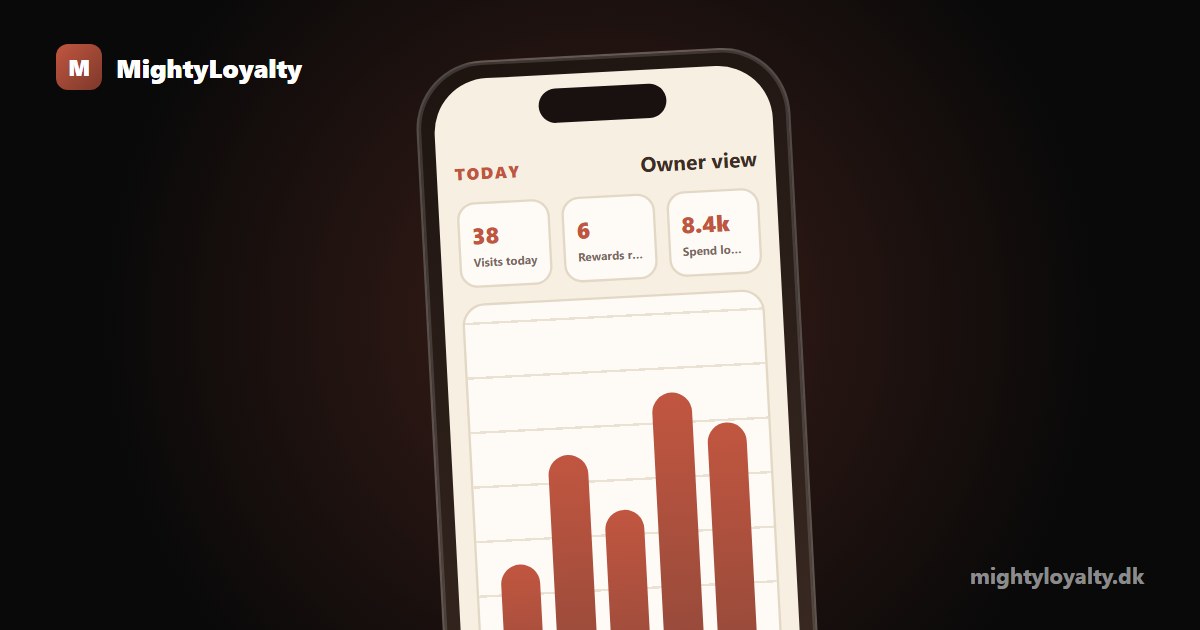
Every visit logged in your loyalty program leaves a trace: when the guest came in, what they redeemed, and whether they have been back since. Most restaurants, cafes, and salons collect this data without ever using it actively as a marketing channel. It is your most underused asset, and it requires neither extra budget nor a marketing agency.
What guest data you already have
A digital loyalty program records at least three types of data for every active member.
Visit history. When did the guest last come in? And the time before that? This tells you whether someone is a weekly regular, a monthly visitor, or beginning to drift away from your network.
Visit frequency. How often does the guest visit on average? If your typical member returns every ten to fourteen days, you can spot when a particular guest starts deviating from their own pattern.
Redemption behaviour. Which rewards do guests choose? The guest who always takes the free coffee is different from the one saving up for a larger meal. It is a weak signal about preferences, but a consistent one.
A digital system gives you all of this structured and date-stamped. That is fundamentally different from a paper stamp card, which tells you nothing about who holds it or when they last visited.
Three questions guest data can answer
Data on its own is not useful. The value is in the questions you ask of it.
Who are your most loyal guests? Identifying the five to ten percent of your customers who visit most often is the starting point for everything else. They are the most likely to write a Google review, recommend you to friends, and try a new menu item. They are also the ones you absolutely cannot afford to lose to a competitor.
Who is drifting away? A guest who used to come every week and has now been absent for five weeks has not disappeared for good. She is reachable. Catching that deviation from her normal pattern is what makes a win-back attempt possible before she has fully moved on.
When do guests typically return? Imagine a cafe where the average regular comes back every nine to twelve days. Sending a personalised message to guests who have not visited in twenty days puts your message precisely in the window when they are starting to consider alternatives. Timing is the most important variable in re-engagement marketing.
From insight to action: three practical steps
Knowing your guests is only useful if you act on it.
Win-back campaigns. Identify guests who have not visited in 30 to 45 days and send them a concrete invitation: not a generic newsletter, but a message that acknowledges their absence and offers a reason to return. A stamp bonus, a complimentary starter, or a special reward all work. The key is that the message feels personal. "We miss you" outperforms "offer for all customers" every time.
Offer segmentation. A guest who visits twice a month does not need the same message as one who last came in three months ago. Your most loyal guest will value an exclusive benefit or early access to a new menu. Your dormant guest needs a low-barrier incentive to cross the threshold again. One message for everyone is the default, but guest data is precisely what makes segmentation possible.
Communication timing. Guest data typically shows that members are most receptive to messages close to the time they usually visit you. If a regular eats with you every Friday at lunch, a message on Tuesday or Wednesday is far more relevant than one sent on a Sunday evening. Visit history can give you that signal even at a broad level.
A practical guide to writing email campaigns around guest behaviour is in Email marketing for restaurants: get guests to return. To build the base of loyal guests that makes this data meaningful, Get more regulars: 7 tactics that work is a natural next step.
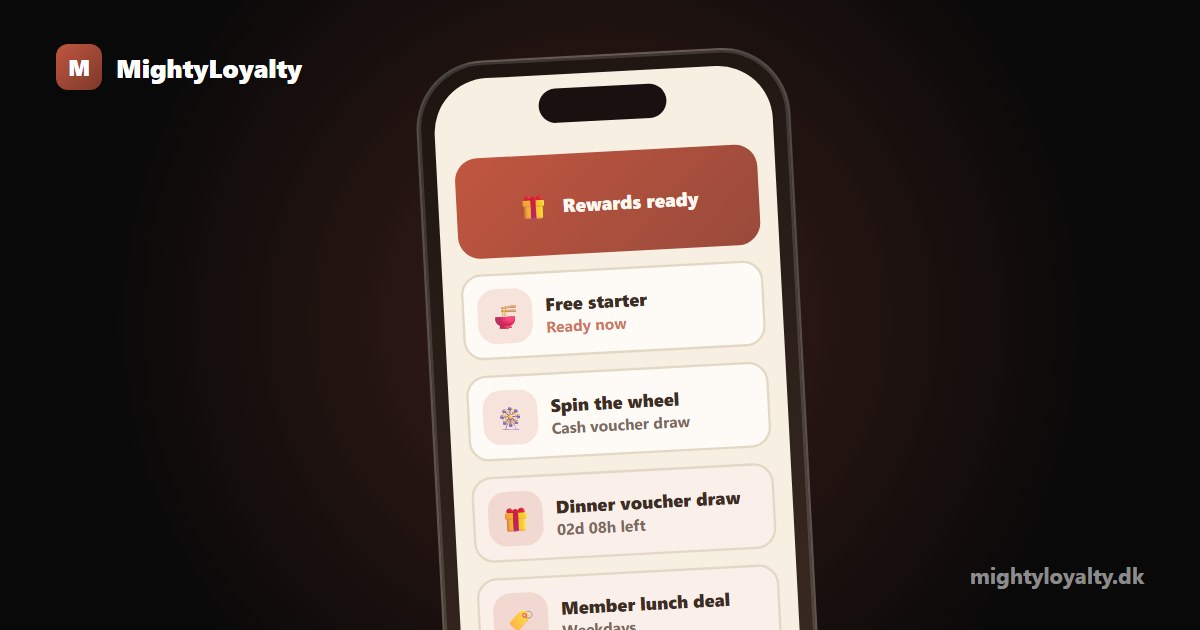
The rule you cannot skip: GDPR
Guest data is useful, but it is not yours to use freely without the right framework in place. Loyalty programs fall under GDPR, and the three key principles are: collect only the data you have a legitimate use for; ensure the guest has actively consented to being contacted; and make it easy to unsubscribe.
The advantage of a digital loyalty program is that the guest signs up actively. They give consent at the point of joining. That is fundamentally different from buying an email list or collecting data without explicit agreement. You have a legally and ethically sound basis for using the data your program collects, as long as you use it for the purpose the guest agreed to.
A detailed look at the specific GDPR requirements for loyalty programs is in Loyalty Schemes and GDPR: What Customer Data Can You Keep?.
The cafe with 80 active loyalty members
Imagine a cafe with 80 active loyalty members. That is not just 80 customers. It is 80 profiles with visit history, reward preferences, and a visible pattern for when they usually come in and when they have started to slip away. It is 80 opportunities for a proactive win-back attempt, rather than waiting for them to find their way back on their own.
It starts with asking the right questions of the data you already have. Who are your most loyal guests? Who are you missing? When do they typically visit? The answers are already in your loyalty program. The step is choosing to use them.
For an overview of what a digital restaurant loyalty program can do beyond data collection, see restaurant loyalty program.
Frequently asked questions
Do I need an advanced system to use guest data?
No. A straightforward digital loyalty program already gives you the three key insights: visit frequency, most recent visit, and redemption behaviour. You do not need a dedicated CRM system or analytics platform. The important thing is simply to start looking at the numbers, rather than using the program only as a stamp card.
What if I have many guests but a low sign-up rate for my loyalty program?
Focus on the sign-up process at the counter. Ask at the point of payment, keep a QR code visible on the till and the table, and briefly explain what the guest gets by joining. A low sign-up rate is usually a visibility problem, not a lack of interest. Loyalty program sign-ups: 6 counter tactics that work walks through the most effective steps.
When is it too early to start using guest data actively?
You can start using guest data actively once you have 30 to 50 active members. Below that, patterns are too sparse to act on meaningfully. Above 50 you begin to see real patterns in visit frequency and deviations from the normal. Start with the simplest analysis: who has not visited in the last 30 days? That requires no extra setup beyond your loyalty program itself.