A local business partnership is an agreement between two shops on the same street to recommend each other to their customers, usually with a small offer that only the other shop's customers get. For a café, a salon or a bakery it is one of the cheapest ways to find new guests, because they already walk past your door. This guide covers who to partner with, what the offer should be, and how to tell whether it works.
Why next door beats an ad
A social media ad reaches people who may live on the other side of town. Your neighbour's customers are already in your area, and they have already shown that they spend money locally. You will not find a tighter audience.
Trust matters too. When a hairdresser says "try the café next door, their cinnamon roll is the best around", the tip comes from someone the customer just spent an hour with. That carries more weight than a post they scroll past.
And it costs almost nothing: no ad budget, only some time, an agreement and an offer whose size you control. The real risk is that it brings nothing, and you keep that risk small by starting small.
Pick the right partner
A good partner shares your customers but not your products. Two cafés on one street are rivals. A café and a bookshop are natural partners, because people like a coffee with their new book.
Think in daily routes. Where do your customers go just before or just after visiting you? That is where a partnership makes sense:
- Bakery and florist: the weekend bread and the bouquet for dinner.
- Hair salon and café: coffee before the cut or lunch after.
- Pet shop and vet: the same owner, with the same animal.
- Wine bar and cheese shop: the bottle and what goes next to it.
- Bike workshop and café: the wait while the bike gets fixed.
Partners | The shared customer | A natural offer |
|---|---|---|
| Bakery and florist | Shopping for the weekend | Small bouquet with the bread |
| Hair salon and café | Has time before or after | Half price coffee after a cut |
| Pet shop and vet | Has the same animal | A treat on the first visit |
| Wine bar and cheese shop | Planning an evening | A taste of this week's cheese |
| Bike workshop and café | Waiting for the bike | Free coffee while you wait |
Also pick someone you enjoy working with. The whole thing rests on staff in both shops actually mentioning each other, and that only happens when both owners believe in it.
The offer: small, simple, for the other shop's customers only
A partner offer has to fit in one sentence at the counter. "Show your bakery receipt and get a small bouquet at half price" is easy to remember. An offer with three conditions never gets mentioned.
Keep it small. The point is not a big discount but a reason to walk the extra 20 metres and through your door the first time. After that your shop has to do the work. A coffee, a taste or a small add-on to the purchase is enough.
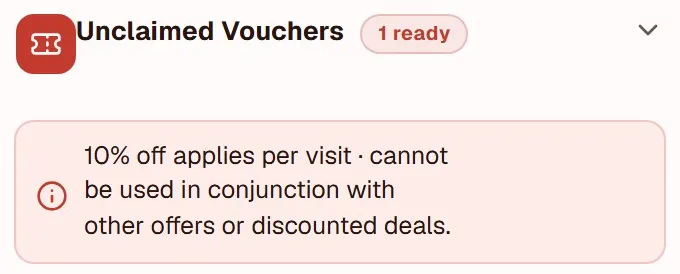
Tie the offer to joining your loyalty program. That way you do not just get one sale, you get a new guest with a stamp card and a reason to come back. An offer you can limit to members and to a set period is easy to keep track of. The difference between paper coupons and digital offers is covered in our guide to digital coupons.
Turn the neighbour's customer into your member
The guest from next door may only come once unless you act. The moment that matters is the first visit: that is when they should join and get their first stamp.
A QR code is the simplest route. Ask your partner to put a small poster with your QR code and one line about the offer by their till. The customer scans it, the card opens in the browser, and there is no app to download. Where a poster actually gets scanned is covered in our QR poster placement guide.
At your own counter, staff need a ready line. When a guest mentions the neighbour, the answer is: "Welcome, shall we set you up with a stamp card now? You get the offer straight away and a stamp on top." That first stamp means the card never starts empty.
Measure it honestly
A partnership is only worth keeping if it brings new customers. You do not need a sophisticated system to see that, but you do need to agree on how you count before you start.
Three simple methods work:
- Count at the counter. Every time a guest mentions the partner or shows the receipt, staff add a tally mark on a sheet. It is basic, and it is the most accurate number you will get.
- Watch new members. Compare new members during the partnership with the weeks before. Other things move that number too, but a clear rise is a good sign.
- Check back after a month. Did the neighbour's guests return? One with three stamps since is a new regular. One who only came for the offer was a single sale.
Meet your partner after four to six weeks and compare numbers. If it is lopsided, with one shop getting plenty and the other nothing, adjust the offer or the poster spot. If neither of you gets anything from it, end it on good terms and try another partner.
Never swap customer lists
A partnership must never mean exchanging customer data. Your members joined your program, not your neighbour's, and they have not agreed to their email or phone number being passed on. Under GDPR in Denmark, sending a partner's offer to your whole member list also requires that members agreed to receive marketing from you.
Keep it physical instead: posters, a word at the counter, a small note in the bag. The customer decides whether to walk through the other door. That is both lawful and more credible. What you may store and send to members is covered in our loyalty data and GDPR guide. This is not legal advice, so ask an adviser if you are unsure.
From one partner to a neighbourhood network
If one partnership works, grow it. Many Danish streets and districts already have a local traders' association (handelsstandsforening) that can bring several shops together for a shared late opening or a seasonal campaign. It is a good place to find your next partner.
Do not make it too big, though. Five shops with five different offers are hard to explain, and staff stop mentioning them. Two or three steady partners everyone knows beat a large network nobody remembers.
A local partnership is close to a referral program, only between businesses instead of between customers. If your regulars already recommend you to friends, the two can run side by side. How that works is covered in our guide to referral programs for small businesses.
Same customers, different products
Only for the other shop's customers, one sentence long
The new guest joins on the first visit
A tally per guest at the counter and new members per week
Continue, adjust or end it on good terms
What does it cost?
The partnership costs only the offer you choose to give. The loyalty program that keeps the new guests costs 99 DKK/month on MightyLoyalty Standard and 249 DKK/month on Pro, both excl. VAT, with unlimited members and unlimited stamping. You can try every Pro feature free for 14 days without a payment card, with no setup fee and no binding period. See how a free loyalty program works in practice.
Frequently asked questions
How do I find the right partner?
Look for a nearby business with the same customers as you but different products. Think about where your customers go just before or after visiting you. A café and a hair salon, or a bakery and a florist, are classic pairs.
What should a partner offer be?
Something small that fits in one sentence: a coffee, a taste or a small add-on to the purchase. The aim is to get the customer through your door the first time and into your program, not to give a big discount.
Can we share customer lists with each other?
No, not without your customers' explicit consent. Your members joined your program, not your partner's. Keep the partnership to posters, a word at the counter and offers the customer chooses to use.