A referral program for a small business rewards an existing customer when a friend they invited becomes a customer too. For a cafe, restaurant or salon it is the cheapest way to win new guests, because they arrive recommended by someone they already trust. This guide covers how to set one up so regulars actually share, and so the reward only goes to real new guests.
Why a recommendation beats an ad
An ad tells people you exist. A friend tells them it is worth going. The new guest walks in with an expectation someone else set, and often together with the person who recommended you. That is a very different first visit from a passer-by trying their luck.
Word of mouth already happens at most small businesses; you just cannot see it. A referral program changes two things. It gives a regular a small reason to mention you a little more often, and it shows you who is actually bringing new people in. That second part is often the more valuable one: those names are your best ambassadors, and they deserve to be recognised at the counter.
Keep expectations realistic. A referral program does not create a stream of new guests on its own. It amplifies the recommendations that already exist, and it works best when your guests are already happy to come back.
What should the reward be?
In a stamp card program the most natural reward is one or more bonus stamps for the person who invites. It costs you no cash discount, and it pushes the regular closer to their next reward, so they come back a little sooner. It follows the same logic as the rest of the program: the reward is tied to returning.
Keep it small. One to three bonus stamps per friend is enough to feel like a thank you without turning friend-hunting into a side business. If your card takes ten stamps for a free coffee, two bonus stamps are worth a fifth of a coffee. That is a low price for a new guest who might keep coming for years.
Think about the friend's side too. Many referral programs reward both people, because it gives the friend a reason to make that first visit. It can be as simple as staff offering a biscuit with the first coffee. What matters most is that you can explain it in one line. For a deeper look at rewards in general, see how to choose a stamp card reward.
Model | Good when | Watch out |
|---|---|---|
| Bonus for the person who invites | You want to keep it simple | The friend has no extra reason |
| Bonus for both | The friend needs a reason for a first visit | Twice as much to explain |
| Reward for several friends | You have a few very active ambassadors | Can turn into a hunt for friends |
Reward the visit, not the sign-up
The most important rule in a referral program is when the reward triggers. If the bonus lands the moment the friend creates an account, you are rewarding a sign-up nobody has to follow through on. That invites accounts that never get used.
Trigger the bonus when the friend has actually been in and received their first stamp instead. Then there is a real guest behind every reward, and your staff have seen them. It also closes most of the abuse covered in loyalty program fraud prevention: a fake account earns nothing until somebody is standing at the counter.
Two more rules help. A guest can only be referred once, and only as a new customer, so existing regulars cannot refer each other back and forth. And nobody can refer themselves.
Make sharing effortless
The main reason referral programs fail is not the reward. It is that sharing takes too much effort. If a regular has to remember a code, dig it out and explain what the friend should do with it, it rarely happens.
The simplest option is a personal link the regular can send in a message. The friend taps it, sees your stamp card and joins, and the invite comes along automatically. No app to download and nothing to type.
Your staff are the other half. A regular who has just claimed a reward is in the best mood to hear "did you know you can send your card to a friend?". One sentence at the counter does more than a sign nobody reads. For the few lines that work, see training your staff on the loyalty program.
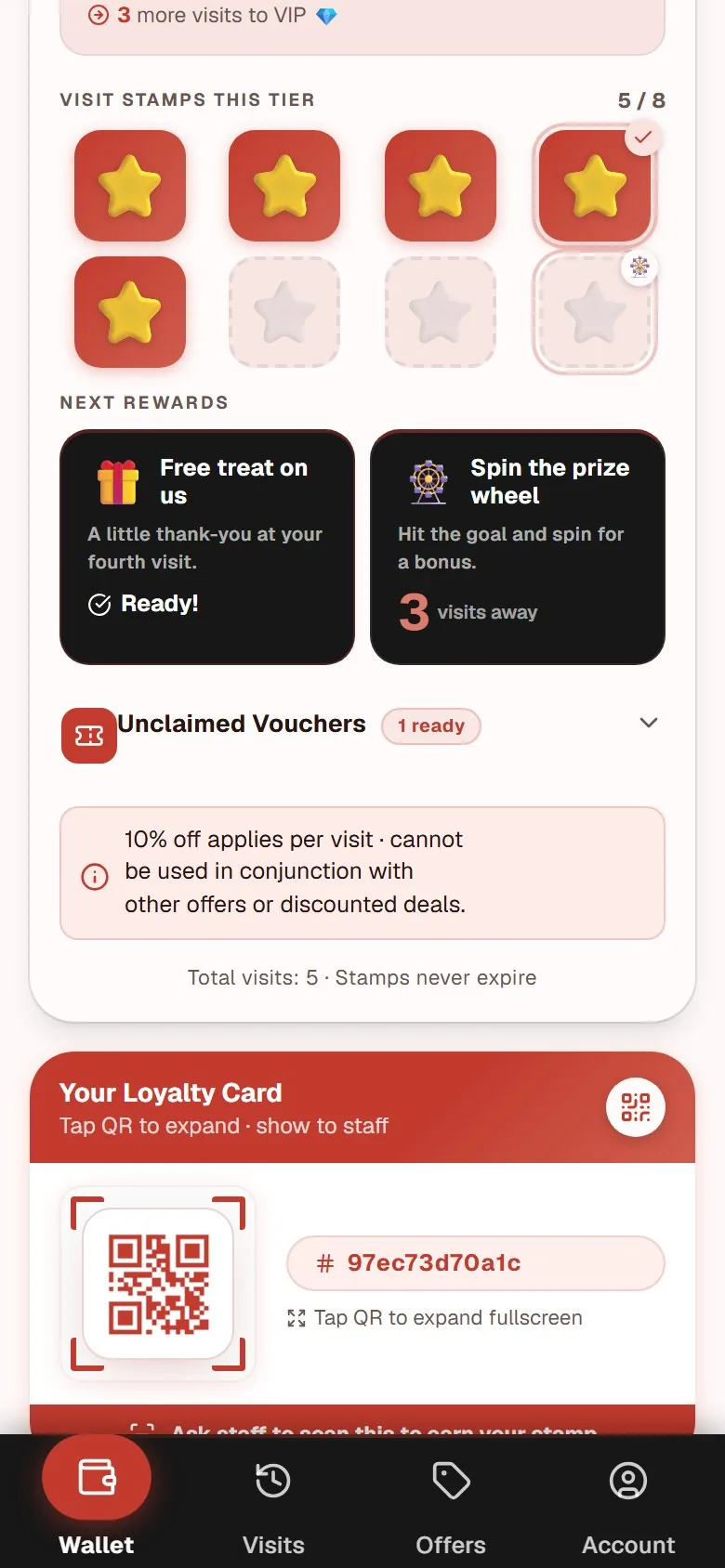
A message to a friend, straight from their card
The link opens the sign-up, no app and no code
Staff scan their first stamp
The regular gets their bonus stamps automatically
How it works in MightyLoyalty
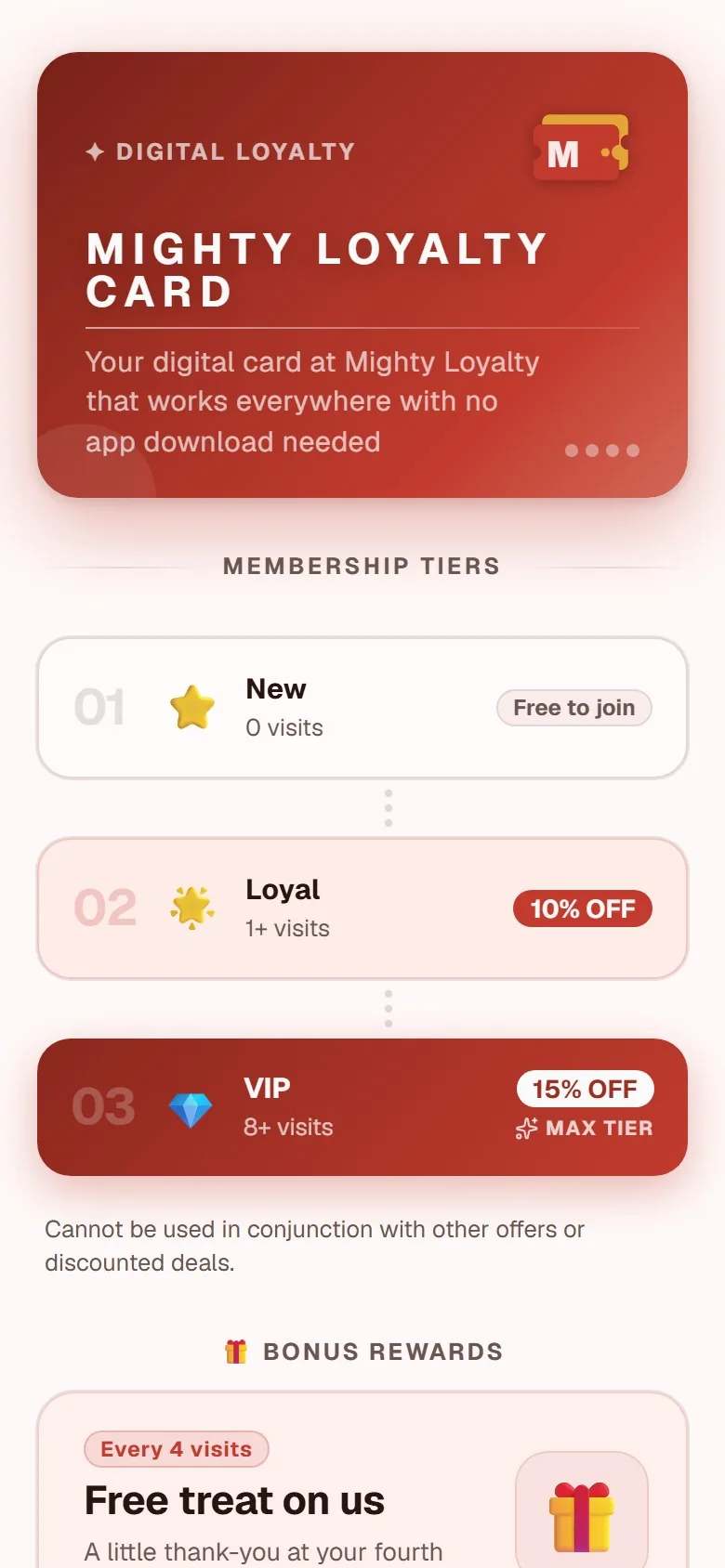
Referrals are an add-on on Standard (from 19 DKK a month) and included in Pro. Once you switch them on, every member gets their own invite code, which they can share as a link straight from their card. You decide how many bonus stamps the person who invites receives.
The bonus triggers on the friend's first real visit, not on sign-up. A code cannot be used on your own card, and a member can only be referred once.
In the owner portal you see how many referrals have completed, how many friends have joined but not visited yet, and who your most active ambassadors are. The whole program, referrals included, is described on the free loyalty program page, which also covers the 14-day trial with no card.
What to keep an eye on
After a month or two you can tell whether the program is pulling its weight. Three things are worth a look:
- Completed referrals. How many friends actually came in? That is the only number that counts.
- Pending referrals. Lots of friends who joined but never visited can mean the friend lacks a reason for that first visit. A small welcome for the friend can help.
- Who refers. Often a handful of regulars account for most of it. Recognise them and say thank you.
If almost no referrals come in, the reward is rarely too small. More often nobody has mentioned it. Start with your staff before you raise the bonus.
Frequently asked questions
Should both the regular and the friend get a reward?
It is not required, but it helps. The bonus stamp for the person who invites gets them to share. A small welcome for the friend gives them a reason to make the first visit. Keep both small and easy to explain.
How many bonus stamps should I give per friend?
One to three is a good starting point. It should feel like a thank you and nudge the regular towards their next reward, without being so large that collecting friends who never return becomes a game.
Can people cheat with referrals?
The hardest gap to close is fake sign-ups, and you close it by paying the bonus only on the friend's first visit. When a guest can only be referred once and nobody can use their own code, there is little to gain from cheating.