The rebooking problem in a hair salon is not a satisfaction problem. Clients leave delighted, compliment you at the desk, and then quietly book somewhere else six weeks later. This guide is about closing that gap: the sentence to say while the client is still in the chair, the reward structure that makes the next appointment feel closer, and the desk habit that makes both stick.
The clients you lose without a goodbye
The most frustrating client in a salon is not the one who complains. It is the one who smiled at the desk, said "I love it," and then booked elsewhere.
It rarely happens because they were dissatisfied. It happens because the gap between visits is long enough for life to intervene: a colleague recommends a place near the office, or a search for availability lands on a competitor with an earlier slot. There does not have to be anything wrong with your work. There just needs to be something pulling the client back specifically to you.
Imagine a salon with forty active clients a month. If only eight quietly drift away each quarter, you lose a real slice of revenue to attrition, and you never know it happened because nobody says goodbye.
Why "book your next one now" fails on its own
Every salon knows it should rebook at the desk. Most try, and most stop, because the ask lands awkwardly: the client is paying, thinking about her afternoon, and being asked to commit to a date six weeks out with no reason beyond your convenience.
What changes the answer is having something concrete to point at. "You need two more stamps for your free toner" gives the client a reason of her own to name a date. The rebooking ask stops being about your calendar and starts being about her reward.
That is the whole job of a loyalty card in a salon. It is not a discount scheme; it is a reason to answer yes at the desk.
The rebooking script
Three sentences, in order, at the end of the appointment.
In the chair, while she still loves the result: "Do you collect stamps with us? Every visit counts towards a free toner."
At the desk, after the card is scanned: "That is stamp four. Two more and the next toner is on us."
Before she has put her coat on: "Want me to put you in for six weeks so you are on track for it?"
The order matters. The stamp comes before the booking ask, because the stamp is the thing that makes the ask reasonable. Reversed, it is just a diary request with a loyalty card bolted on afterwards.
Set the goal to the salon calendar, not a cafe's
A stamp card designed for a cafe assumes near-daily visits. A salon client may come monthly for trims, or three to six times a year for cuts and color, and copying a ten-stamp goal into that rhythm produces a card nobody will ever finish.
The underlying mechanic is the same: collect stamps, earn something worth waiting for. But the goal has to reflect that each visit is a meaningful spend, not the price of a coffee. Four to six stamps is realistic for a cut-focused salon. A color-and-cut salon might set three, so the first reward is achievable within a few months rather than a couple of years. The same logic holds in other trades with a steady monthly rhythm, such as a car wash loyalty program.
See our guide on choosing the right reward for your stamp card for how to set goal and reward value in proportion to each other.
What happens at the desk
Picture the moment: the cut is done, the client is delighted, and she is at the desk paying. That is the best time to sign her up, because satisfaction is at its peak and her association with your salon is warm.
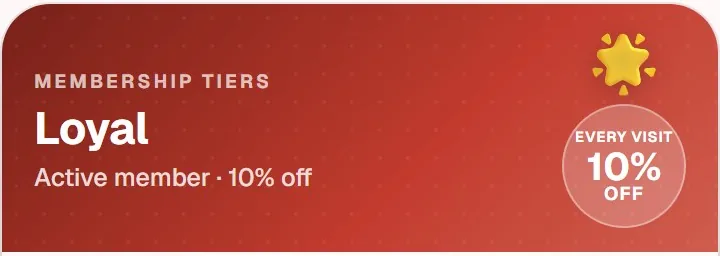
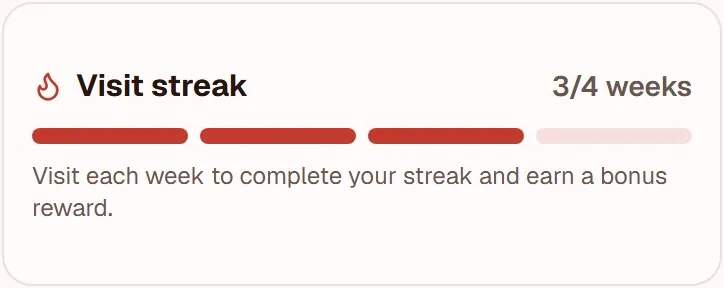
Signing up takes under a minute. You display a QR code at reception or on the counter, the client scans it with her phone, the page opens in the browser with no app download, and you add a stamp from the staff interface. She walks out with one stamp already on the card and a concrete reason to return. Our salon loyalty program is built around exactly this moment, with stamp goals tuned to how often clients realistically come back. What the client sees from QR scan to first stamp is shown step by step on our stamp card app page.
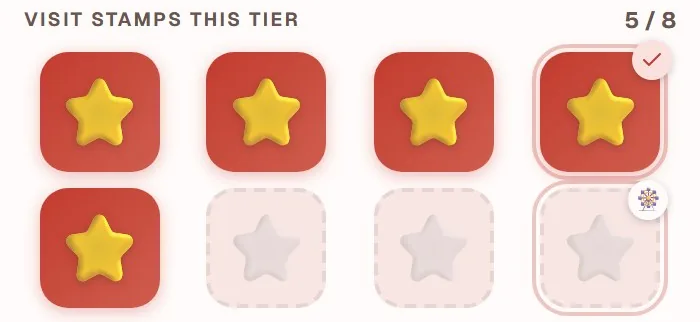
Your team does not need to own the system to stamp. Staff access is separate from your owner dashboard, so an assistant can add stamps without seeing business data or changing settings. It also needs no integration with your booking system.
See the stamp card setup guide for a full walkthrough from setup to first stamp.
Rewards that make the next booking feel closer
The best salon reward has high perceived value for the client and a low real cost for you. Three types consistently work.
A complimentary add-on treatment. A free toner application, a beard trim, a styling consultation. These slot naturally into an existing appointment and feel genuinely valuable without consuming a full hour of your time. They are also the easiest to name in the rebooking sentence, because claiming them requires an appointment.
A discount on the next visit. Concrete and easy to communicate: book now, use the saving next time. The trade-off is a slightly reduced margin on that one visit.
A product from your retail range. A shampoo, hair mask, or styling product is low cost with high perceived value, and it doubles as a soft promotion for your retail shelf.
Avoid rewards that are complicated to redeem, require a specific weekday, or depend on stock you do not always carry. The client should be able to say "I would like to use my reward today" and have it happen without friction.
Making the program visible without nagging
Two things help beyond the script.
Put it at reception. A poster or small counter display gives waiting clients something to read and understand before they pay, so the sentence at the desk is a reminder rather than an introduction.
Keep the card simple. One goal, one reward, no asterisks. Salons already have a more personal relationship with clients than cafes do, and that connection is a strong retention tool on its own. The card should support the relationship, not replace it with rules.
For tactics that work across business types, read the seven tactics to get more regular customers and adapt the ones that suit a salon.
Pricing and getting started
Standard costs 99 DKK per month and covers unlimited stamping, a printable QR poster, and the owner dashboard. Pro at 249 DKK per month adds email marketing, automations, and birthday rewards. There is no binding period and no setup fee, and you cancel in the portal. You can see the client experience at loyalty.maiya.dk.
Frequently asked questions
Does a stamp card make sense when clients only visit a few times a year?
Yes, and the low frequency is precisely what makes it useful. In a cafe the card wins tomorrow's coffee decision; in a salon it creates a goal to come back to in six to eight weeks, which is exactly the window where clients drift. A client who needs two more stamps has a far stronger reason to name a date at the desk than one with no program at all, because each stamp represents a deliberate decision and a meaningful spend.
Can I use the same system as a cafe, or does a salon need something different?
The same system. The only things that change are your settings: the stamp goal, the reward type, and the text on the card. All of that is configured at setup and adjustable at any time. There is no technical difference between running a card for a salon and for a cafe; the difference is entirely in how and when you present it to clients.
What happens to a client's stamps if she cancels an appointment?
Stamps are not removed on cancellation and the client keeps everything she has collected. You can always add or remove a stamp manually from your dashboard if a specific situation calls for it, which means you can handle edge cases the way your own salon policy dictates rather than being locked into a rigid rule.