Loyalty program terms and conditions are the rules that tell a guest who can join, what earns a stamp, and what happens when you change or close the programme. They do not need to be long, but they need to exist and they need to be readable without a lawyer. Here are the seven points to cover, and how to write them so they hold up at the counter and over time.
Why a small business needs terms at all
While everything runs smoothly, nobody reads your terms. They matter on the day something is unclear: a guest is sure they have three more stamps than the card shows, a new staff member hands out a reward you thought was retired, or you want to swap the free coffee for something else.
In those moments your terms are what you and your team can point to. Without them every disagreement turns into a negotiation, and you nearly always lose it, either on the numbers or on the mood. With them, staff can calmly say "that is how the rules work" and move on.
There is a formal reason too. Danish marketing rules expect the conditions of perks, discounts and offers to be clear and easy for the customer to find, and a loyalty programme is exactly that kind of perk. This post is not legal advice, so check with an adviser if you are unsure about something specific. But a short, honest page gets you most of the way.
The seven points your terms should cover
This checklist fits most cafés, restaurants, salons and shops running a stamp card or a members' club in Denmark. Each point takes one or two sentences.
Point | Answers |
|---|---|
| Who can join | Age, one card per person, personal card |
| How to earn | What earns a stamp, and when it is given |
| Rewards | What you get, and what it cannot be swapped for |
| Expiry | Whether stamps or rewards have a deadline |
| Changes | How and when you announce a new rule |
| Ending | What happens to stamps if the programme closes |
| Data | What you store, and where the guest can read more |
1. Who can join
Say whether the programme is open to everyone, whether there is an age limit, and that each guest has one card. A personal card also means stamps cannot be pooled from several cards or handed to someone else. It sounds strict, but it is exactly the sentence you need when two friends want to merge their cards at the till.
2. How guests earn stamps
The most important point. Describe what earns a stamp so nobody can read it two ways. "One stamp per visit with a purchase" is different from "one stamp per coffee", which is different again from "one stamp per set amount spent". Also say that the stamp is given at the time of purchase and cannot be added later if the guest forgot to show the card. That sentence alone removes a lot of the conversations your staff would otherwise have.
3. Rewards
State what the guest gets when the card is full, and what the reward cannot do: usually it cannot be exchanged for cash, combined with other offers or used on certain items. If you reserve the right to replace a reward with something similar when an item leaves the menu, say so here.
4. Expiry
If stamps or rewards have a deadline, it belongs in the terms before the guest starts collecting. If they do not, write that too, because it is a selling point. Which model suits you, and how to introduce it without letting anyone down, is covered in should loyalty stamps expire?.
5. Changes to the programme
At some point you will change something: the reward, the stamp goal or the earning rule. Say that you can change the terms, that you announce changes in advance, and that stamps earned before a change keep the old rules. That last part is what keeps your regulars' trust.
6. If the programme ends
Nobody starts a programme planning to close it, but write down what happens anyway: how much notice guests get, and how long they can still use the stamps and rewards they already have. A fair window to claim earned rewards is the least a regular can expect.
7. Data and privacy
The terms do not need to repeat your whole privacy policy, but they should say that you store details about the member and their visits to run the programme, and where the guest can read more. What you may keep, and when it has to go, is in the loyalty data and GDPR guide. Keep consent to newsletters and offers separate from membership itself, so the guest knows which is which.
Write them so a guest understands them
It is tempting to copy the terms from a big chain's scheme and swap in your name. Don't. Those documents are written for points, partners and card systems you do not have, and they are so long that nobody reads them.
Write instead the way you would explain the rules to a guest at the counter:
- Short sentences. "Stamps cannot be moved to another card" beats a paragraph about the transfer of rights.
- Real numbers. Write the actual stamp goal and the actual reward, not "a number determined from time to time".
- One page. If your terms cannot fit on half a page, the programme is probably too complicated for guests as well.
- A date. Put the date of the last change at the top, so you and the guest both know which version applies.
A good test: read the terms aloud to a member of staff. If they can then answer "do I get a stamp if I only buy a bottle of water?", the terms are clear enough.
Where the terms should live
Terms nobody can find do not help anyone. A guest should see them before joining and be able to find them again later. In practice that means three places:
A link or a short line before the guest creates a card
So the guest can look the rules up when the question comes up
One line on the sign or poster with the QR code
On a paper card the rules sat in small print on the back. A digital card has more room, so there is no excuse for hiding them. If you would rather start from the very beginning and set the whole programme up first, there is a step-by-step guide on how to start a loyalty program.
Separate conditions for offers and campaigns
A time-limited offer often has its own rules: 10 percent off in January, a free dessert on weekdays, double stamps for a single week. Those rules do not belong in your general terms but next to the offer itself, so the guest sees them at the moment they matter.
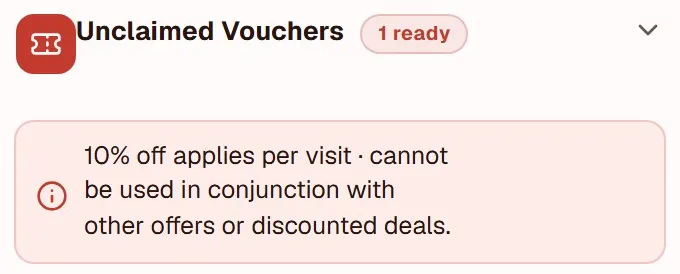
In MightyLoyalty every offer can carry its own short conditions text, shown on the voucher in the guest's card, such as "cannot be combined with other offers". When a guest joins, they agree that you store their details to run the card, with a link to the privacy policy. The rules of the programme itself, like the stamp goal and any expiry, are still yours to write. How a members' club can be set up beyond that is on the free loyalty program page.
Common mistakes to avoid
Terms that contradict what staff do. If the terms say "one stamp per visit" but staff give two when it is busy, what staff do is what counts in the guest's eyes. Walk the team through the rules when you write them.
Retroactive changes. Raising the stamp goal on cards that are already half full feels like a broken promise, whatever the small print says.
Anti-abuse clauses you never use well. A line saying you may close a card in case of misuse is sensible. Use it rarely, and only for obvious abuse. How to prevent misuse in the first place is covered in loyalty program fraud prevention.
Frequently asked questions
Do I have to have terms for my stamp card?
Danish marketing rules expect the conditions of perks and offers to be clear and easy to find, so in practice you should have them. They can be short. Check with an adviser if you are unsure about something specific, as this is not legal advice.
Can I change the terms once the programme is running?
Yes, as long as your terms say you can and you announce the change in advance. Let stamps earned before the change keep the old rules, so no guest loses something they have already earned.
How long should loyalty program terms be?
As short as possible. For most small businesses the seven points fit on half a page, with one or two sentences per point and the date of the last change at the top.