Customer lifetime value for a restaurant is the total a guest spends with you for as long as they keep coming back, not just what is on tonight's bill. It matters because it tells you how much it is worth doing to turn a first visit into a habit. Here is the simple formula, where to find the numbers, and what to do with the answer.
The three-number formula
Large chains model customer lifetime value (CLV) with cohort analysis and churn curves. An independent restaurant or café in Copenhagen can get most of the insight from three numbers:
- What does a guest spend on an average visit?
- How many times a year do they come?
- For how many years do they keep coming?
Multiply the three and you have the lifetime value. Picture a lunch restaurant where a regular spends 150 kroner a visit on average, comes 20 times a year and stays a regular for three years. That guest is worth 150 times 20 times 3, which is 9,000 kroner in revenue. A guest who comes once and never returns is worth 150 kroner.
That gap is the whole case for working on regulars. You have already paid to get the guest through the door the first time, through your location, your signage, your ads or a friend's recommendation. Every visit after that costs you far less to win.
Use contribution margin, not revenue
Revenue is not what you keep. Ingredients, packaging and the share of wages that comes with each visit have to come off first. What is left is the contribution margin, and that is the number to use when you decide how much a guest is allowed to cost you.
If 100 kroner of each visit is left after food and direct labour, the sum looks like this:
Input | Value | Over three years |
|---|---|---|
| Average bill | 150 kroner | 9,000 kroner |
| Contribution per visit | 100 kroner | 6,000 kroner |
| Visits a year | 20 | 60 visits |
| Years as a regular | 3 | 3 years |
Those 6,000 kroner are the ceiling on what it could make sense to spend winning and keeping that guest. You will spend far less in practice, but the number puts things in proportion. A free coffee after ten visits costs you the ingredients, not the menu price, and that is small next to what the guest brings in over a year.
Where to find the three numbers
Average bill comes from your POS: revenue for a period divided by the number of receipts. It mixes regulars with tourists and one-off visitors, so it will not be exact for your regulars, but it is a sensible place to start.
Visits a year is harder to read from a till, because a receipt is rarely tied to a person. This is where a loyalty program helps: every scan is a visit from a known guest. Count visits, not stamps. If you give stamps per item or per amount spent, one visit can be worth several stamps and the number comes out too high. For how to work out how many guests come back at all, see customer retention for small business.
Years is the number you have least data on, especially if you opened recently. Be conservative. If you are new, assume one year and adjust as you learn more. Underestimating is safer than building decisions on a regular who in theory stays for a decade.
What moves the number most?
There are three levers in the formula and you can pull all of them, but they do not weigh the same. Start from the 6,000 kroner of contribution and change one input at a time:
The example is made up, but the pattern holds in most versions of the sum: keeping a guest one more year, or getting them in a little more often, does more than upselling a side at the counter. Those are exactly the two things a stamp card is built for. The reward gives a reason to come back within the next few weeks, and a membership that lives on the guest's phone keeps you in mind when they are choosing between you and the place next door.
What to use the number for
Choosing the reward. Once you know a regular is worth several thousand kroner over their lifetime, a free main or dessert after a set number of visits stops looking like a cost to avoid and starts looking like a small investment. That does not mean the reward should be expensive. It means it has to be good enough to come back for.
Deciding what a new regular may cost. A welcome gift at sign-up, a sign at the till or a small campaign to get guests into the program all cost something. Compare that with the lifetime value, not with the margin on the first visit.
Prioritising guests who are drifting away. A guest who used to come every other week and has not been in for two months has already shown you what they are worth. Winning them back is cheaper than finding someone new, and how to win back lapsed customers walks through it.
Three traps
The average hides the spread. In many restaurants a fairly small group of regulars accounts for a large share of visits, while plenty of guests come once. One overall average makes both groups look more ordinary than they are. Work out the number for your regulars on their own.
It is an estimate. Customer lifetime value is a rule of thumb, not an accounting figure. Use it to compare choices and see proportions, not to promise yourself a revenue target.
Lifetime value is not ROI. Lifetime value tells you what a guest is worth. Whether your loyalty program pays for itself depends on how many extra visits it actually creates, which is a different sum, covered in measuring loyalty program ROI.
Where a loyalty program fits
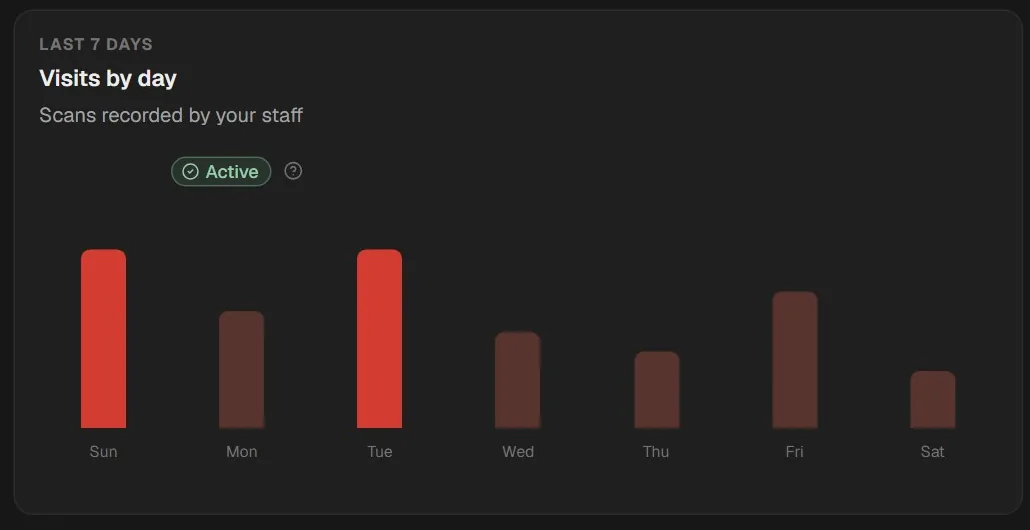
A loyalty program will not change your average bill, but it can move the other two numbers. In MightyLoyalty the owner dashboard shows visits per day and active members this week against last week, so you can see whether guests come more often after you change the reward or run a campaign.
If you want to set up a program that brings more visits rather than just more stamps, the restaurant loyalty program page explains how it works for restaurants.
Frequently asked questions
What is customer lifetime value for a restaurant?
It is the total a guest spends with your restaurant over the whole period they are a customer. The simplest version is average bill times visits a year times the number of years they stay.
Should I use revenue or margin?
Use contribution margin when you decide how much a guest may cost you. Revenue gives a bigger, more impressive number, but margin is what pays for rewards, wages and rent.
How do I work it out if I have only just opened?
Take the average bill from your POS, make a cautious estimate of visits a year and assume one year. Adjust the inputs as real data on how often guests return comes in.