Word of mouth marketing for a small business is everything that makes customers recommend you to other people without you paying for it. For a cafe, restaurant or salon it is often the biggest source of new guests, and the good news is that a lot of it is in your hands.
Why people recommend a place
Nobody recommends a cafe because it was fine. People talk about what surprised them, what made them feel noticed, and what makes them look a little more in the know to their friends. Whoever knows the small place with the best croissant in the neighbourhood gets something out of sharing it.
That leaves three questions to ask about your own business:
- What is the one thing people remember? Not ten good things, but one that is easy to repeat: "the best dal in town", "the stylist remembers what I said last time".
- When does a guest feel recognised? A name at the counter or a remark about last visit gets passed on far more often than a discount.
- Is there something to show? A plate, a cup or a corner of the room that people photograph works for you on phones you will never see.
If you want to go deeper on the experience itself, the guide to the restaurant guest experience walks through the small moments that decide whether a guest comes back.
Five things that get guests talking
You cannot control word of mouth, but you can set the stage for it. These are the moves that cost a small business least and do the most.
Make what you do best easy to say in one sentence
A name and a small remark beat any discount
Unexpected and rare, never fixed and expected
When the guest has just said something nice
A referral or a review in two taps
1. One thing to remember. People repeat short sentences. If you cannot say in one line why someone should come to you, your guests cannot either. It does not have to be a slogan; it can be a dish, a habit or the way you greet people.
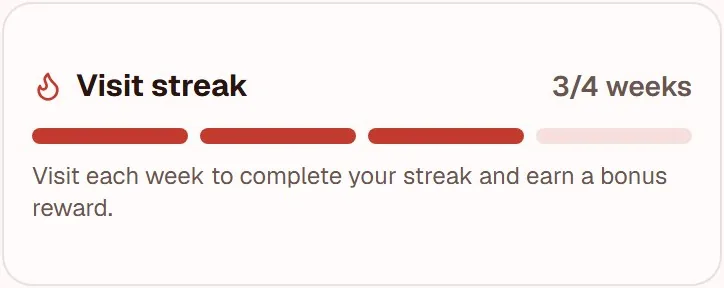
2. Recognise the regular. A guest greeted by name tells others about it. Remembering ten regulars is easy; remembering a hundred is not. A digital stamp card helps, because staff see the guest's name when the card is scanned and can say "good to see you again" and mean it.
3. A small surprise. An extra biscuit with the coffee, a taste of a new dish, or an unexpected bonus stamp. It works because nobody expects it. Do it every time and it becomes part of the price, and then there is nothing left to tell.
4. Ask at the right moment. When a guest says "that was really good", it is a natural moment to say thanks and mention that you would love it if they told a friend. Not as a sales line, just an honest sentence. Most people simply have not thought of it.
5. Make it easy to share. A recommendation that needs the guest to look up your name, address and a link happens less often. A referral link or a direct link to your Google profile removes that friction.
Word of mouth happens online too
Much of what people used to say over dinner they now write on Google. A review is a recommendation to a stranger, and for many new guests it is the first thing they see of you. The founder's own restaurant, Maiya Nepali Kitchen in Amager, Copenhagen, had 4.8 stars from 152 Google reviews, measured 2 November 2026. Every one of those is a guest who took the time to tell a stranger what it was like.
The rule is simple: ask for reviews, never reward them. Stamps or a discount for a good review is not fair to the people reading it, and it can hurt your profile. How to ask for more reviews and how to reply to them is covered in the guide to Google reviews for restaurants.
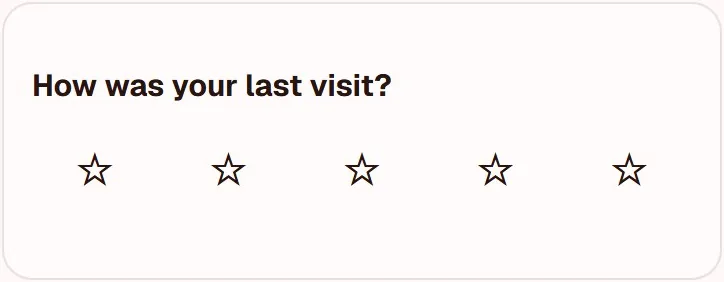
Ask privately first where you can. A short five-star feedback prompt after the visit catches the unhappy guest before the experience ends up online, and gives you a chance to put it right. The guest you helped is often the one who tells the story afterwards.
Where a referral program fits
A referral program is the part of word of mouth you can measure. A regular gets a few bonus stamps when a friend they invited comes in, and you can see who is actually bringing new people. It does not replace a good experience; it amplifies the one you already have.
It makes sense once you have guests who already like coming and you want to give them a small reason to mention you a bit more often. How to pick the reward and avoid abuse is in the guide to referral programs for small businesses.
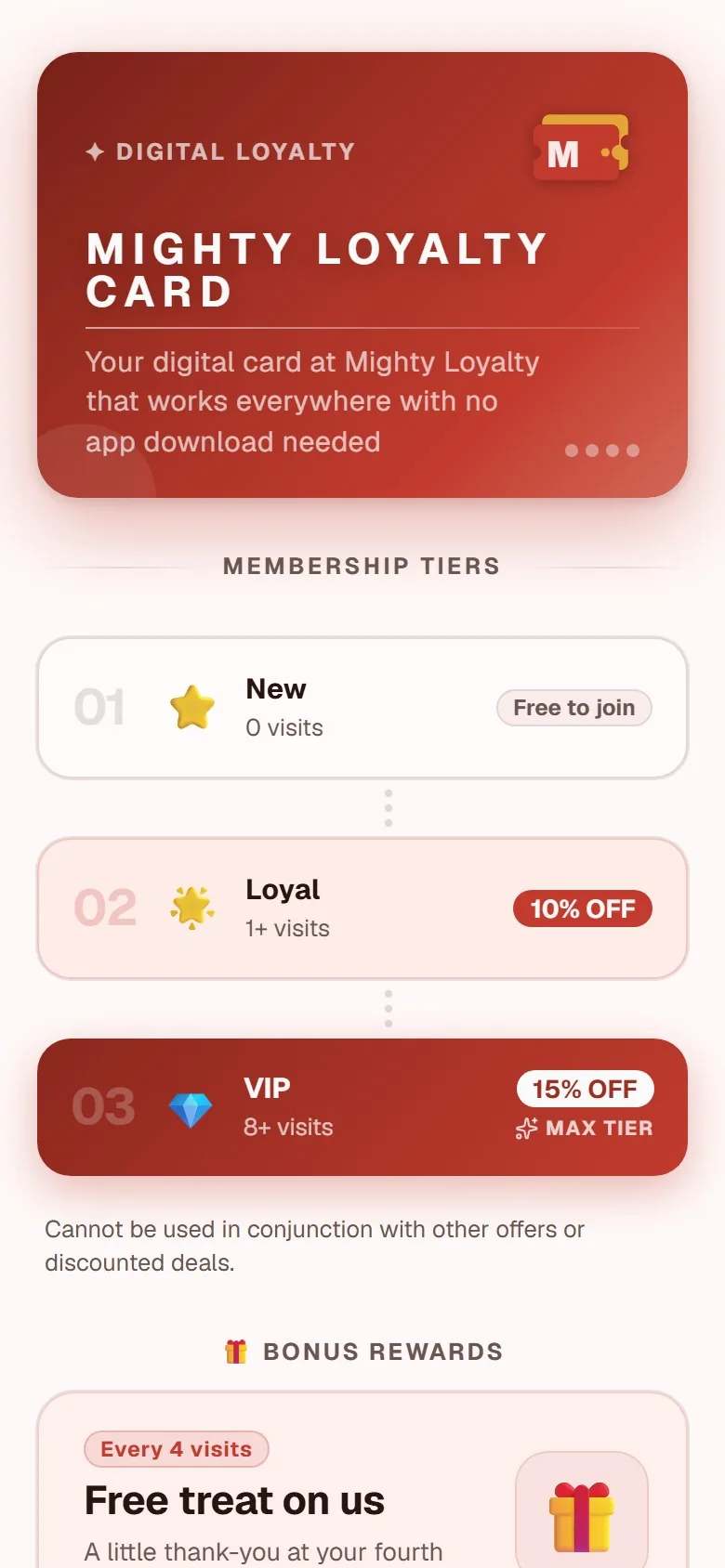
A loyalty program with a digital stamp card brings the three together in one place: you recognise the regular at the scan, you can ask for feedback after the visit, and you can give bonus stamps for a friend who comes along.
What kills word of mouth
It matters just as much to know what stops a recommendation:
- Uneven quality. Nobody recommends a place where it is a lottery whether the dish is good today. The guest who brought a friend and was let down will not do it twice.
- Long waits with no explanation. People rarely talk about the wait itself, but about feeling forgotten.
- Too many deals. A place that is always on offer gets recommended as "cheap", not as "good". That brings a different kind of guest.
- Asking too much. Ask every guest for a review, a share and a referral and it starts to sound like a pitch. One question, when it fits, is enough.
How to tell if it is working
Word of mouth is hard to measure directly, but a few signals help. Ask new guests how they heard about you and jot the answer down for a week or two. Keep an eye on how many new reviews you get each month. And if you run a referral program, look at how many new members came through a friend.
The numbers do not need to be large. What matters is the direction: if more new guests arrive having already heard of you, you are doing something right.
Frequently asked questions
Can you pay for word of mouth?
Not directly. You can reward a referral with a few bonus stamps when the friend comes in, but the recommendation itself has to come from a good experience. Paid or rewarded reviews are never a good idea.
What is the difference between word of mouth and a referral program?
Word of mouth is every recommendation guests make on their own. A referral program is a small, measurable part of it, where a regular gets a reward when a friend they invited comes in.
How do I get more recommendations without being pushy?
Only ask when the guest has just said something nice, and ask for one thing at a time. An honest line like "we would love it if you told a friend" is enough, and a link makes the rest easy.