Good lunch deal ideas for a restaurant or cafe do more than sell one cheap meal: they turn a busy office worker into someone who comes back every week. The weekday lunch guest is the most habit-driven guest you have, with the same street, the same break and often the same days. Here is how to build a lunch deal that wins the habit, not just the first plate.
Know who your lunch guest is
Before you put a deal together, picture who it is for. On a weekday, the typical lunch guest works within walking distance, has thirty to forty-five minutes, and needs to know the food will come quickly. Many arrive with a colleague or two, and the decision about where to eat is often made during the morning, not at your door.
That leaves your lunch deal with three jobs:
- Save time. The guest has to be back at their desk. A deal that is slow to serve is not a deal for them.
- Be predictable. Office workers pick what they know. A fixed dish or a short menu is easier to say yes to than a new menu every day.
- Give a reason to pick you again. There are other places on the street. What decides next Tuesday is rarely price alone; it is habit and the feeling that the place knows them.
In Denmark, keep one local detail in mind: many workplaces have a canteen or a subsidised lunch scheme (frokostordning). Your lunch guest is often the person without one, or the one who wants to get out of the building once or twice a week. That is a realistic guest to build on: not five days a week, but the same one or two days, week after week.
Four kinds of lunch deal, and what each one does
Most restaurant lunch specials fall into one of four groups. Each does a different job, and they combine well.
A dish of the week. One fixed dish at one fixed price, changing weekly. It is easy to announce, easy for the kitchen to plan and easy for the guest to choose. On its own, though, it gives nobody a reason to come back next week rather than try the place next door.
A time window. The deal only runs on weekdays between, say, 11:30 and 13:30. It moves guests into the hours you want to fill and makes the offer feel like a lunch thing. If you have slow weekdays to fix, quiet hours: targeted offers that fill your restaurant goes deeper.
A bring-a-colleague perk. A small bonus when a guest brings someone from work: a coffee for the newcomer, or an extra stamp for the person who brought them. It widens your circle with people who already share an office with a guest you know.
Stamps that build the habit. Every lunch visit earns a stamp, and after a set number of visits a reward is waiting. It is the only one of the four that directly rewards coming back, which is why the others should hang off it.
Deal | What it does | Pitfall |
|---|---|---|
| Dish of the week | Makes the choice easy | No reason to return |
| Time window | Fills specific hours | Slides into a standing discount |
| Bring a colleague | Brings in new colleagues | Needs a guest who already comes |
| A stamp per visit | Rewards coming back | Only works if stamping is quick |
Speed is part of the deal
For a lunch guest, time is part of the price. A lunch deal where people queue ten minutes to pay costs them more than the number on the board suggests. That shapes how you build it:
- Keep the lunch menu short. Three to five dishes give a real choice without slowing the kitchen down.
- Tell guests how long it takes. "Ready in ten minutes" is a promise office workers remember.
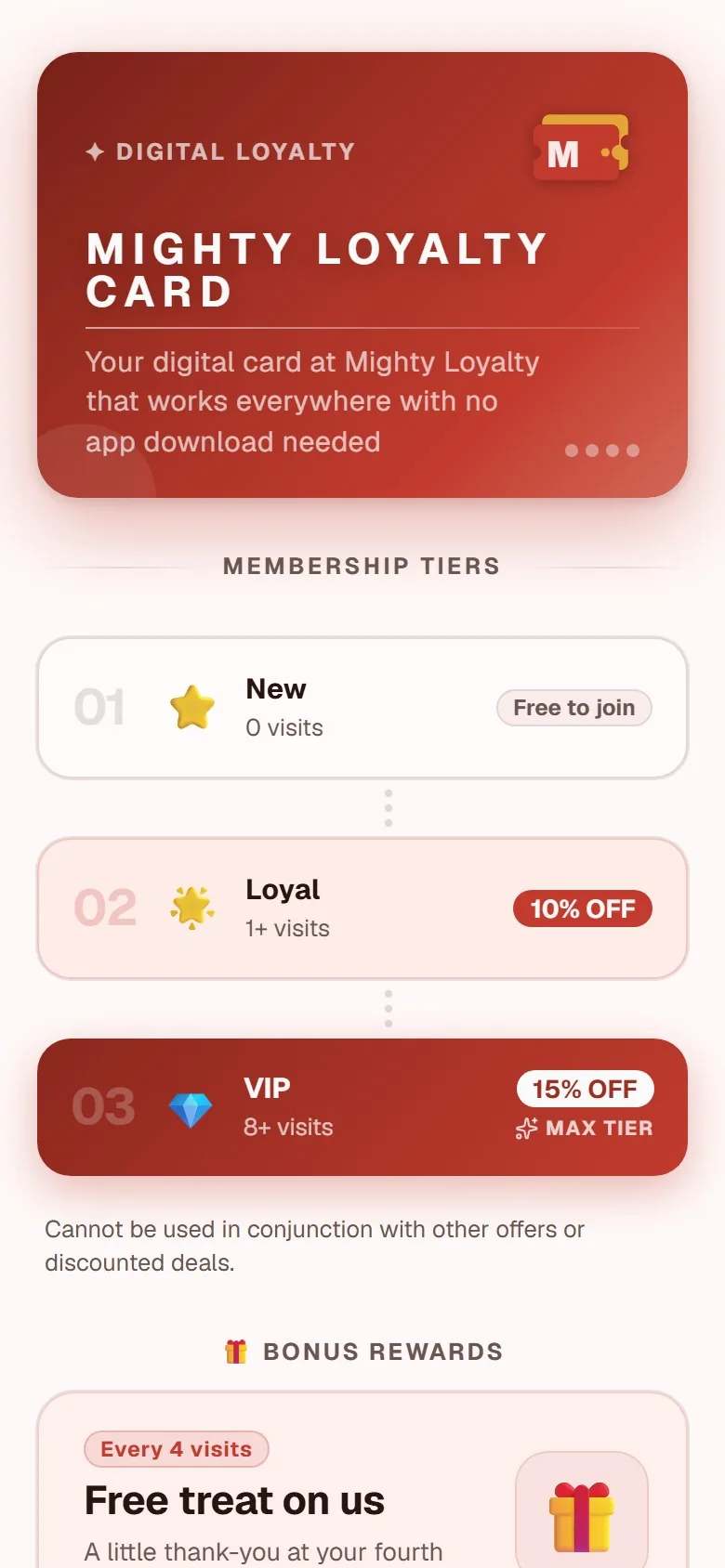
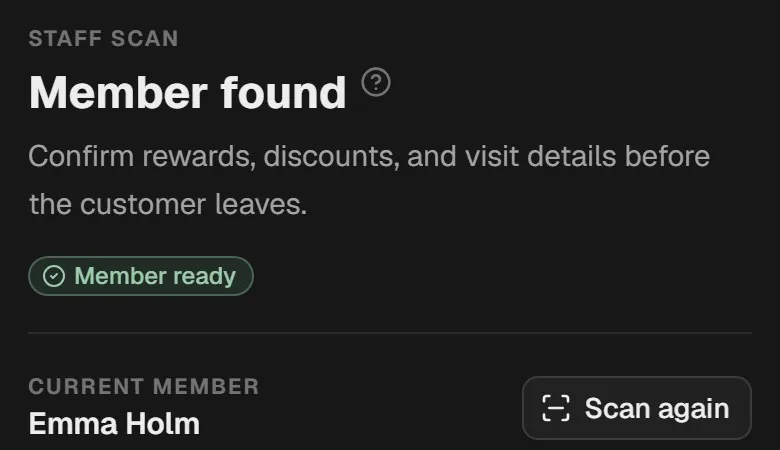
- Make stamping fast. With a digital stamp card, staff scan the guest's QR code at the till, which takes a moment and needs no app. A paper card that has to be dug out of a wallet gets forgotten in the lunch queue.
That last point matters more than it sounds. A stamp program that feels slow gets skipped in exactly the busy minutes when it should be working hardest for you.
Turn lunch into a habit with stamps
A guest who comes every Tuesday is worth more to you than one who came once for a good deal. Stamps are the simplest way to reward exactly that.
Keep it simple: one stamp per lunch visit, and a reward the guest can reach within a couple of months. Picture a cafe where an office worker comes twice a week. Set the goal at ten visits and they reach the reward in five weeks. Set it at twenty and it takes ten weeks, and many give up along the way. How to choose a reward that actually motivates is covered in rewards for loyal customers.
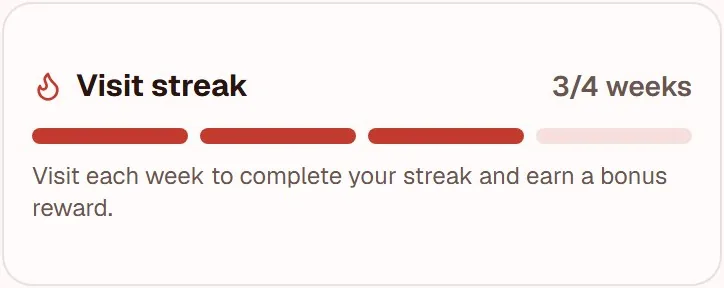
To go a step further, a visit streak rewards regularity itself: if the guest comes, say, three weeks out of four, they get a bonus. That fits the lunch rhythm exactly, because it rewards the fixed weekday rather than the raw number of visits. Streaks are part of Pro and an add-on on Standard.
The guest joins at the till and gets their first stamp straight away.
The dish of the week and a time window give a reason to return on the same day.
A streak rewards the fixed weekday, and colleagues get brought along.
The guest reaches the goal and starts a new card, habit intact.
For the slowest lunch days, double stamps for a limited period is a useful extra. It works, but it gets expensive if it never stops; double stamp days explains how to set the limits.
If you run a restaurant, the full setup of stamps, rewards and guest list is on the page about our restaurant loyalty program.
Tell them before they decide
A lunch deal a guest hears about at 12:15 is too late. The decision is made and they are already queuing somewhere else. Timing matters as much as the deal itself.
- At the till. The best advert for next week's lunch is the guest standing in front of you today. Mention the dish of the week and the stamp card while they pay.
- An email on Monday morning. A short note about this week's lunch dish, sent to your members while they plan their week. Email marketing is part of Pro and an add-on on Standard.
- A push message mid-morning. A message at 10:30 lands before the choice is made. When push helps and when it annoys is covered in push notifications for restaurants.
- In the room. A poster with the QR code at the door and on the tables, so new guests can join without asking.
Do not message every day. A lunch guest wants a reminder, not a chase. Once a week is a good baseline.
Check whether the deal works
It is easy to believe a lunch deal works because one Tuesday was busy. It is harder to know whether the same people come back. So watch two things: whether visits on your lunch days rise over a few weeks, and whether the number of guests with repeat visits grows.
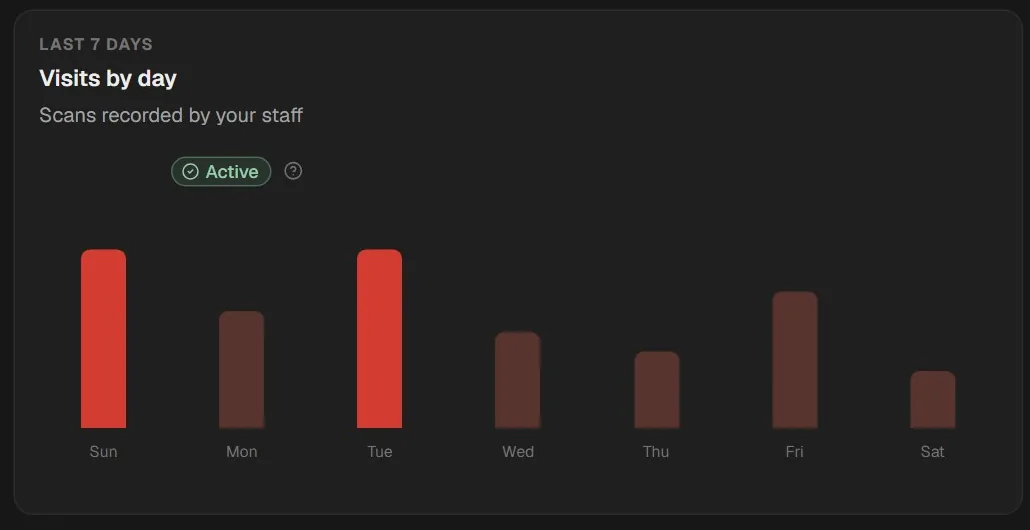
Compare the four weeks after you started the deal with the four weeks before. Are there more visits on the days you meant to fill? And are the same guests coming back? How often a regular typically returns, and how to read that number, is covered in customer visit frequency.
If it is not working, change one thing at a time: the time window, the reward, or the way you tell people about it. Change everything at once and you will not know what made the difference.
Frequently asked questions
Does a lunch deal have to be cheaper than the rest of the menu?
Not necessarily. For a lunch guest, speed and predictability often count as much as price. A fixed dish that is ready quickly, plus a stamp card that rewards coming back, can be a stronger offer than a lower price that just eats your margin on guests who would have come anyway.
How many stamps should a lunch guest collect?
Set the goal so a guest who comes once or twice a week can reach it within a couple of months. A goal that feels out of reach gets abandoned; one that is reached too quickly gets expensive. Start somewhere in the middle and adjust once you see how far guests actually get.
Can I give lunch stamps without guests downloading an app?
Yes. MightyLoyalty is a web app, so guests join by scanning a QR code and have the stamp card in their phone's browser straight away. Staff scan the guest's code at the till, which takes a moment. You can try every Pro feature free for 14 days with no payment card.