A coffee subscription is a fixed monthly payment that gets a customer a set number of coffees, or unlimited coffee, for as long as it runs, however often they come in. It is often pitched as the modern replacement for the loyalty card, and a growing number of cafés sell one. The two models solve different problems, though, so here is what each does for your cash flow, your regulars and your staff.
Coffee subscription vs loyalty card: the core difference
In one line: the subscription takes the money before the visit, the loyalty card rewards the visit after it.
A coffee subscription is an ongoing agreement. The customer pays a fixed amount each month and gets, for example, one drink a day, a number of drinks a month or a discount on all coffee. The payment renews automatically until they cancel.
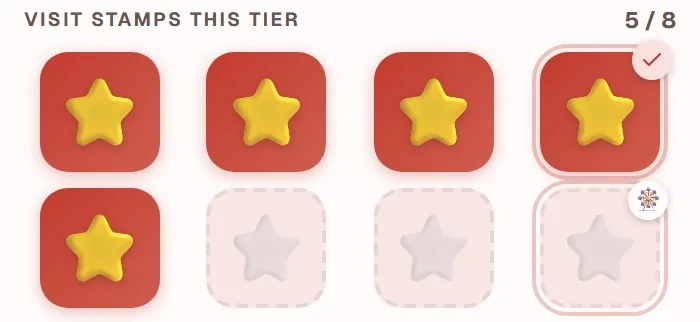
A loyalty card needs no agreement at all. The customer pays for each coffee as usual, collects a stamp for the visit, and gets a reward when the card is full. They can stop whenever they like, because there is nothing to cancel.
If that sounds like the old prepaid clip card, it is close, with one important difference: a clip card is a single payment for a bundle, while a subscription keeps charging on its own. We compared the clip card and the stamp card in clip card vs stamp card, and much of that reasoning carries over.
Where the subscription wins: predictable revenue
The strongest argument for a coffee subscription is cash flow. You know part of next month's takings before the month starts, which is rare in a café where the weather and the school holidays usually decide everything.
A subscription also commits the customer. Once the month is paid for, your café is the obvious place to get coffee, because it is already paid for. It is the same pull that gets people to the gym in the month they just paid for.
And some of what is paid for never gets used. A subscriber paying for a coffee a day who comes in three times a week has paid for drinks you never made. That is part of why the model can work at all.
Where it hurts: the threshold, the heavy drinker and the admin
That last point is also the weakness. A customer who notices they pay for more than they use will cancel, so a subscription has to keep earning its place every month, not just once.
Three more things to plan for:
- A high threshold. Agreeing to a recurring charge is a bigger decision than scanning a QR code. Fewer people say yes, and the ones who do tend to be the people who already come most. You risk giving your best customer a discount they never needed to keep coming.
- The heavy drinker. "Unlimited coffee all month" attracts exactly the people who drink the most. Price it for the average customer and you lose money on your most loyal one; price it for the heavy drinker and it is too expensive for everyone else.
- Running it. A subscription needs recurring billing, a way for staff to check at the counter whether a subscription is active, and a clear way to cancel. Consumer subscriptions in Denmark also fall under the consumer protection rules, so check them before you launch.
None of that is a reason not to do it. It is the reason a subscription suits a café with plenty of daily regulars and staff who have the time to sell it.
Where the loyalty card wins: low threshold, paid after the habit
The loyalty card turns it around. Customers decide nothing beyond scanning, so far more of them join. And the reward only goes to people who actually came back: you pay for the behaviour once it has happened, not up front for behaviour you are hoping for.
The maths is easy to control, because you choose how many stamps a reward costs. What a free coffee really costs you, and why ten stamps is rarely the right number, is worked through in cafe loyalty program: what a free coffee costs.
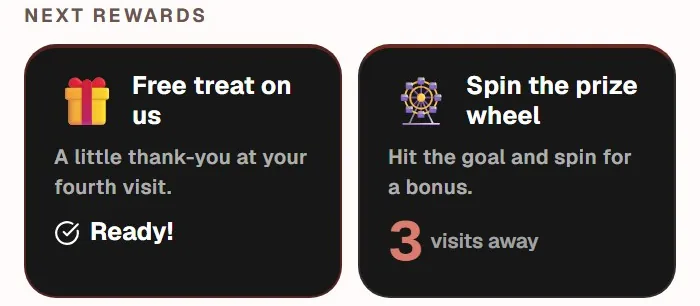
The downside mirrors the subscription's strength: no money arrives in advance, and revenue swings as much as it did before. A loyalty card will not make January predictable. It just turns more of your customers into regulars who also turn up in January.
A worked example
Picture a café where a coffee costs 40 kroner, selling a subscription of 20 coffees a month at a fixed price. A customer who already came in 15 times a month signs up, and that month they come 17 times. You have their money up front, but most of those visits would have happened anyway, and you have discounted them.
The same customer on a loyalty card with a free coffee for every eighth stamp gets roughly two free coffees a month. That is a smaller discount, and it is only triggered by visits they actually made.
This is not proof that one model always wins. It shows how much depends on who signs up: new customers who start coming more often, or existing regulars who come just as often as before and now pay less.
Which one fits your café?
Consider a coffee subscription if:
- you have lots of customers who come every single day, typically from nearby offices or a campus,
- your till or payment provider can handle recurring billing and check a subscription at the counter,
- you want predictable revenue and accept that the model needs active selling.
Choose a loyalty card if:
- your crowd is mixed and many come once or twice a week,
- you want as many customers as possible on board without selling anything at the counter,
- you want to be able to change the reward later without renegotiating an agreement with every customer.
For most cafés starting from scratch, the loyalty card is the right first step. It takes minutes to set up, and it tells you how often your customers really come in, which is exactly the number you need if you later want to price a subscription.
To be straight about it: MightyLoyalty is a digital stamp card and customer club. We do not handle subscription billing. If you run a subscription, the payments go through your till or payment provider, and the stamp card can happily run alongside it for everyone who does not want to commit. You can see how a stamp card is set up for a café on the coffee shop loyalty program page.
Can you run both?
Yes, and plenty of cafés end up there: the subscription for the handful who come daily, the loyalty card for everyone else. The point is to keep them apart. Decide in advance whether subscription coffees also earn stamps, and tell customers and staff clearly. The classic mistake is a subscriber who assumes their coffees count on the card and feels cheated when they do not.
For more ideas on what the reward on the card should be, so it is not just a discount in disguise, read how to choose a stamp card reward.
Frequently asked questions
What is a coffee subscription?
A coffee subscription is a fixed monthly payment that gives the customer a set number of coffees, a coffee a day or a discount on coffee for as long as it runs. The payment renews automatically until the customer cancels.
Is a coffee subscription better than a loyalty card?
It depends on your customers. A subscription gives predictable revenue but mostly attracts people who already come often. A loyalty card has a lower threshold and only rewards visits that actually happen. Most cafés start with the loyalty card.
Should subscription coffees also earn loyalty stamps?
That is your call, but decide it up front and say it clearly. Many cafés choose not to stamp subscription coffees, because the customer already gets their benefit through the subscription.