A customer loyalty card is the simplest tool a restaurant, cafe, or salon has to turn a first-time visitor into a regular. For decades that card was a small piece of laminated plastic or a paper punch card tucked inside a wallet. Today it lives in a phone browser, collects data with every stamp, and works whether the customer remembered to bring anything or not.
What is a customer loyalty card?
A customer loyalty card is a record of the relationship between a business and a repeat customer. It serves two purposes: it gives the customer a visible path toward a reward, and it gives the business a record of who their regulars are and how often they come back.
The card holds the mechanics of the loyalty program: stamps, points, or a visit count. The customer earns one unit per visit (or per item, or per amount spent), and when they reach the target, they claim their reward. The card is the container; the reward design is a separate decision.
Physical vs digital: what actually changes
The paper punch card and the plastic loyalty card share the same underlying logic, but they behave differently in ways that matter in practice.
Availability. A physical card lives in a wallet or a drawer. If the customer leaves it at home, the visit goes unrecorded and the motivation disappears. A digital card lives on the customer's phone, which most people have with them at all times.
Data. A physical card tells you that a card was filled, because you see it happen. It tells you nothing about when the customer last came, whether they are close to leaving, or how many filled cards were never redeemed. A digital card stores every stamp with a timestamp and links it to an email address, giving you a picture of who is active and who has gone quiet.
Communication. A physical card ends the conversation at the counter. A digital card gives you an address: once a customer has signed up, you have a way to reach them between visits, whether with a campaign, a personal offer, or a reminder when they are close to a reward.
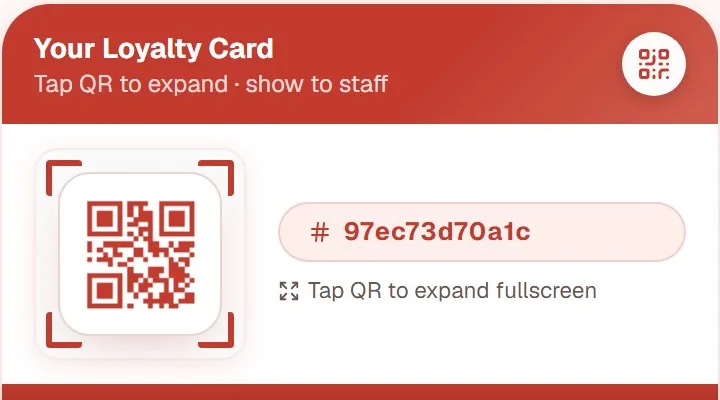
Joining. A web-based digital loyalty card requires no app download. The customer scans a QR code at the counter, the card loads in their browser, and they are enrolled within sixty seconds. On future visits they open the same shortcut, show their personal QR code, and get stamped in under ten seconds.
You can see the customer journey live at the free demo: https://loyalty.maiya.dk/
What does a customer loyalty card need to do well?
Not every digital loyalty card platform delivers the same experience. Here are the four things worth checking before you commit.
No app to install. If customers need to download anything, a significant share will not bother at the point of sign-up. The simpler the join flow, the more regulars end up in the program.
Visible progress for the customer. A customer who can see "four of ten stamps" is more motivated than one who trusts the count is being kept somewhere they cannot access. Progress visibility is one of the simplest levers that drives return visits.
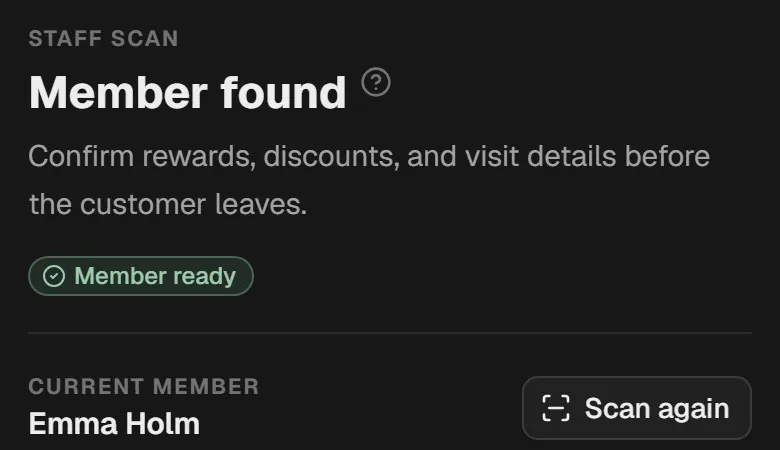
Simple staff operation. Stamping should take one action: scan the customer's QR code. If the demo requires more than a few seconds at the counter, it creates friction during a busy lunch rush.
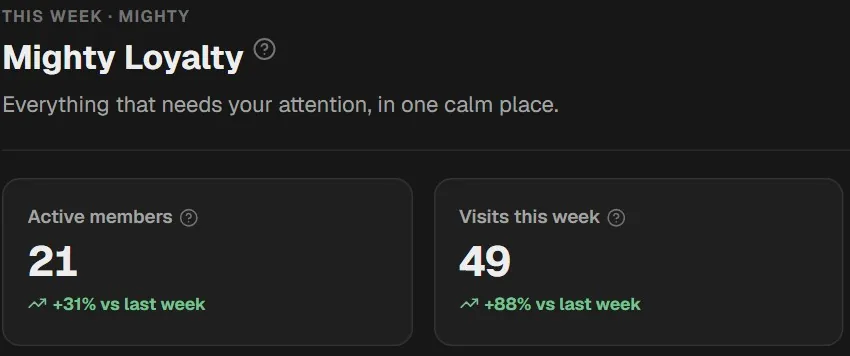
An owner dashboard with real data. Stamps are only useful if you can act on them. A dashboard that shows how active your member base is, when they visit, and which rewards drive return trips is what turns a loyalty card into a business tool rather than a gesture.
Loyalty cards and stamp cards: which is which?
The two terms are used interchangeably in everyday conversation, but there is a useful distinction.
A stamp card is a mechanic: the customer collects stamps and redeems a reward when the card is full. A loyalty card is the container: it is what the customer carries, and it can run a stamp mechanic, a points system, visit-based tiers, or a combination of these.
In practice, a digital loyalty card can be configured in different ways. A classic ten-stamps-for-a-free-coffee setup is the most common starting point. A spend-based points model makes more sense when ticket sizes vary significantly, so a guest paying eighteen dollars for lunch and seventy-five for a Friday dinner does not earn the same single stamp for both visits. For the trade-off between stamps and points in practice, the guide on points or stamps: what motivates customers most? covers the decision in detail.
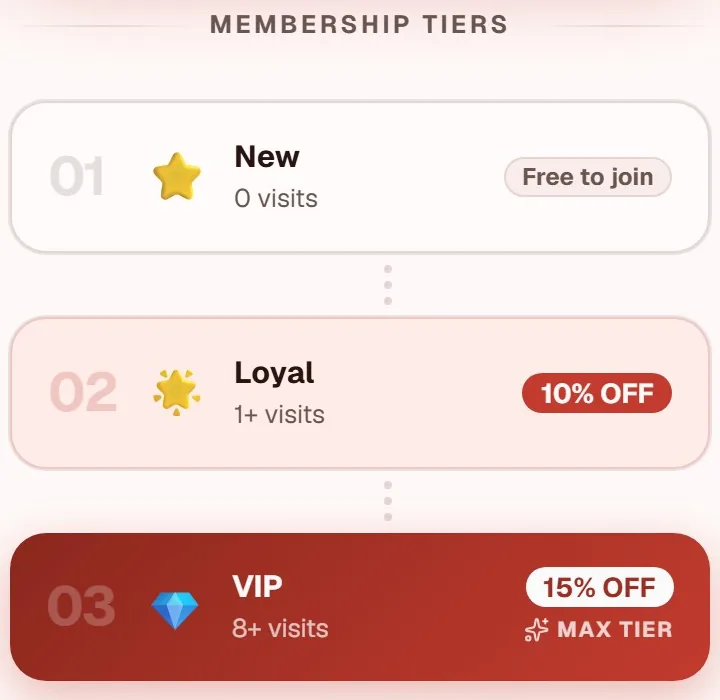
For businesses that want to add tiered membership levels on top of a stamp card, the loyalty tier design guide covers when tiers add motivation and when they add complexity.
For a complete overview of what a digital stamp card covers and how to get one set up the same day, see the stamp card app page.
What does a customer loyalty card cost?
The price depends on whether loyalty is built into a point-of-sale system or purchased as a standalone product.
POS-integrated loyalty modules are rarely priced transparently: they are bundled into tiered packages or sold as add-ons, and the total cost depends on your contract and transaction volume. Comparing providers is difficult because loyalty is mixed in with payment processing, table management, and other POS features.
Standalone digital loyalty card platforms tend to charge a flat monthly subscription. MightyLoyalty charges 99 DKK per month on the Standard plan, covering unlimited members, unlimited stamping, a QR counter poster, and the owner dashboard. The Pro plan at 249 DKK per month adds email marketing and automations. There is no binding period and no setup fee, and you cancel in the portal.
Both plans are available in an annual billing option: 990 DKK per year for Standard and 2.490 DKK per year for Pro (both excluding VAT), which works out to two months free compared to monthly billing.
For a full comparison of how different platforms structure their pricing, the stamp card platform pricing guide breaks down the five models in detail. For a broader look at all five categories of loyalty solution in Denmark, including wallet cards, POS-integrated programs, and web-apps compared side by side, loyalty solutions in Denmark: overview and pricing covers the full picture.
The free loyalty program page gives a clear overview of what each plan includes and what the setup process looks like.
Frequently asked questions
Does a digital customer loyalty card work without connecting to my POS system?
Yes. A standalone digital loyalty card requires no integration with your point-of-sale system. Staff scan the customer's QR code on a phone that sits alongside the till, completely independent of the checkout software. You can switch POS providers, add new payment terminals, or change processors without any effect on your loyalty program, your member list, or your stamp history.
What happens to a customer's loyalty card if they change phones?
Nothing is lost. A digital loyalty card is linked to the customer's email address, not to a specific device. When they sign in again on their new phone or a new browser, all their stamps are still there. This is one of the most important differences from a plastic card: you cannot lose your progress by getting a new handset.
How is a customer loyalty card different from a points program?
A customer loyalty card is the format a customer uses to participate in a loyalty program, whether that program runs on stamps, points, or visit counts. A points program is a specific type of mechanic: the customer earns points per visit or per amount spent, and redeems them against a reward catalogue. Both run on a loyalty card. For a step-by-step guide to choosing a program format and getting it running, see how to start a loyalty program.