To get customers to come back a second time, you have to win a decision rather than a coincidence. The first visit can happen by chance: a friend's tip, a rain shower, a sign on the pavement. The second one is a choice, and this is what you can do in the first 30 days so it goes your way.
Why the second visit is the hard one
After one visit there is no habit yet. There is only an impression, and it competes with every other place the guest already knows. Nothing has to go wrong for you to lose them. It is enough that nothing happens.
That is also why leaving it to chance is expensive. You have already paid to get this person through the door: the ad, the rent on a good corner, the opening offer, the Instagram post. If they never return, all of that bought a single sale. If they do return, it starts paying back.
A small welcome perk can give a new guest a concrete reason to return, and we cover how to pick one in the welcome offer for new customers. But the offer is only one part of what decides visit two. The rest is what the guest experiences, and what happens in the weeks after.
Visit one: give them something to remember
The guest should leave with a clear sense of why your place is worth coming back to. That does not take a grand gesture. It takes one or two moments that stand out.
- Ask whether they have been in before. It is a natural question at the counter, and the answer tells your staff this person deserves a little extra attention.
- Point to one thing to try next time. "If you come back, try the cardamom bun, it was baked this morning." It gives the guest a small plan for their next visit.
- Get them into the programme while they are standing there. A guest who joins on visit one walks out with a card that already has a stamp on it. A started card is a reminder; an empty one is nothing.
The last point matters most, because it makes the rest possible. Without a sign-up you do not know who the guest was, and you have no way to follow up. We walk through the whole first visit, door to bill, in the restaurant guest experience.
The first days: a short, friendly follow-up
The day after a first visit, the guest still remembers the place. That is the best moment for a short hello, because it lands while the impression is fresh, not as an advert three weeks later.
Keep it short: thanks for coming in, here is how the stamp card works, and here is what waits when it is full. No discount code, no long menu. The point is that the guest links your name to something already on their phone.
In MightyLoyalty you can switch on an automatic welcome email that goes to new members the day after they join. You write the text once, and the system sends it to every new guest. Automations are included in Pro and available as an add-on on Standard.
Visit two: recognise them
When the guest comes back, the first thing that should happen is that someone notices. "Good to see you again" is a small sentence, but it tells the guest they have gone from a random customer to someone you remember.
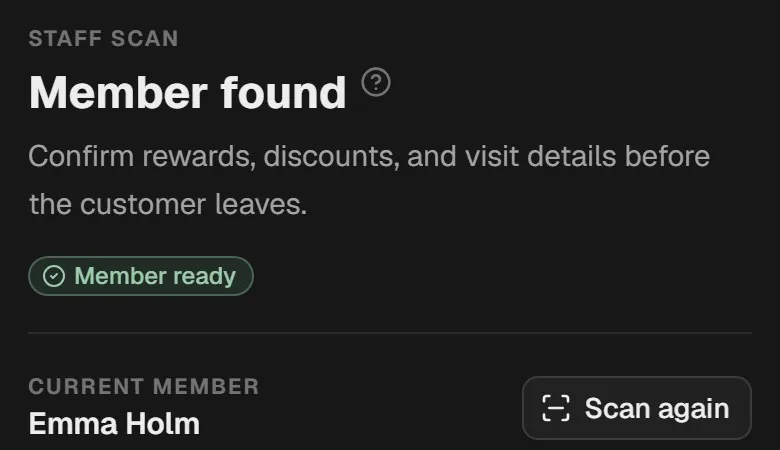
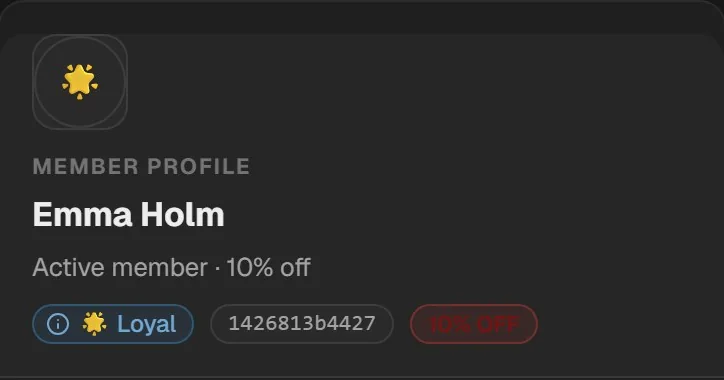
Your staff cannot remember every face, and they do not need to. When they scan the guest's card, they see the guest's profile with their name, so they can say it straight away. Use the name once, naturally, and perhaps ask whether they tried what you suggested last time.
The second stamp does something too. The guest can see the card moving, and how far it is to the first reward. If that reward feels close enough to reach, the third visit is already half decided.
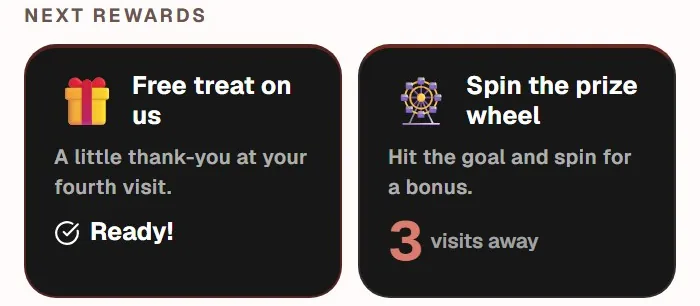
If the goal on the card is too far off, a first-timer does not think "only eight more stamps", they think "I will never get there". If many new guests stop after one or two visits, check whether the card is too long or the reward too small.
When they do not come back on their own
Some guests return without any help. Others need a nudge, and it has to arrive before they forget you. How long to wait depends on how often people normally come to you. A coffee bar with daily regulars should act sooner than a restaurant people visit for birthdays. You can work out your own number with customer visit frequency.
An automatic win-back email can handle this for you. In MightyLoyalty you choose how many days without a visit should pass before it goes out; the default is 30 days. It goes to every member who has been away that long, not only the new ones, so write it to fit both: a friendly reminder of what is on their card and what is waiting.
Put together, the timeline looks like this:
They join at the counter and get a stamp on the card right away.
A short welcome email: thanks for coming, and what is waiting.
Staff see the name when they scan and welcome the guest back.
A friendly reminder of the card and the next reward.
How to write that reminder so it does not sound desperate is covered in how to win back lapsed customers.
How to tell whether it is working
The number of sign-ups tells you whether people join. It does not tell you whether they return. The number that matters here is how many new members get a second visit.
The member list shows, for every guest, how many visits they have had and when they were last in. Once a month, look at the guests who joined one or two months ago and count how many have only one visit.
Picture a café where 40 guests joined in September. By the end of October, 14 of them have been back. That is 35 percent. Nobody can tell you whether that is good or bad, but you can compare it with next month. Change one thing, say your staff start recommending something for next time, and see whether the number moves.
Change only one thing at a time, or you will not know what worked. Everything that comes after the second visit, and eventually turns a guest into a regular, is laid out on the free loyalty program page.
Frequently asked questions
When should I follow up with a new customer?
First the day after their visit, with a short thank you and an explanation of the card. Then again only if they have not returned within what is normal for your place. For a coffee bar that might be a couple of weeks; for a restaurant, longer.
Do first-time customers need an offer to come back?
Not necessarily. A small welcome perk can help, but a good first visit, a started stamp card and a short follow-up do much of the work. Avoid a big discount, because it teaches the guest to wait for the next one.
How do my staff know who is new?
They do not have to remember. Ask at the counter whether the guest has been in before, and let the scan do the rest. When staff scan the card they see the guest's name and profile, so they can welcome them back without recognising the face.