Loyalty card wording is the handful of sentences that tell a guest what they collect, what they get and how to join. Most owners spend hours on the logo and the colour and write the words at the last minute, even though the words are what guests actually read. Below are loyalty card wording examples for every place a guest meets your card, ready to copy and adjust.
One sentence that carries everything
Before you write anything else, write the card as one sentence, the way you would say it at the counter. Every other line comes from it, so if this one holds, the rest will too.
- "Ten coffees, and the next one is on us."
- "Eight cuts, and the ninth is free."
- "Every tenth pizza is free."
- "Five visits get you a free cinnamon roll."
All four have a number and a concrete thing. "Collect stamps and enjoy great perks" has neither, and the guest knows nothing more after reading it. The visual side (logo, colour, stamp icon) is covered in loyalty card design. This post is only about the words.
The reward name
The reward name sits on the card every time the guest opens it, so it has to be readable in a second. Two to four words, naming something a guest could point to in the display case or on the menu.
| Instead of | Write |
|---|---|
| Free drink | Free cappuccino |
| Little surprise | Free croissant |
| Treatment discount | Free wash and blow dry |
| Bonus gift | Free dessert |
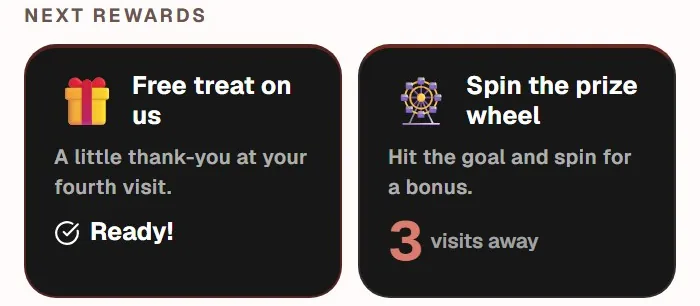
If you have more than one reward on the way, give them names a guest can tell apart. "Free cookie" at four stamps and "Free lunch menu" at twelve says there is something close and something bigger further out. Choosing the reward itself and the stamp goal is covered in how to choose your stamp card reward.
The description and the small print
Under the name there is room for a line or two explaining the reward. Use it to answer what the guest would otherwise ask at the counter:
- "Any hot drink, any size."
- "Any pizza on the menu, family size included."
- "Choose today's cake or a cinnamon roll."
Conditions belong here, short and plain, never in the name. Write them the way you would say them to a guest you like:
- "Cannot be combined with other offers."
- "Does not include alcohol."
- "Redeem in store, not on delivery."
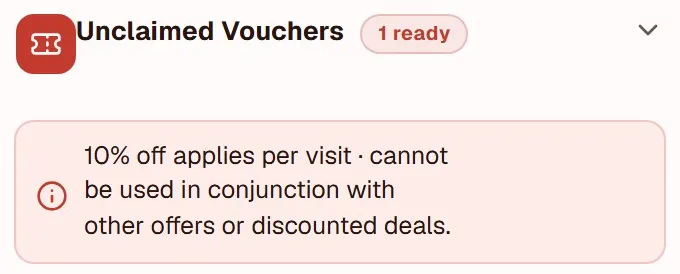
If your list of conditions runs past three lines, the reward is too complicated. Make it simpler instead of explaining more. The rules that need to exist somewhere, but not on the card itself, belong in a short set of terms.
The sign at the till
The QR sign has one job: get the guest to lift their phone. Someone queuing or waiting for a coffee reads six to eight words at most before deciding. So the headline should say what they get, not what the programme is called.
Headline examples:
- "Your tenth coffee is on us"
- "Collect stamps. Every eighth cut is free"
- "Scan now and get your first stamp"
Under the headline, say how it works and that it is quick:
- "Scan with your camera. No app, you are in within a minute."
- "Show the card on your phone when you pay to get your stamp."
Keep words like "loyalty programme", "rewards club" and "member benefits" out of the headline. They are accurate, but they sound like something with terms to read. The guest should picture the reward, not the scheme. If your customers are a mix of Danish and English speakers, a number and a thing ("10 coffees, the next one is free") reads well in both. Where to hang the sign so people see it is covered in QR poster placement.
What your staff say
The wording most guests hear is not written anywhere. It is what staff say at the till, and it needs to be as short as the sign. Give staff one line, not an explanation:
- "Do you have our stamp card? You can get your first stamp right now."
- "Scan here and today's coffee counts."
- "Two more and the next one is free."
The last one works best over time, because it makes the card concrete for a guest who is already in. It is also the one staff forget first. Pin the lines up behind the counter for the first month until they stick.
The messages to the guest
Once a guest has joined, there are three moments when a short message makes a difference. The wording can be reused for years, so it is worth writing properly once.
When | What it says | Example subject line |
|---|---|---|
| Day after joining | Thanks, and what is coming | Welcome, your first stamp is on |
| When the card is full | The reward is ready | Your free coffee is waiting |
| After a quiet spell | What is on the card | You still have 6 stamps with us |
Welcome. "Thanks for coming in today. You have one stamp on your card, and at ten the next coffee is on us. Your card is here, and it works without an app." No discount code, no long menu. The point is that the guest links your name to something already in their pocket.
Card full. "Your card is full. Show it at the till next time and your cappuccino is free." Write it as good news, not a receipt.
After a quiet spell. "We have not seen you for a while. You have 6 stamps on your card and only 4 to go to a free coffee." Mention what is on the card, not a new offer. A guest who is close already has a reason to come back. How to adjust the tone for guests who have been gone a long time is in win back lapsed customers.
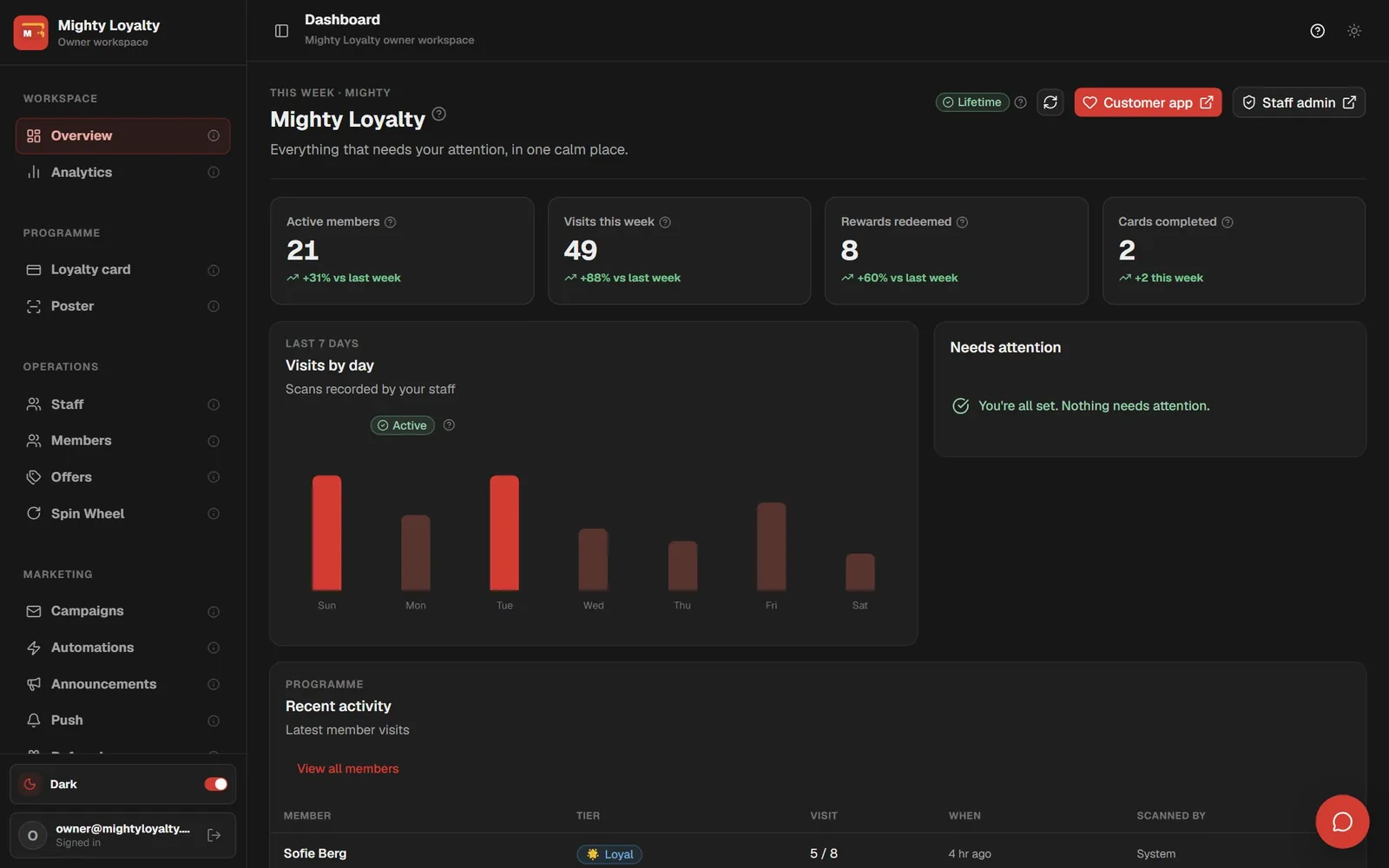
In MightyLoyalty you can switch on automatic messages when someone joins and after a set number of days without a visit, and you write the text yourself. Automations are part of Pro and available as an add-on on Standard.
Five words that weaken your wording
When you read your texts back, look for these five. They take up space without saying anything:
- "Exclusive": anyone can join, so the guest does not believe it.
- "Amazing perks": name the perk instead.
- "Up to": reads as the least the guest will get.
- "Points", if you use stamps: stick to one word all the way through.
- "Click here": say what happens, for example "See your card".
Finally, read your texts out loud to a colleague. What sounds odd to say also sounds odd to read. How the stamp card fits the rest of your business is covered on the punch card app page.
Frequently asked questions
What should a loyalty card say?
Four things: who the card is from, what earns a stamp, how many stamps it takes, and what the reward is. Name the reward as a concrete thing, such as "Free cappuccino", and put any conditions on a short line underneath.
Should my card be in Danish or English?
Use the language you speak with guests at the counter. If many of your guests speak English, keep the card short and simple enough for both. A number and a thing, like "10 coffees, the next one is free", is understood in almost any language.
How long should the wording on the counter sign be?
Keep the headline to eight words at most, and make it say what the guest gets. Below it there is room for one line on how to join. Anything beyond that does not get read in a queue.