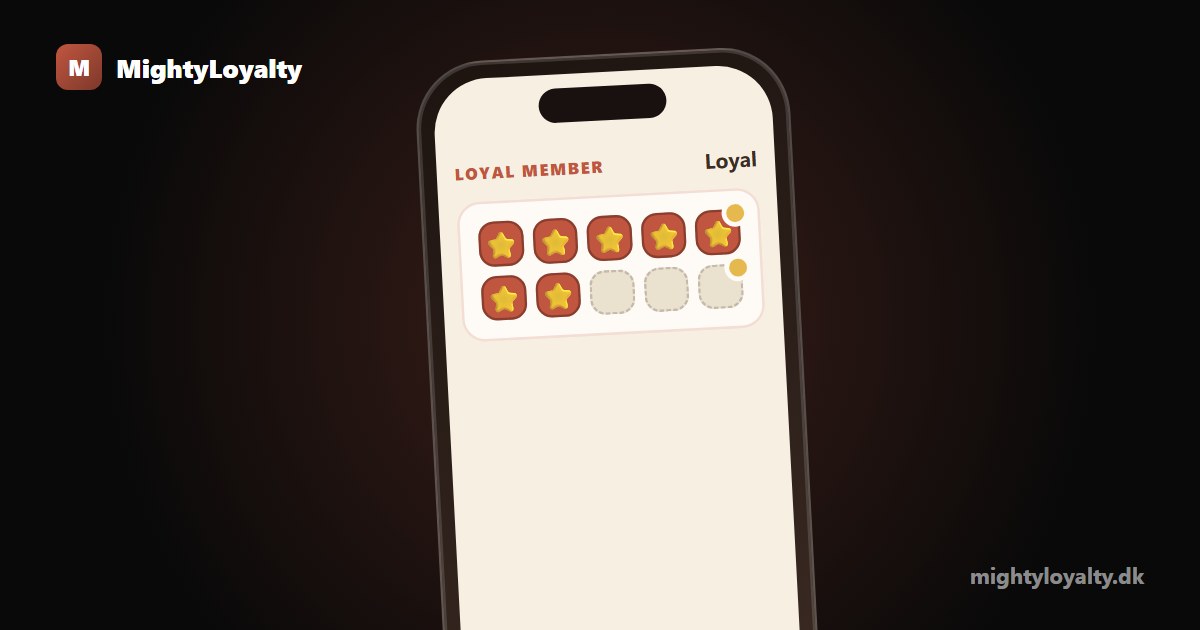
Before you ask what a loyalty program costs, ask how much time a loyalty program takes. In a café, salon, or bakery where the owner also works the counter, hours are the scarcer currency, and they are the part no pricing page tells you about. This is a realistic account of where those hours actually go.
The three places your time goes
There are only three, and only one of them is a one-off.
Setup. Choosing the reward, setting the stamp goal, printing the poster, briefing the team. You do this once.
The counter. The seconds a scan adds to each transaction, multiplied by every member who pays that day. This is the number owners underestimate most.
The follow-up. Looking at the numbers often enough to notice whether the program is working, and adjusting when it is not.
Everything else you may have read about (segmentation, campaign calendars, integrations) is optional. If a provider makes any of it mandatory, that is a claim on your calendar, not just on your budget.
Setup: an afternoon, not a project
With a web-based platform, the work is short and finite. Register the business, upload a logo and colour, pick a stamp goal, describe one reward, print the QR poster, and spend five minutes showing the team the scan screen. Most owners are ready to accept their first sign-up the same afternoon, and the longest delay is usually the printer.
What turns that afternoon into a fortnight is a platform that expects something else first: a spreadsheet import, a till integration, a scheduled onboarding call, or a template library you have to work through before anything is live. Every one of those is time you spend before you know whether your customers will use the program at all.
If you have not chosen a platform yet, the trade-offs that decide how long this step takes are compared in loyalty card app: how to choose one. For a complete overview of what a digital stamp card includes out of the box, see the stamp card app page.
The counter: seconds per visit, multiplied
This is where the real arithmetic lives. Imagine a café serving 120 paying customers a day, a third of whom have joined the program. That is 40 scans. At five seconds each, it is a little over three minutes spread across a whole trading day, which nobody notices.
Now imagine the same 40 scans on a system where staff have to log in each time, search for a customer by name or phone number, and type an amount. At 30 seconds each, that is 20 minutes a day standing between your team and the queue. The queue is what people remember, so the scans quietly stop happening. A program staff skip under pressure is not cheap; it is worthless.
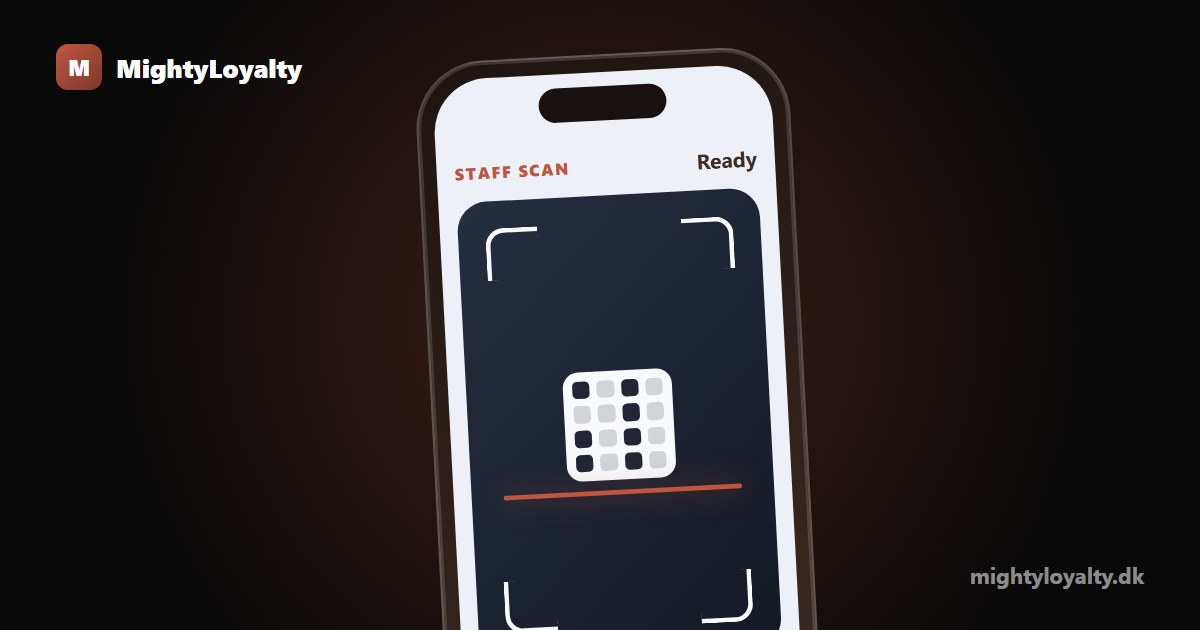
Two design choices keep it in the seconds column. The customer's own phone carries the identification, so nothing is typed or looked up. And the staff device stays in scan mode between customers instead of returning to a menu. That is the practical case for a browser-based loyalty app for small business rather than a till module: the identification travels with the guest.
Sign-up time follows the same rule. A customer who has to find your app in an app store, download it, and create an account will abandon that halfway through while a queue builds behind them. A customer who scans a QR code and confirms in their browser is done before their card payment clears, which is how a stamp card without an app download works in practice.
The follow-up: fifteen minutes a month
You do not need a reporting routine. You need three numbers, and a dashboard should surface all three without you building anything.
- How many active members do you have, and is that figure still rising?
- How many visits were registered this week?
- Who has not been back in a month?
Fifteen minutes a month with those three numbers is enough to decide whether the reward is too far away, whether the team has stopped asking, and who is worth a message before they are gone for good. Keep the commitment that small on purpose: an hour a week is easy to postpone into never, and a quarter of an hour is not.
Adjusting a reward should belong in that same fifteen minutes. If changing "free coffee after ten stamps" to "free pastry after eight" requires a support ticket and a wait, the program will keep running on a setting you already know is wrong.
The warning signs that a program will eat hours
Four things reliably turn a small commitment into a recurring one.
Per-scan or per-member pricing. It makes staff hesitate at exactly the moment they should not, and it makes you audit the invoice every month.
Manual member lookup. Any flow that starts with searching for a person by name belongs to a till, not to a counter with a queue.
Changes that need support. Rewards, stamp goals, and opening messages are things you will want to tune. If each tune is a ticket, you will stop tuning.
Shared marketplace apps. Platforms that promote every business on the app show your members your competitors' offers, and you spend time competing for attention you already paid for.
And the money, since it is the easier question
MightyLoyalty costs 99 DKK/month (Standard) or 249 DKK/month (Pro), both excluding VAT, with unlimited members and unlimited stamping. There is no setup fee and no binding period, and you cancel in the portal, so the commitment you are testing is one month rather than one year. The full breakdown sits on the pricing page.
Because the price is flat, a busy week costs the same as a quiet one, which also means nobody at the counter has a reason to scan less. A wider look at how the different pricing models behave over a year is in how much does a loyalty program cost?.
You can walk through the whole customer side yourself at https://loyalty.maiya.dk/
Frequently asked questions
How long does setup really take?
For a web-based program, an afternoon is realistic: registering the business, setting the stamp goal and reward, and printing a poster take well under an hour of actual work. The rest is deciding what the reward should be, which is a business question rather than a technical one. If a platform quotes you an onboarding period measured in weeks, it is built for a chain, not for a single counter.
How much time does it add per customer?
Around five seconds when the customer holds up a code and staff scan it, which is roughly the length of the pause while a card payment goes through. It only grows when the system asks staff to log in, search, or type. Time one scan on any platform you are trialling before you commit, because that single number, multiplied by your busiest hour, tells you whether the team will keep using it in three months.
Do I have to run campaigns for it to be worth it?
No. A stamp card that customers actually use produces repeat visits on its own, without a single message being sent. Campaigns are an option you can add later, once you can see who has gone quiet and decide it is worth a note. Plenty of small businesses run a loyalty program well on nothing more than a visible poster, a team that asks, and fifteen minutes a month.