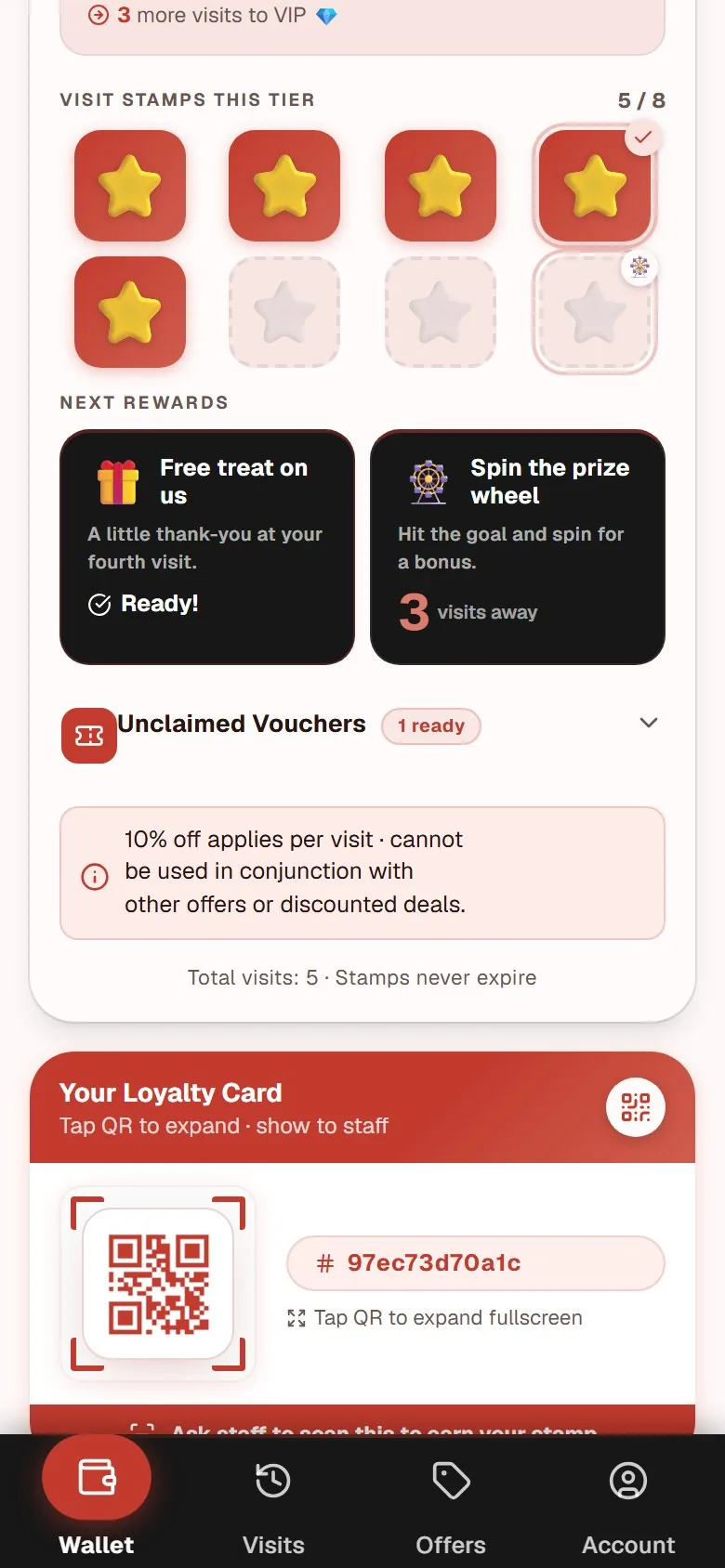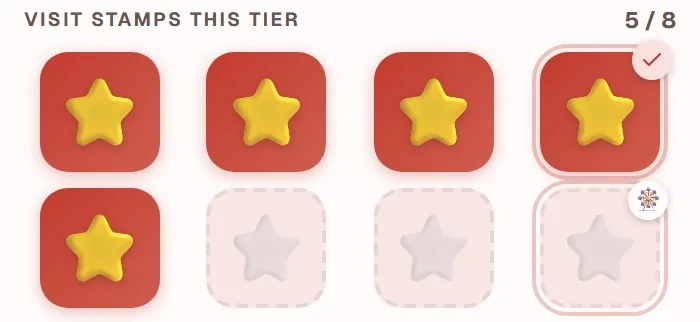
Stamps per visit vs per purchase is one of the first choices you make when you set up a digital stamp card, and it quietly decides what the card rewards: coming back, buying more of something, or spending more. Get it right and the card feels fair to every kind of guest. Here are the three rules side by side, so you can pick the one that fits your business.
The three rules in brief
A stamp card can turn a scan into stamps in three ways.
One stamp per visit. Every scan is worth one stamp, whether the guest buys one coffee or four. It is the simplest rule and the one most cafes use. Guests get it instantly: "Every time you come in, you get a stamp."
Stamps per item. Staff type a quantity when they scan, and the guest earns one stamp per item. Three pizzas, one scan, three stamps. You name the unit yourself, so the card says "pizza" or "haircut" instead of a generic "stamp".
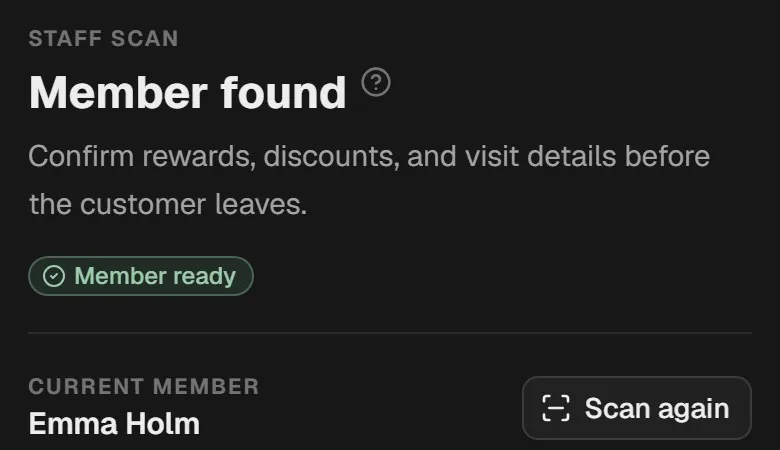
Stamps per amount spent. Staff type the amount on the receipt, and the system works out the stamps. Set one stamp per 50 kroner and a 149 kroner bill earns two stamps: it always rounds down, never up. A bill under the threshold still counts as a visit; it just earns no stamp.
Rule | One scan earns | Staff |
|---|---|---|
| Per visit | Always one stamp | Scan and confirm |
| Per item | One stamp per item | Type the quantity |
| Per amount spent | The bill divided by your threshold, rounded down | Type the amount |
What the rule does not change
Whichever rule you pick, one scan is still one visit. That matters, because several parts of a loyalty programme deliberately count visits rather than stamps:
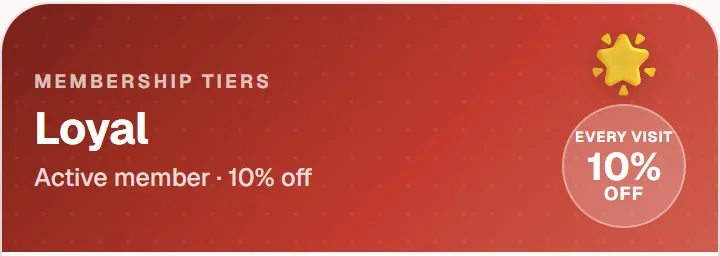
- Tiers. A guest moves up a tier by coming back, not by placing one big order. Otherwise a single office catering order could buy VIP status. The guide to loyalty tiers covers how to set them up.
- Streaks. A streak rewards regular visits in a row, so it counts visits too.
- Visit statistics. Your numbers on how often guests return stay the same, whatever the rule.
The stamp card itself (how far along the guest is, when a reward unlocks and what a redemption costs) follows the stamps. So you can let a big spender reach a reward faster without handing them a tier their visits have not earned.
Per visit: when the habit is what you reward
One stamp per visit fits when guests buy roughly the same thing each time. A coffee bar, a bakery with a morning crowd, or a hair salon where one visit is one cut has no reason to make it more complicated.
The upside is obvious. There is nothing to type, so stamping takes a moment, even with a queue out the door. Guests can work out their card in their head. And the sign by the till is a single sentence.
The downside is that the rule cannot tell guests apart. The person picking up coffee for the whole office gets the same stamp as the person buying one espresso. If that is rare, it does not matter. If it happens a lot, one of the other rules probably fits better.
Per item: when there is one clear core product
Stamps per item make sense when one product is the reason guests come, and they often buy several at once. The pizzeria is the classic case: the family ordering four pizzas on a Friday night is worth more than the couple sharing one, and the card can say so. The stamp card guide for pizzerias goes deeper on exactly that situation.
It makes the card very concrete. "Your tenth pizza is free" is easier to grasp than a points balance, and the card itself makes clear it is about pizza.
The cost is one extra tap at the till: staff have to enter the quantity. It takes seconds, but it needs to become routine, especially at peak times. Decide up front what counts, too. Does a kids' pizza count? Does a salad? The clearer the rule, the fewer debates at the counter.
Per amount spent: when baskets vary widely
Stamps per amount spent suit businesses where one visit can be anything from a small purchase to a large one. A shop, a butcher, or a restaurant serving both quick lunches and group bookings gets a card that rewards what the guest actually spends with you. Shops have their own walkthrough in the retail loyalty programme guide.
The threshold is the key decision. Set it too high and small purchases never earn a stamp, so the guests who come most often with small baskets lose interest. Set it too low and one big order fills the whole card. A good starting point is a threshold close to your typical bill, so an ordinary purchase earns a stamp or two.
Keep in mind that a per-spend stamp card is, in practice, close to a points system. That is fine, but the card still has to be easy to read. If you are weighing a pure points scheme instead, points or stamps lays out the difference.
The per-scan cap is your safety net
With per item and per amount spent you can set a cap on the most stamps a single scan can give. It is not a target; it protects you against typos. If someone enters 50 instead of 5, the number is trimmed to the cap and staff are told on screen. Set the cap a little above your biggest normal order, so genuine large orders go through and mistakes do not.
How to choose in five minutes
Ask yourself three questions.
- Do guests buy roughly the same thing each time? Choose per visit. It is the simplest, and simple wins at the till.
- Is there one product guests often buy several of? Choose per item, and name the unit.
- Does the bill vary a lot from guest to guest? Choose per amount spent, with the threshold close to your typical bill.
Choose one stamp per visit. Nothing to type, easy to explain.
Choose stamps per item, and give the unit a name like pizza or haircut.
Choose stamps per amount spent, with the threshold close to your typical bill.
When in doubt, start with per visit. It is the rule guests understand fastest and the one your staff learn fastest, and you can switch once you have seen how people actually buy. Whatever you choose, match the reward to how quickly the card fills: three stamps on one pizza night means the reward arrives sooner than it would per visit. To see how these rules look on a working digital punch card, that is the place to start.
Frequently asked questions
Can I change the rule once the programme is running?
Yes. A change only affects future scans. The stamps members have already collected stay exactly as they are, so nobody loses anything. Tell guests about the change before it takes effect, so nobody is surprised at the till.
Can one big order move a guest up a tier?
No. Tiers and streaks count visits, not stamps, so one large order earns many stamps but still only one visit. That protects the guests who keep coming back from being overtaken by a single big spender.
Do per-item or per-spend stamps need a till system?
No. Staff type the quantity or the amount on the scan screen, so there is no link to your till. MightyLoyalty is a web app, so guests keep the card in their phone's browser with nothing to download, and you can try every Pro feature free for 14 days with no payment card.