Cashback vs a stamp card is the choice between handing guests a percentage of what they spend back as store credit and giving them a concrete reward once they reach a number of visits. Both bring people back, but they cost you different amounts and feel different to the guest. Here is the difference, worked through with one simple example.
How the two models work
Cashback gives the guest a fixed percentage of what they buy back as a balance, which they can spend as payment on a later purchase. The more they spend, the bigger the balance; the reward always tracks the amount.
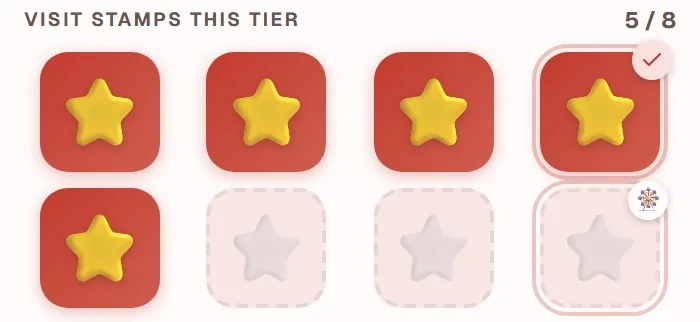
A stamp card gives the guest a stamp per visit, per item or per amount spent, and a full card unlocks a set reward: a free coffee, a pastry, money off the next treatment. The reward is known from day one, and the guest can see how far along they are.
Both are loyalty programs and both cost you something. The difference is what you give away and how it lands.
What the guest actually notices
A percentage is hard to feel. Five percent back on a coffee is a couple of kroner, a number the guest has to remember or look up. The balance creeps up and nothing in particular ever happens, so cashback mostly feels like a discount that arrives late.
A stamp card has a moment. The last stamp unlocks something the guest can see and taste, and a free coffee feels like a gift rather than a refund. Along the way the progress is right there on the card. Consumer research has found that people often speed up as they get closer to a goal: Kivetz, Urminsky and Zheng called it the goal-gradient hypothesis, using a coffee card as their example. Cashback has no goal to get closer to.
How to pick a reward that actually pulls people back is covered in choosing a stamp card reward.
What it costs you
This is the part many owners miss. Cashback costs you the full percentage of revenue, because the credit is spent as payment at menu prices. A stamp card only costs you what the reward costs to make, while the guest values it at menu price.
Picture a cafe in Copenhagen where a coffee is 40 kroner and a regular buys ten of them. They have spent 400 kroner.
- With five percent cashback they have earned 20 kroner of credit, half a coffee. When they spend it, it has cost you 20 kroner of revenue.
- With a ten-stamp card they get a free coffee they see as worth 40 kroner. Say that coffee costs you 10 kroner in ingredients: the reward has cost you 10 kroner.
The figures are made up and your own ingredient costs will differ, but the pattern holds in most cafes, restaurants and salons: the guest values the stamp card reward more, and it costs you less.
5 % cashback | Stamp card | |
|---|---|---|
| Guest has spent | 400 kroner | 400 kroner |
| Guest gets | Credit | A free coffee |
| Guest values it at | 20 kroner | 40 kroner |
| It costs you | 20 kroner | 10 kroner in ingredients |
Cashback has an accounting side too. Unused credit is money you owe your guests, and it can pile up, so ask your accountant how to book it before you launch a scheme. A stamp is not an amount owed in the same way, but your terms should still say plainly what it is worth; we cover that in loyalty program terms and conditions.
When cashback makes sense
Cashback is not a bad model. It just fits a different kind of business than the neighbourhood cafe:
- Large, varied baskets. When guests spend very different amounts, a reward that tracks the amount feels fair.
- High margins. A few percent of revenue is easier to carry when your markup is generous.
- A huge range and no obvious reward. If you sell a thousand different things, one gift that suits everyone is hard to find.
That usually means larger shops and chains. The closely related question of points against stamps is covered in points or stamps.
The best of both: stamps per amount spent
Many owners who look at cashback really just want a big spender to earn more than a small one. A stamp card can do that too. In MightyLoyalty you choose what a stamp is worth: one per visit, one per item, or one per amount spent, for example a stamp for every 50 kroner. You can also cap how many stamps a single scan can give.
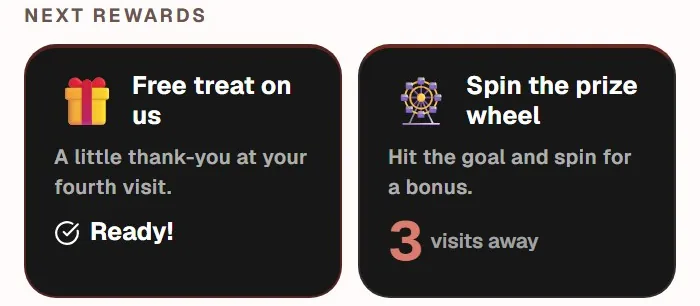
The reward then follows the spend, as with cashback, but the guest is still working towards something concrete they can see. That is especially useful in shops where the basket changes a lot from visit to visit, as described in retail loyalty programs for small shops.
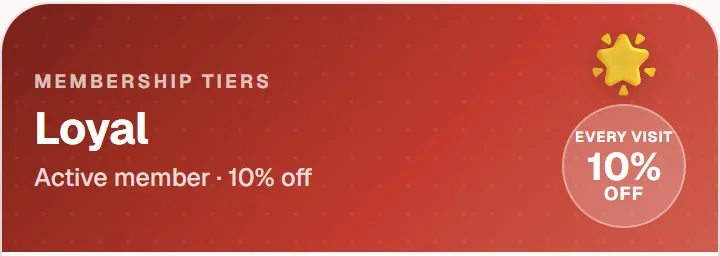
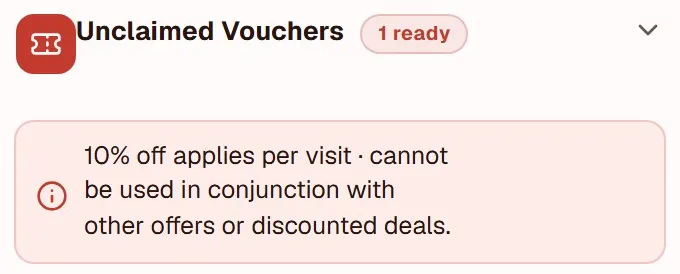
MightyLoyalty has no cashback balance. If you want a plain percentage off, give it as a member benefit on a tier instead, for example ten percent for your regulars. More on the stamp card as a model is on the stamp card app page.
A simple rule of thumb
Choose a stamp card if you have a short menu, guests who come often, and a reward that costs you less than the guest thinks it is worth. Consider cashback if baskets are large and vary a lot, and no single reward suits everyone. If you are unsure, start with stamps per amount spent: you get the fairness of cashback and the moment of a stamp card.
Frequently asked questions
Isn't cashback just a discount?
Almost. The difference is that the guest only gets the money on their next purchase, so it rewards coming back. To the guest it often feels like a small discount, though, and to you it costs the same as a discount on all of their spend.
Can I offer cashback with MightyLoyalty?
No. MightyLoyalty is a stamp card with rewards, tiers and offers. If you want the reward to follow the amount spent, give a stamp per amount instead of one per visit.
What percentage do cashback schemes usually give?
It varies widely and we have no figure we can stand behind. Work backwards instead: what can one extra visit cost you, and what share of revenue can you give away, including to guests who would have come anyway?