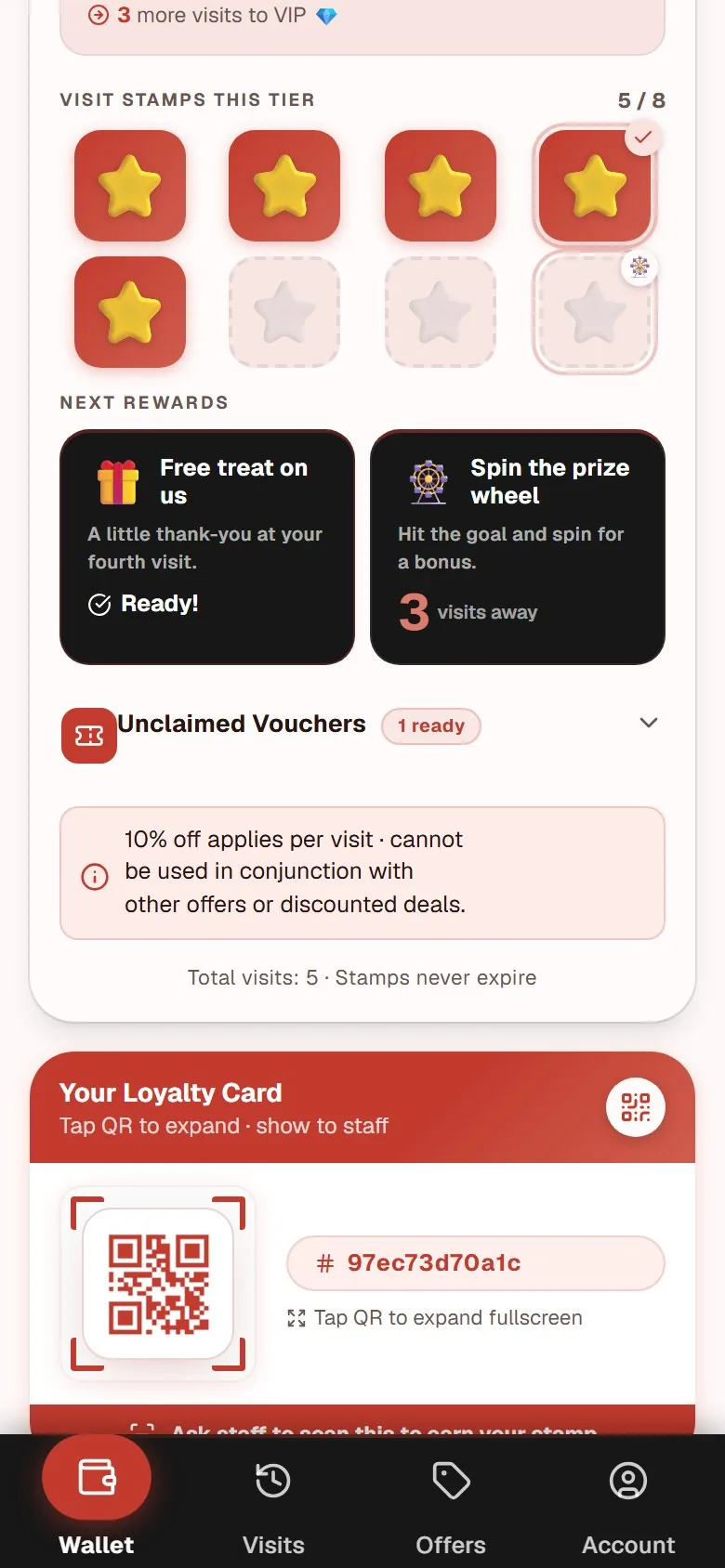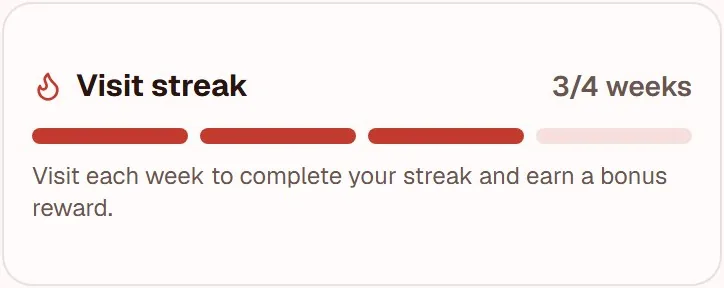
A convenience store loyalty program has one job: to make your kiosk the fixed stop on a customer's daily route, so the coffee, the sandwich and the bottle of water get bought from you rather than from the chain on the next corner. Your regulars come in often, sometimes several times a week, but every basket is small. This guide shows how to set up a digital stamp card for lots of small purchases, which products to keep out of it, and how to keep the counter moving when there is a queue.
Frequent visits, small baskets
A kiosk runs on a different rhythm from most shops. The commuter grabs a coffee on the way to the S-train. The tradesperson picks up a sandwich and a soft drink at lunch. The neighbour pops in for milk in the evening. You see the same faces again and again, yet none of them thinks of your shop as "theirs". They buy wherever is easiest.
That is exactly why a stamp card earns its place. When the choice between two kiosks on the same street is close to random, a half-full card is a small, concrete reason to pick yours. The customer has something to collect, and you get a way to know your regulars, including the ones you only see for a few seconds at the till.
The difference from a butcher or a bookshop is that the basket here is small and fairly similar each time. That changes how the card should be set up.
Per visit or per item?
MightyLoyalty can award stamps in three ways: per visit, per item and per amount spent. At a butcher, where the basket swings from a couple of sausages to the Christmas roast, per amount is the right call. In a kiosk it rarely is, because the amounts are small and alike. With a threshold of, say, 50 kroner per stamp, many purchases would earn nothing at all, and the card would feel stingy.
Two models fit better:
- Per visit: one stamp for every purchase, whatever is in the basket. It is the simplest rule to explain and the fastest at the counter, because staff only scan.
- Per item: one stamp for every cup of coffee, or every sandwich, if that is the product you want to build the habit around. Staff enter the quantity when they scan. It works well when customers often buy two cups, one for themselves and one for a colleague.
Rule | Fits when | At the counter |
|---|---|---|
| Per visit | Baskets are small and alike | Scan only |
| Per item | One product carries the habit | Scan and enter quantity |
| Per amount | Baskets vary a lot | Scan and enter amount |
If you go per item, set a cap on how many stamps a single scan can give. It protects you against typos and against the office's Friday order of twelve coffees. The guide to stamps per visit vs per purchase compares the three rules in more depth, and the retail loyalty program guide shows how they play out in larger shops.
Keep tobacco, alcohol and gambling out
A kiosk sells products a loyalty program should never reward. In Denmark, tobacco, e-cigarettes and nicotine pouches fall under strict rules on advertising and sales promotion, and alcohol and gambling have no place in a scheme designed to make people come back more often. The simplest answer is to leave them out entirely:
- Stamps are given only for products you choose, such as coffee, food, soft drinks and groceries.
- The reward is never one of the excluded products.
- Agree with your staff that a purchase made up only of excluded products is not scanned.
Put this in the program terms and on the poster at the counter, so customers know from day one and staff never have to argue about it in the queue. If you are unsure what is allowed, ask your trade association before you launch.
Rewards a customer can feel tomorrow
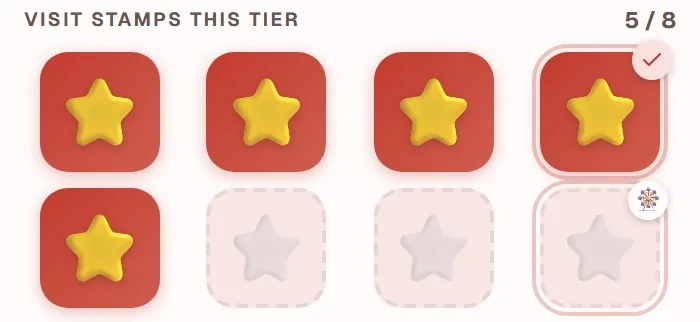
Because a kiosk sees its regulars so often, the goal can be short. A commuter who comes in five mornings a week fills a 10 stamp card in two weeks. That is a rhythm people notice, and it keeps the card in mind. A goal of 30 takes more than a month, and by then many have forgotten they were collecting.
Good kiosk rewards cost you little and feel like a gift:
- A free coffee, the classic one everybody understands at once.
- A free bun or a Danish pastry with the morning coffee.
- A soft drink or a bottle of water with lunch.
- Something small from the sweets shelf, if many of your customers are families.
To make it more interesting, add a smaller reward halfway. The guide to choosing a stamp card reward explains how to balance the goal against the value.
Fast at the counter, even with a queue
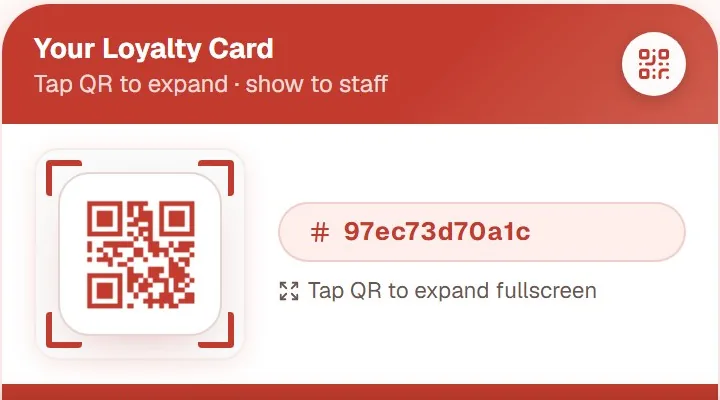
At 7:45 nobody has time for explanations, so the card has to work in seconds. The customer shows the QR code on their phone, staff scan it with the shop's phone or tablet, and the stamp is in. There is no app for the customer to download, because the card opens in the phone's browser, and there is no till integration to set up.
Sign-up has to be just as quick. Put the QR code where customers stand and wait: by the coffee machine, at the till and on the door. A new customer can join while the coffee is brewing and get their first stamp at payment.
Kiosks often have many staff on rotating shifts, many of them young. Keep the rules simple and the same for everyone: one scan per purchase, and never a scan for excluded products. Give each person their own login instead of one shared code, so it is easier to follow up if something looks odd.
Use the fixed peaks
A kiosk has clear peaks: morning, lunch and after work. Here is how the card fits each one:
A stamp per cup, and a free cup as the reward
Mention today's sandwich when the customer scans
Double stamps can move some purchases here
The quiet afternoon hour is where double stamps do the most good. Extra stamps at rush hour reward purchases that would have happened anyway. Extra stamps when it is quiet can shift some of them.
Where to start
Keep it simple: per visit or per cup of coffee, a goal of 8 to 10 stamps and a reward nobody needs explained. Write down which products are excluded and tell your staff. Put the QR code by the coffee and the till. Then check after a month how many people came back. Our page on the digital stamp card app shows how it works in practice.
Frequently asked questions
Should a convenience store stamp per visit or per item?
Per visit is the simplest and fastest, because kiosk baskets are small and similar. Choose per item if one product, usually coffee, carries the habit and customers often buy several at once. Per amount rarely fits, because small purchases would earn nothing.
Can I give stamps for tobacco or alcohol?
Keep them out entirely. In Denmark, tobacco, e-cigarettes and nicotine pouches fall under strict rules on advertising and sales promotion, and alcohol and gambling do not belong in a scheme meant to make people visit more often. Say so in the terms and on the poster.
How many stamps should a kiosk card have?
Usually 8 to 10. Kiosk regulars come in so often that a 10 stamp card can fill up in a couple of weeks, which keeps it top of mind. A very long card gets forgotten before it is full.