A membership rewards program is one of the first decisions a cafe, restaurant, or salon has to make: stamp card or loyalty club? Both bring customers back, but they work through very different mechanisms, and the format that suits a hair salon rarely works best for a restaurant with unpredictable ticket sizes. This guide lays out the real difference and helps you choose the right structure from the start.
What is a membership rewards program?
The term "membership rewards program" covers two distinct loyalty models, and the distinction matters in practice.
A stamp card is a transactional mechanic. Customers earn one stamp per visit (or per purchase), and once they reach the target, they collect a reward. The logic is simple and visible: customers always know exactly where they stand.
A loyalty club works differently. Customers sign up to belong to a defined group, and membership itself confers ongoing value: member-only discounts, exclusive offers, early access to new menu items, or invitations to private events. The benefit is continuous, not tied to filling a specific number of slots on a card.
The practical difference: with a stamp card, the customer is working toward something specific. With a loyalty club, the customer is already receiving something just by being enrolled.
The stamp card: clear, low-friction, effective
Stamp cards work best when three conditions are in place.
Consistent purchase size. A coffee for three dollars, a lunch dish for twelve, or a haircut for forty. When each visit produces a bill in roughly the same range, one stamp per visit feels fair. Customers who always spend about the same amount have no reason to feel the system is weighted against them.
Frequent visits. A stamp card needs customers to return often enough to fill the card within a reasonable time. For a cafe, bakery, or salon with weekly or monthly regulars, this is not an issue. For a business where customers come in only a few times a year, the card may expire before it is ever filled, and the motivational effect disappears.
Simple staff operation. A stamp card requires no judgment: the customer scans their code, the stamp registers automatically. The whole interaction takes under ten seconds and creates no queue friction or counter debate during a busy lunch rush.
For most cafes, casual restaurants, bakeries, and salons, the stamp card is the right starting point. It is fast to understand, easy for staff to explain, and requires almost no ongoing administration. For a detailed guide on choosing the reward that actually brings customers back, see choosing the right stamp card reward.
The loyalty club: when it makes sense
A dedicated membership club tends to make more sense when your business model does not fit naturally into a one-stamp-per-visit framework.
Wide variation in ticket size. A restaurant where a guest pays twenty dollars for a weekday lunch and ninety for a Friday dinner with wine creates a sense of unfairness if both visits earn the same single stamp. A model that rewards based on spend rather than visit count is perceived as fairer by the customers who actually contribute the most revenue.
Building a sense of community. A stamp card gives customers a goal. A well-structured club builds an identity: belonging to something is a stronger bond than having a count on a card. Identity-based loyalty is harder for a competitor to copy with a discount or a new sign-up offer, but it also takes more deliberate effort to build.
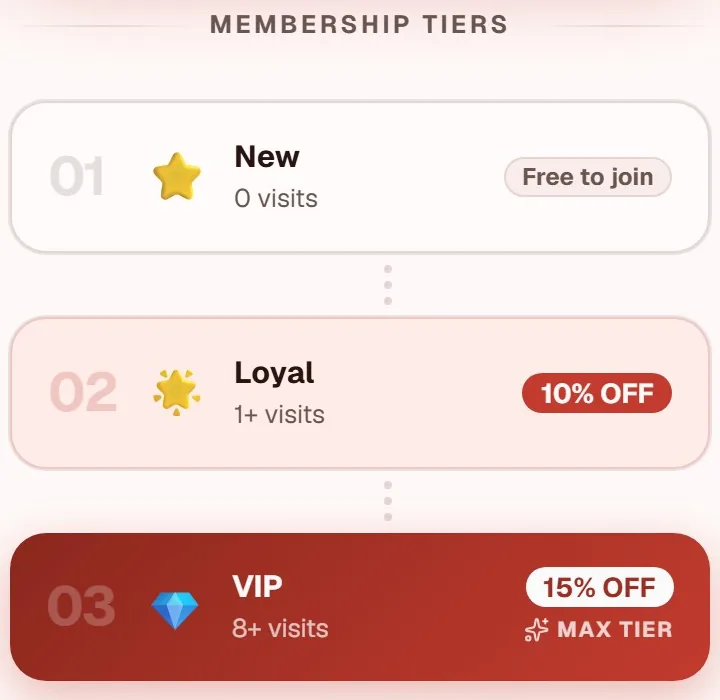
A broader reward catalogue. A club can offer tiered benefits: a flat discount for all members, early access to seasonal specials for higher tiers, private tasting events at the top. This is the level above a classic stamp card. If you want to explore when tiered loyalty structures actually motivate customers versus when they confuse them, the guide on designing a loyalty tier system covers the tradeoffs.
Combining both in one digital program
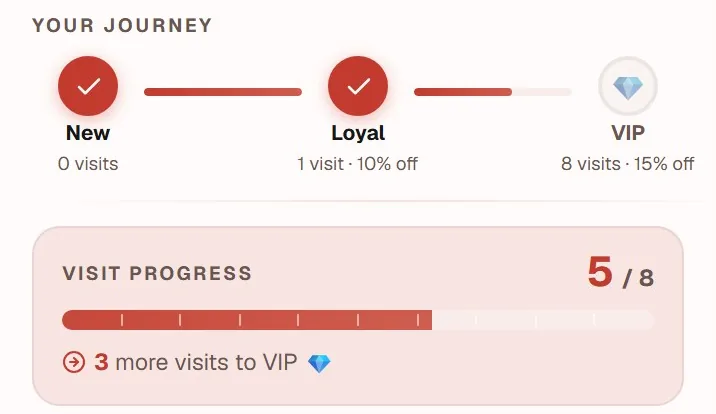
In practice, the line between "club" and "stamp card" is sharper in theory than in real loyalty programs. Most modern digital platforms blend both elements: customers sign up as members (club-style) and earn stamps per visit (stamp card-style). The result is the personal welcome and sense of belonging of a club, combined with the clear visible progress of a stamp card.
This hybrid is the format that fits most independent venues well. Low sign-up friction for the customer, visible progress toward a concrete reward, and a membership identity that grows as the relationship deepens.
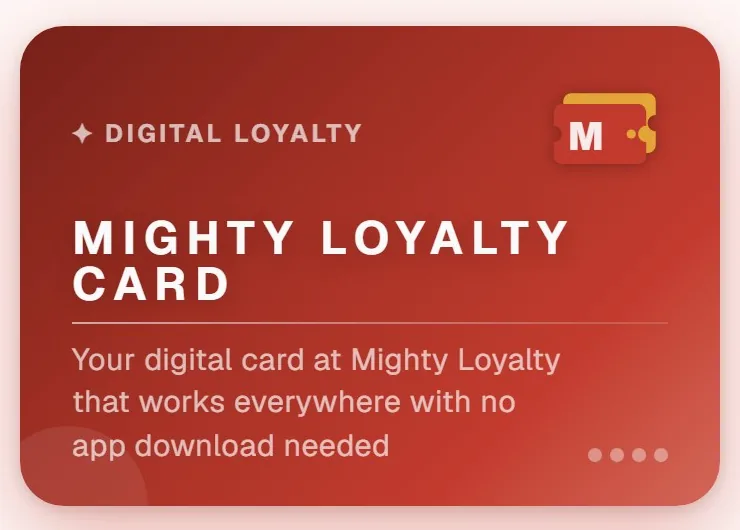
You can see what this looks like from the customer's side at the free loyalty program page or via the live demo at https://loyalty.maiya.dk/
What does it cost?
A digital stamp card through a platform like MightyLoyalty costs 99 DKK per month on the Standard plan or 249 DKK per month on the Pro plan (both excluding VAT, with unlimited members and unlimited stamping, no binding period, no setup fee). You cancel in the portal if it does not work for you.
A full loyalty club structure with a points engine, tiers, and a dynamic reward catalogue either requires a more advanced platform configuration or integration with a CRM system, and the price rises accordingly. The investment makes sense when your business model is complex enough that a simplified stamp card leaves too many high-value visits unrewarded.
For a broader comparison of what loyalty programs cost at different levels of complexity, the guide on loyalty program costs breaks down what you actually get at each price point.
Which format fits your business?
Here is a simple decision filter.
Choose a stamp card if your customers visit regularly with a roughly consistent spend per visit, and you want something you can explain to a new staff member in two minutes.
Consider a club or points model if there is a wide range in what your customers spend per visit, and you want to reward the customers who contribute the most.
Picture a cafe with sixty daily guests, all buying a coffee and a pastry for about the same amount. A stamp card giving a free coffee every tenth visit is intuitive, fair, and effortless to explain. Now picture a restaurant where a guest pays eighteen dollars at lunch on a Tuesday and seventy-five for a three-course dinner on a Saturday. Here it is harder to justify treating both visits as equal.
The full comparison of when stamps and when points fit your business model better is covered in points or stamps: what motivates customers most?
For guidance on getting a program off the ground once you have chosen your format, see the step-by-step walkthrough in how to start a loyalty program.
Frequently asked questions
Is a loyalty club the same as a membership rewards program?
A loyalty club is one form of membership rewards program, yes. The term "membership rewards program" covers any structure where customers enroll and receive benefits tied to their membership: discounts, exclusive offers, or earned rewards. A stamp card fits the definition too, since customers sign up and earn toward something. The distinction that matters in practice is whether the reward is tied to filling a card (stamp card) or to the ongoing fact of being enrolled (club).
Can I start with a stamp card and move to a full club later?
Yes, and for most independent venues this is the recommended path. Start with the stamp card: it is quick to set up, simple to explain to staff, and easy for customers to understand from their first visit. Once you have an active member base and real data on when and how they visit, you have a much better foundation for designing a more advanced club structure, one that fits your actual customers rather than your assumptions about them.
What is the main difference for staff between a stamp card and a loyalty club?
A stamp card requires one action from staff: scan the customer's code. A full club model with variable reward logic, tiers, or spend-based point accrual requires staff to understand the system's rules well enough to answer customer questions about them. The more complex the model, the more important it is to give staff a clear, short briefing before launch. When in doubt, start simple and build from there. A guide to making the most of a loyalty app from the small business owner's perspective is in loyalty app for small business.