The single number that decides whether a restaurant card works is the stamp goal, and most restaurants get it wrong by copying a coffee shop. A cafe guest can fill ten slots in a fortnight; a restaurant guest eating out with you twice a month needs five months. This guide covers the arithmetic behind the right number, how to size the reward against it, and when to change it after launch.
Start from your visit rhythm, not from a cafe card
A cafe competes for the daily coffee decision. A restaurant competes for the evening's choice: where are we eating this weekend? That is a deliberate decision, made less often and with higher expectations, and it is why the numbers have to be different.
A satisfied guest is not automatically a regular. The goodwill from her last meal is genuine, but weeks pass before the next one. In the meantime a colleague recommends a new place, Instagram surfaces an exciting opening, and the family wants to try something different. A happy guest has no concrete reason to choose you over the alternatives, and a stamp goal she can actually reach is a way of giving her one.
The arithmetic
There is one calculation worth doing before you choose a number.
Take how often a typical guest eats with you per month. Multiply by three, because roughly three months is the outer edge of how long a reward stays motivating when it is invisible in between. That product is your maximum stamp goal.
A guest who visits twice a month gives you a ceiling of six. A guest who visits once a month gives you three. A busy lunch spot where the same people come weekly can go higher, up to eight or ten, because the pace is closer to a cafe's.
Do the sum for a typical guest, not your best one. Setting the goal for the family that comes every Friday guarantees that everyone else stalls halfway and stops looking at the card.
Five to eight is the usual answer
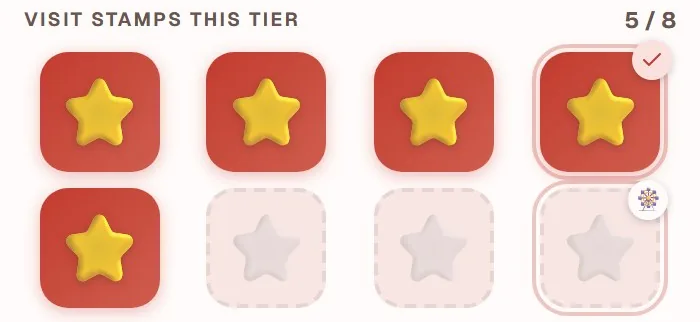
For most table-service restaurants, five to eight stamps is the right range. It creates a timeline that requires real commitment but stays realistic over a few months for a guest with a normal visit frequency.
Set it too high and the program loses momentum before guests are halfway there, which is the most common failure mode and the hardest to spot: the members are there, they simply stopped caring. Set it too low and the perceived value drops, because a reward that arrives after two dinners reads as a discount rather than recognition.
If you are unsure, err low. Raising the goal later is easy to explain; lowering it after guests have already collected feels like an admission that the original number was unfair, even though lowering it is exactly the right correction.
Match the reward to the size of the bill
The goal and the reward have to be sized together. A free coffee is a natural reward in a cafe, where it is roughly what the guest was buying anyway. In a restaurant, where the meal is a much larger purchase, the same coffee reads as an afterthought.
A good restaurant reward matches the occasion: a free starter, a free dessert, a glass of wine, or a fixed discount on the next bill. The test is whether a server can announce it at the table without sounding apologetic.
For a detailed walkthrough of how to balance goal and reward value against each other, see choose the right reward for your stamp card.
Three reward types that work at a table
Free starter. High perceived value and easy to deliver as part of normal service. The server can announce it at the table: "You have reached your goal, here is your complimentary starter." It is a moment guests remember and mention afterwards.
Free dessert or coffee. The end of a meal is a natural moment to redeem. It gives the evening a memorable finish and is easy to coordinate with the kitchen mid-service.
Discount on the next bill. Simple to communicate and easy to use. It is not tied to a specific dish, which works well if your menu changes with the seasons. Check whether the return visit offsets the discount before committing to it.
Avoid rewards with conditions that are hard to remember: a specific weekday, a minimum spend, or a dish that is not always on the menu. Whatever number you choose, the program has to be explainable in ten seconds at the table.
Your servers decide whether the number matters
In a restaurant with table service there are more natural openings to mention the program than in a self-service cafe, and three of them are worth scripting.
At the welcome, the server drops it in while handing over the menu: "Have you heard about our digital stamp card?" One question, no sales pressure.
At the bill is the best moment. The guest is at peak satisfaction and the phone is likely already out for payment. The server places the QR material with the bill: "Scan here to join and you will get your first stamp in under a minute."
On the way out: "Next time, you will be one step closer to a free starter." One sentence that turns a good evening into a concrete promise.
Servers add stamps through a simple web interface on their phone, with no access to the owner dashboard or guest data. It takes under ten seconds and needs no technical training. For a broader guide to what drives guests through the door in the first place, see restaurant marketing that works in 2026.
From setup to the first stamp
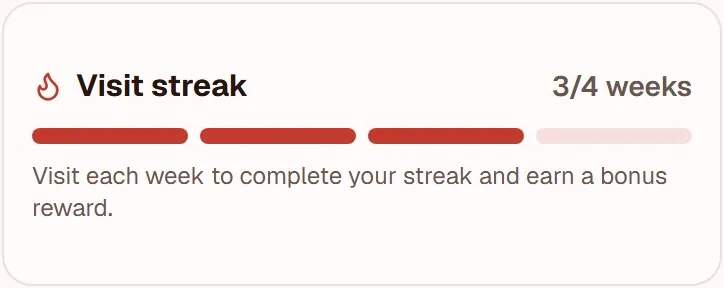
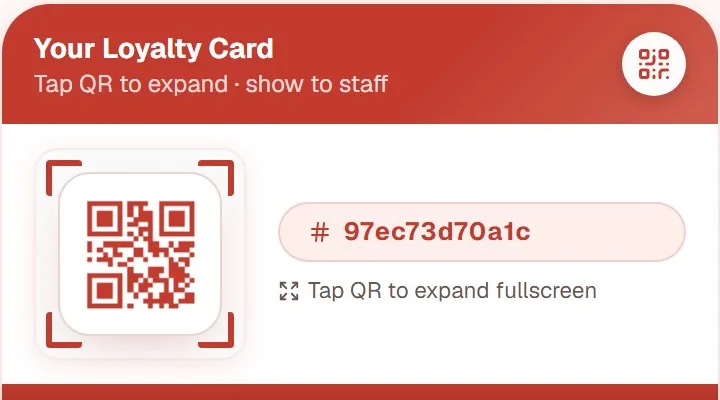
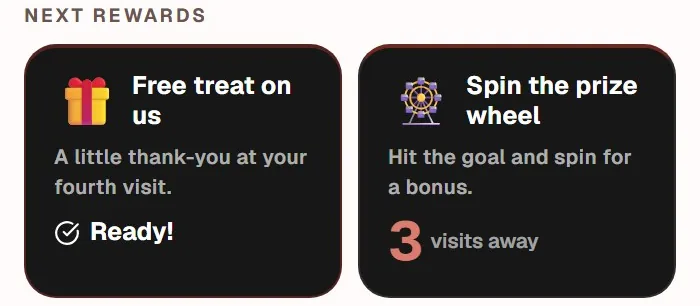
Setup takes under an hour. You choose the goal, the reward, and the text guests see on their card, and our restaurant loyalty program ships with sensible defaults for exactly those three. Then you print a QR poster for the tables and the counter. Guests scan with the phone camera, the sign-up page opens in the browser, and you add the first stamp from the staff interface. No app download for the guest or for you. You can see the guest experience live at loyalty.maiya.dk. A step-by-step walkthrough of the guest card and the staff interface is on the stamp card app page.
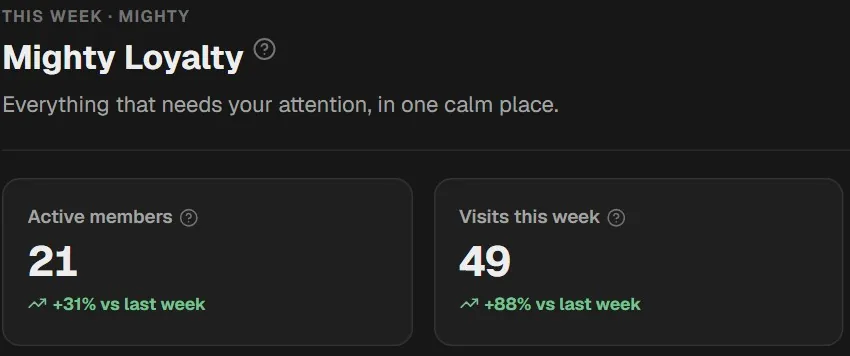
The Standard plan at 99 DKK per month gives unlimited stamps and an analytics dashboard. Pro at 249 DKK per month adds email marketing, automations, and advanced analytics. There is no binding period and no setup fee, and you cancel in the portal.
The full launch checklist is in the stamp card setup guide.
If you are weighing a stamp card against a full membership club for your restaurant, our guide to membership rewards programmes: which format fits? explains when each structure suits a restaurant's guest mix best.
Frequently asked questions
What if my guests visit at wildly different rates?
Set the goal for the middle of your range rather than the top or bottom, then use a milestone to look after the slower half. A small reward at three stamps gives an infrequent guest proof that the card pays out, while the full goal still means something to your weekly regulars. Splitting the card into two goals is usually better than trying to find one number that suits everybody.
Can I lower the stamp goal after I have launched?
Yes, and it is often the right fix if redemption is close to zero after two months. Existing members keep every stamp they have collected, so lowering the goal moves several guests to within reach at once. Tell members directly when you do it: a lower goal discovered by accident feels like a system glitch, while a lower goal announced deliberately feels like a gift.
Does the program need to integrate with my POS system?
No. A digital stamp card requires no integration with a till or POS. Staff add stamps through a separate web interface and guests scan a QR code, so the system runs independently and needs no technical setup beyond printing the QR material. That independence also means you can change POS provider later without touching the loyalty program or losing member data.